Rum Distillery Equipment and Fermentation Setup
ZR Brew Technical Team
Equipo de ingeniería de equipos para la elaboración de cerveza, la fermentación y las bebidas
Updated: September 27, 2026
Rum distillery equipment must connect feedstock preparation, fermentation, distillation, spirit collection, proofing, maturation and cleaning as one controlled process. Molasses, cane juice and syrup behave differently, so the equipment brief should start with the actual raw material, recipe, batch schedule and local product rules.
Rum process and equipment map
| Escenario |
Typical equipment |
Primary design question |
| Feedstock preparation |
Molasses or cane receiving, dilution, screening, pumps and preparation tanks |
How will viscosity, solids, sanitation and seasonal supply be managed? |
| Fermentación |
Fermenters, cooling, yeast handling, transfer and controls |
What residence time, temperature profile and tank count support the schedule? |
| Destilación |
Pot still, column or hybrid still, condenser and receivers |
Which configuration supports the intended style and separation control? |
| Dunder handling |
Dedicated collection, cooling, storage or disposal route |
Will any material be reused under a validated process, or removed safely? |
| Acabado |
Spirit tanks, proofing water, filtration, barrels and packaging handoff |
How will blending, traceability, maturation and product protection be controlled? |
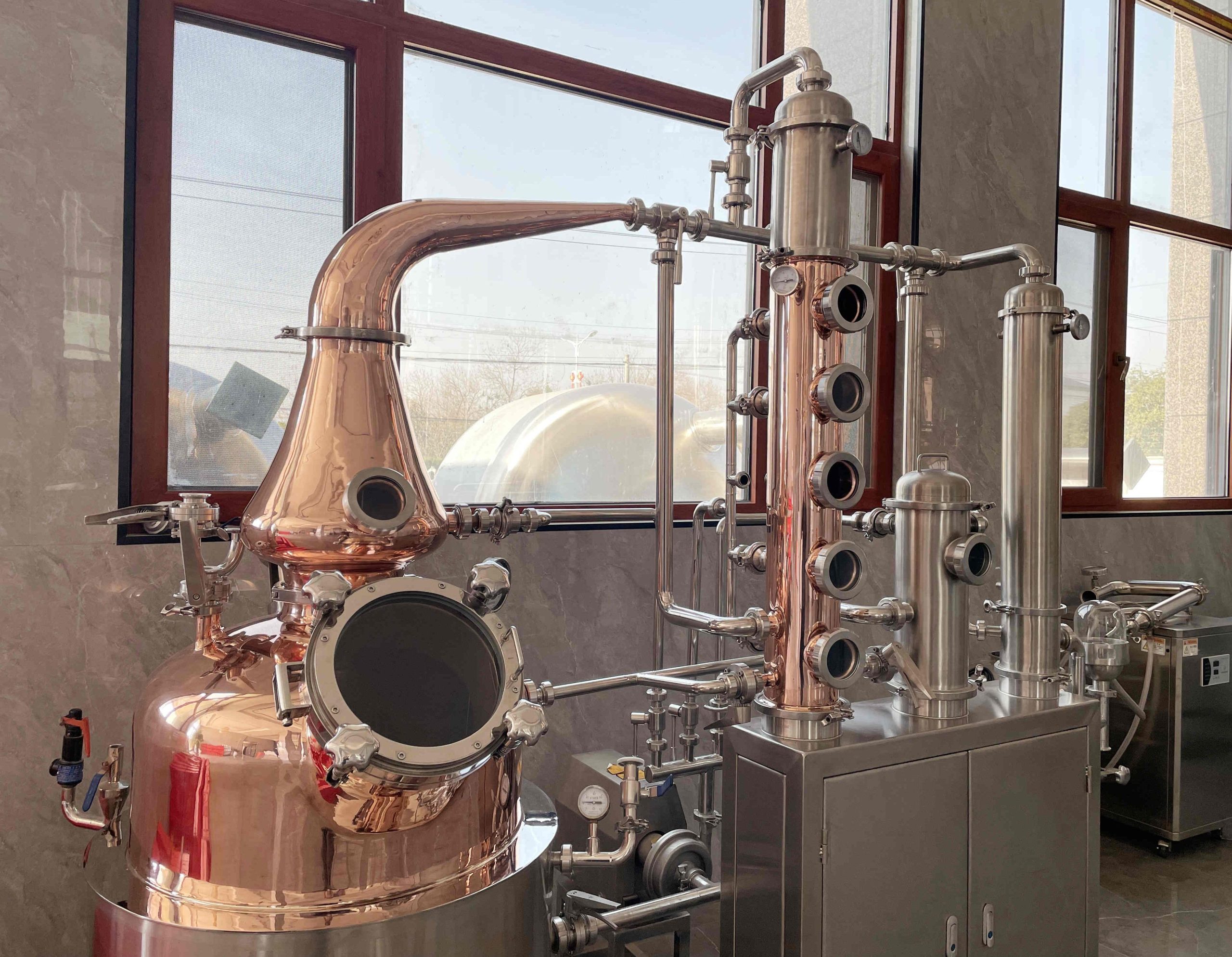
Molasses and cane preparation
Molasses handling may require heated or insulated storage, dilution, solids-tolerant pumps and controlled mixing. Cane juice has a different shelf-life and sanitation profile and may require rapid processing. Specify receiving conditions, concentration, screening, water quality, transfer distance and cleaning before sizing preparation vessels.
Do not assume a generic pump or pipe size will handle every feedstock. Viscosity, solids, temperature and cleaning chemistry influence the transfer system and the practical batch time.
Fermentation setup drives still utilization
Fermenter count should be based on working volume, fermentation residence time, fill and discharge time, cleaning turnaround and the number of charges required by the still. Cooling capacity, measurement, sampling and yeast handling are part of the production design. A large still cannot compensate for insufficient or inconsistent fermentation supply.
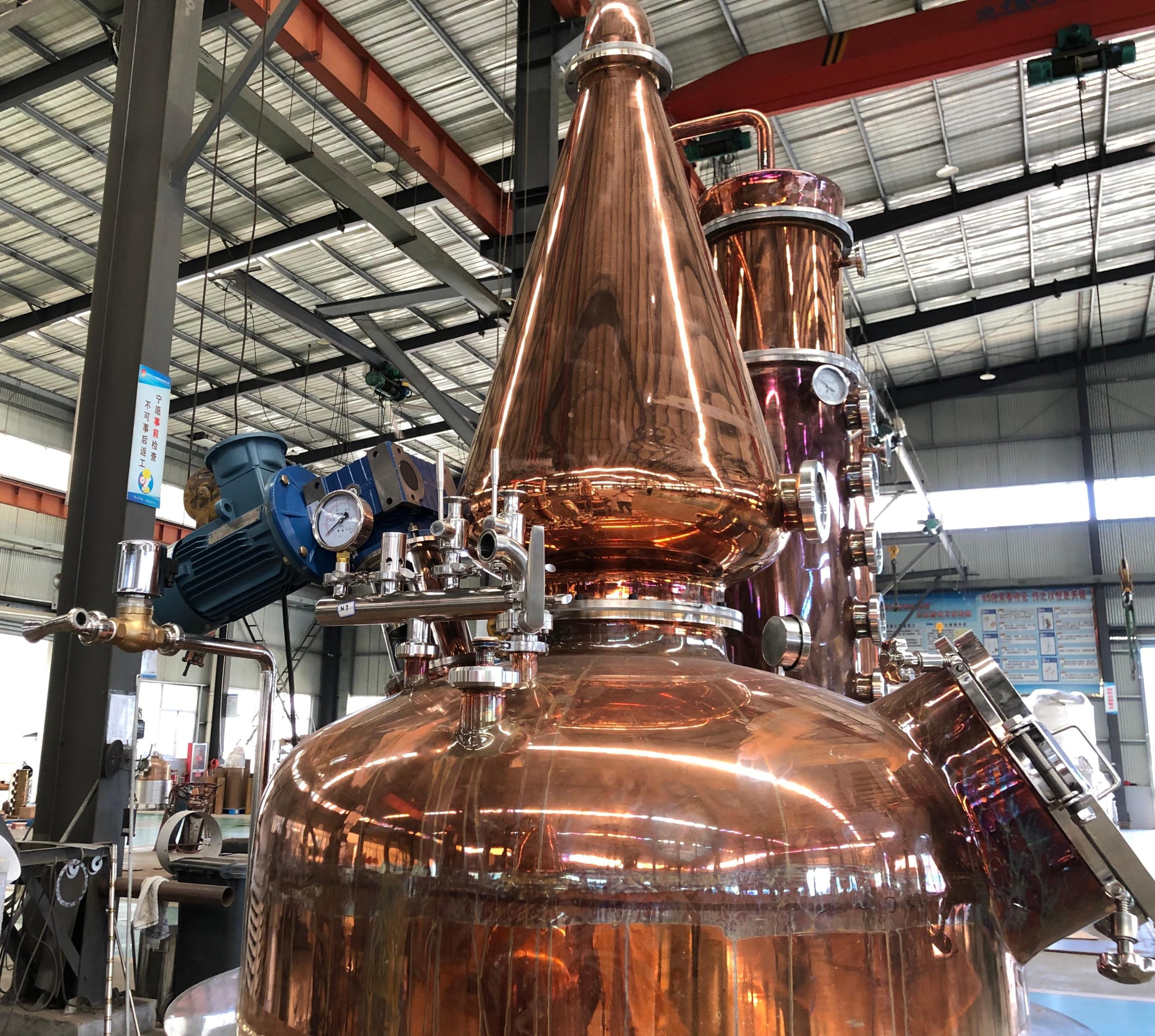
Pot, column and hybrid rum stills
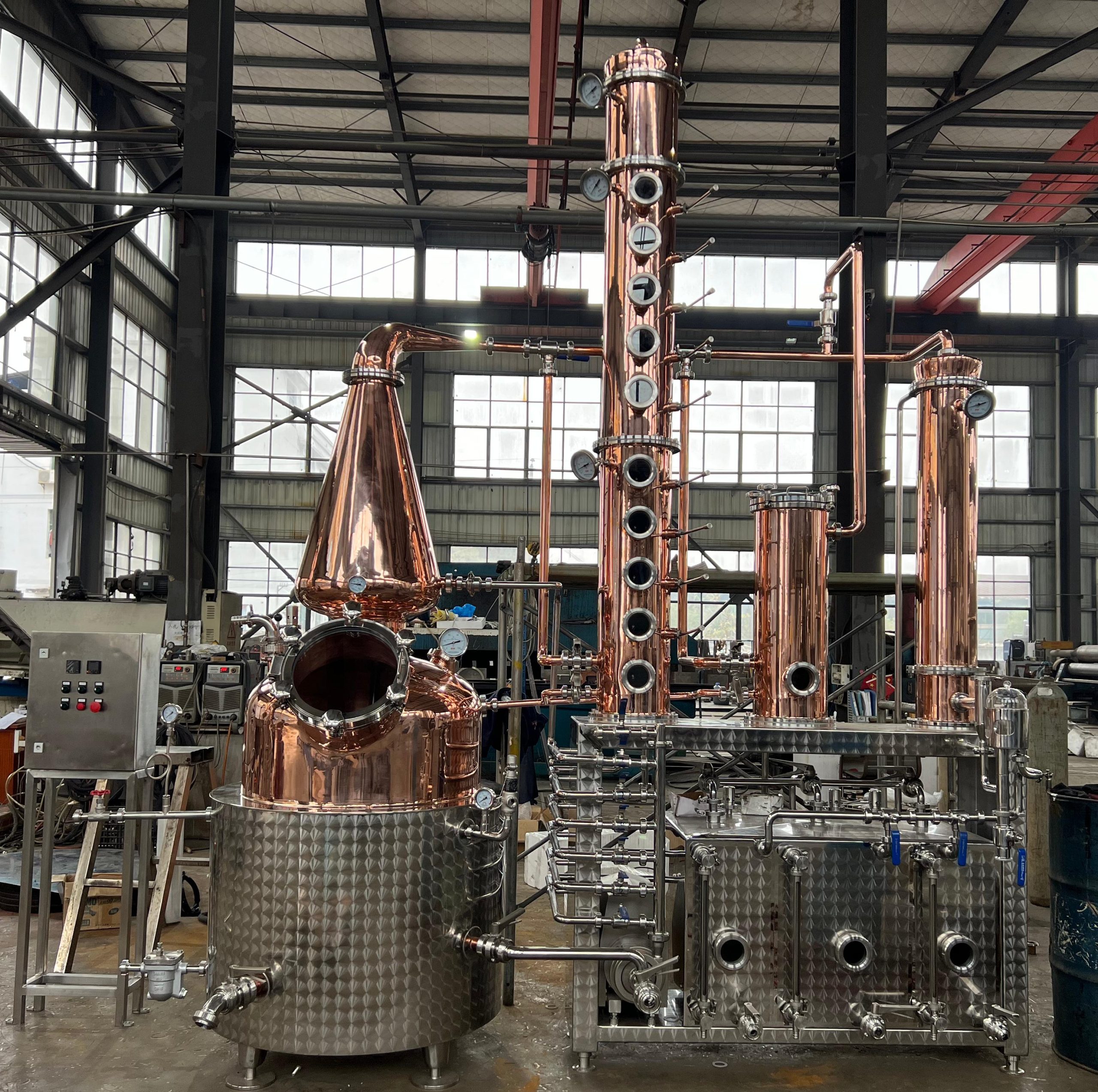
Pot stills suit batch operation and can retain a fuller congener profile. Column systems provide different options for continuous or staged separation and repeatability. Hybrid systems combine elements of both. Selection should follow the intended rum style, approved process, utility limits and operator capability rather than vessel volume alone.
ZR Brew publishes distillery equipment from approximately 100L to 5000L in red copper, SUS304, SUS316 and copper-stainless hybrid configurations depending on the model. Available components can include a still pot, onion head, swan neck, column, dephlegmator, condenser, CIP, piping and collection tanks. Heating may be steam, direct fire or project-specific; controls may use Schneider PID or Siemens PLC components depending on the selected model.
Dunder handling needs a defined route
Dunder is the liquid remaining after distillation. A producer may remove it, treat it, or use a controlled portion within a validated process, subject to recipe, sanitation and local requirements. Provide a dedicated route for collection, cooling, storage and disposal or reuse. Avoid uncontrolled cross-connections with clean product lines.
Maturation, proofing and cleaning
After collection, define spirit storage, proofing-water treatment, blending, filtration, barrel filling and batch records. Materials, seals, hoses, pumps and instruments must suit the actual spirit concentration. Maturation requires traceable barrel identification, warehouse access, spill control and a documented sampling plan.
CIP design should cover vessels, piping and transfer equipment, with attention to drainability, spray coverage, chemical compatibility and rinse verification. Feedstock residue and fermentation soil can require different cleaning steps from the still and spirit side.
Safety and compliance
Distilleries involve heat, pressure, flammable liquid and vapor, electrical equipment and cleaning chemicals. Plan ventilation, fire protection, drainage, hazardous-area electrical design and emergency access with qualified local specialists. In the United States, the TTB distilled spirits resource is an official starting point. Requirements vary by jurisdiction.
Project brief checklist
- Define feedstock, recipe, legal product category and annual operating plan.
- Map preparation, fermentation, distillation, dunder, storage and barrel residence times.
- Specify still type, heating, condenser duty, receivers, controls and CIP.
- Document utilities, layout, floor loading, drainage, ventilation and expansion space.
- Request an itemized supply scope and model-specific compliance documents.
- Confirm licensing and fire, electrical and environmental requirements before fabrication.
Preguntas frecuentes
Is a pot still or column still better for rum?
Neither is universally better. Pot, column and hybrid systems create different operating choices for separation, repeatability and style. Select from the intended product and process.
How many fermenters does a rum distillery need?
Calculate working volume, residence time, cleaning turnaround and weekly still charges. The answer depends on the recipe and operating calendar.
Can dunder be reused?
Some validated rum processes use controlled dunder practices, while others remove or treat it. Any reuse requires a defined recipe, sanitation controls and compliance with local rules.
Explore ZR Brew’s distillery equipment range and commercial distillery equipment guide. For a process-specific rum equipment schedule, ponte en contacto con el equipo del proyecto ZR Brew.
Author: ZR Brew Technical Team, Brewing, Fermentation and Beverage Equipment Engineering Team.


 Publicado