Craft Distillery Equipment: Plan a Complete System
ZR Brew Technical Team
Equipo de ingeniería de equipos para la elaboración de cerveza, la fermentación y las bebidas
Updated: September 28, 2026
Craft distillery equipment should be planned as one production system rather than a standalone still. The design must connect raw-material preparation, fermentation, distillation, spirit handling, proofing, storage, cleaning and packaging while fitting the building, utilities, staffing and local compliance requirements.
Start with the product and production plan
List the spirits to be produced, the feedstocks, target batch sizes, operating days and expected time in each process step. Whiskey, gin, rum, brandy and vodka can require different preparation, still configurations, botanical handling, rectification, storage and maturation. A multi-spirit site needs deliberate changeover and cleaning rules rather than assuming one configuration performs every job equally.
| Planning input |
Equipment impact |
| Spirit mix and recipes |
Preparation vessels, still path, column or basket options, receivers and cleaning. |
| Batch schedule |
Fermenter count, still working volume, storage and staffing. |
| Servicios públicos |
Heating, cooling, electrical supply, water, ventilation and drainage. |
| Building |
Ceiling height, access, floor loading, hazardous areas and expansion. |
| Compliance |
Pressure, electrical, fire, licensing, records and documentation. |
Match fermentation capacity to the still
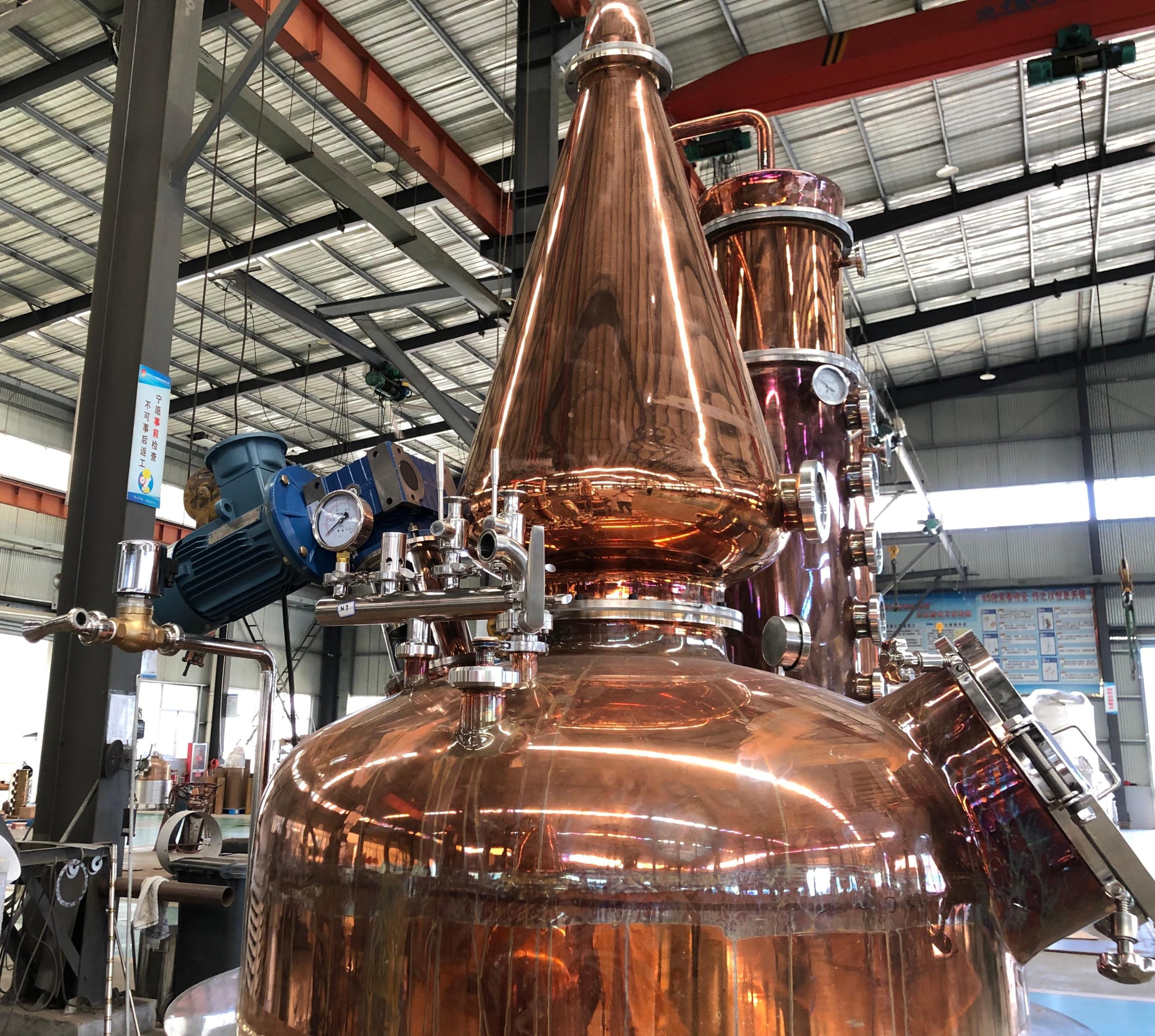
Fermentation often sets the practical production ceiling. Calculate working volume, fill time, residence time, discharge and cleaning turnaround for each recipe. The number of fermenters must keep the still supplied without creating excessive idle inventory. Include cooling duty, temperature measurement, sampling, yeast handling and solids-compatible transfer where required.
For grain-based spirits, preparation may include receiving, milling, cooking or mashing, conversion, cooling and transfer. Other feedstocks require different preparation. The equipment schedule should follow the validated process, not a generic list.
Select pot, column or hybrid distillation
Pot stills support batch operation and straightforward vapor paths. Columns add separation and reflux options. Hybrid systems can provide operating flexibility, but the real capability depends on the exact components, controls and approved modes. Compare heating duty, vapor path, condenser capacity, receiver arrangement, instrumentation, cleaning and operator workload.
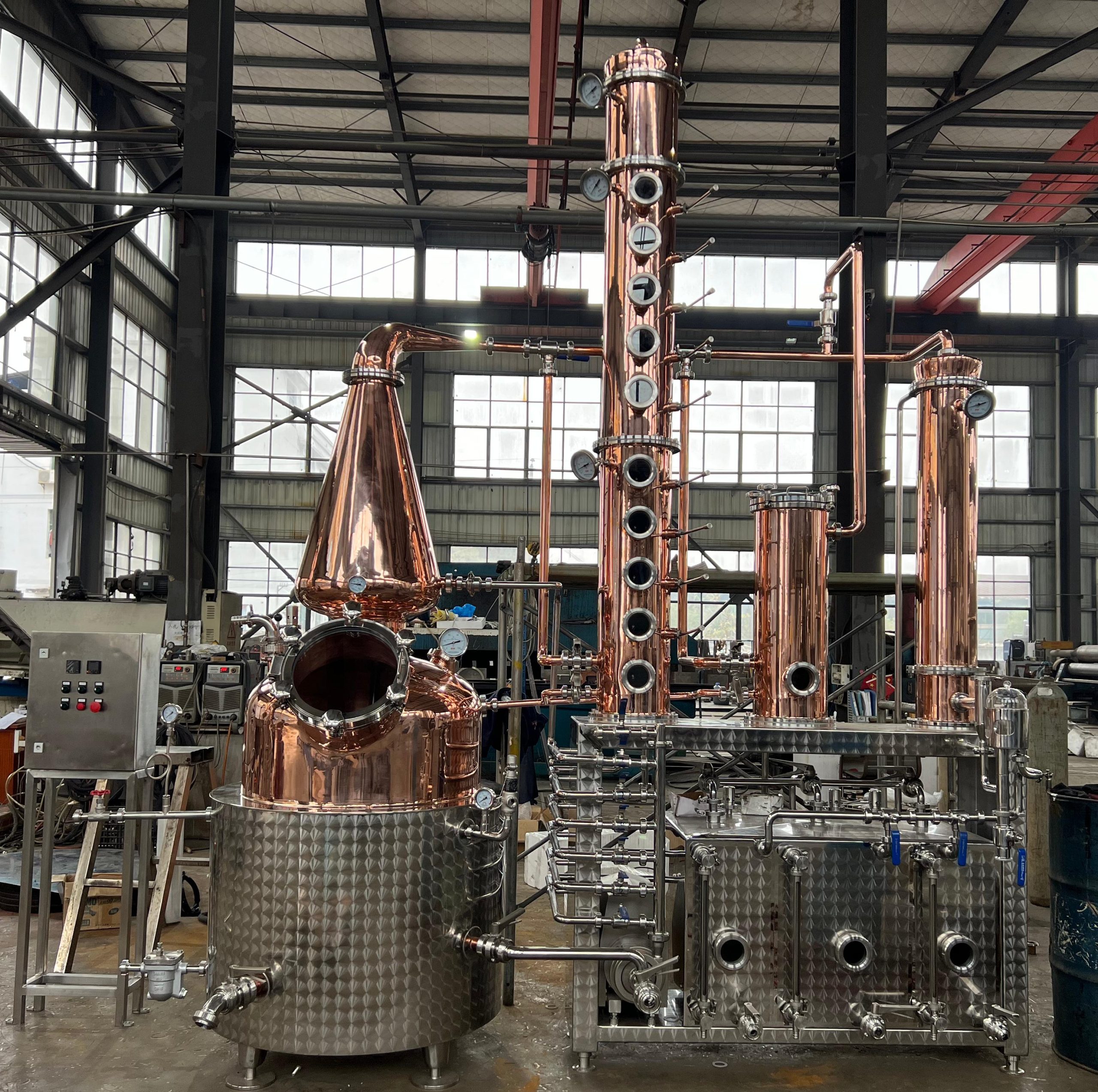
ZR Brew publishes distillery equipment from approximately 100L to 5000L, with red copper, SUS304, SUS316 and copper-stainless hybrid construction depending on the model. Configurable components may include a still pot, onion head, swan neck, column, dephlegmator, gin basket, condenser, CIP, piping and collection tanks. Heating can be steam, direct fire or project-specific, and controls may use Schneider PID or Siemens PLC components depending on the model.
Plan utilities and the room before ordering
Prepare a utility schedule for steam or fuel, electrical power, cooling water, process water, compressed air, ventilation, drainage and fire protection. Confirm available pressure, temperature and flow, not only connection size. Layout drawings should show operating clearance, maintenance removal paths, floor loading, ceiling height, pipe routes, drains, safe access and future expansion.
Staffing, controls and cleaning
Automation can improve repeatability, but it does not eliminate loading, sampling, cut decisions, transfers, cleaning, maintenance and records. Build the batch calendar around actual staff coverage. Define which measurements and valves are manual, which are controlled, and how alarms and batch records are handled.
CIP must cover the soil and geometry of each section. Specify spray coverage, chemical compatibility, drainability, rinse verification and safe chemical handling. Separate product-contact requirements on the wash side from high-strength spirit transfer and storage.
Copper Rivet project: verified system integration
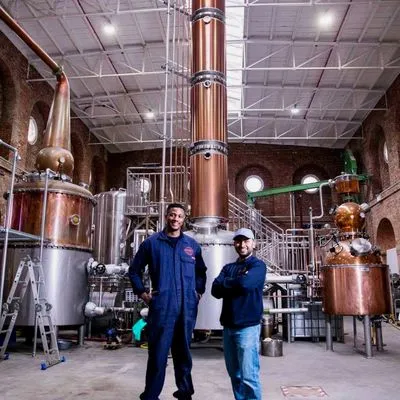
For the Copper Rivet Distillery project in Chatham, United Kingdom, ZR Brew supplied a 3000L distillery brewkit with a steam-heated two-vessel brewhouse, a 40HL hot-liquor tank, a cold-liquor tank, six 60HL fermentation tanks and filtration equipment. This public case demonstrates coordinated upstream brewing and fermentation capacity; it does not disclose production output, yield, revenue or payback.
Safety, licensing and documentation
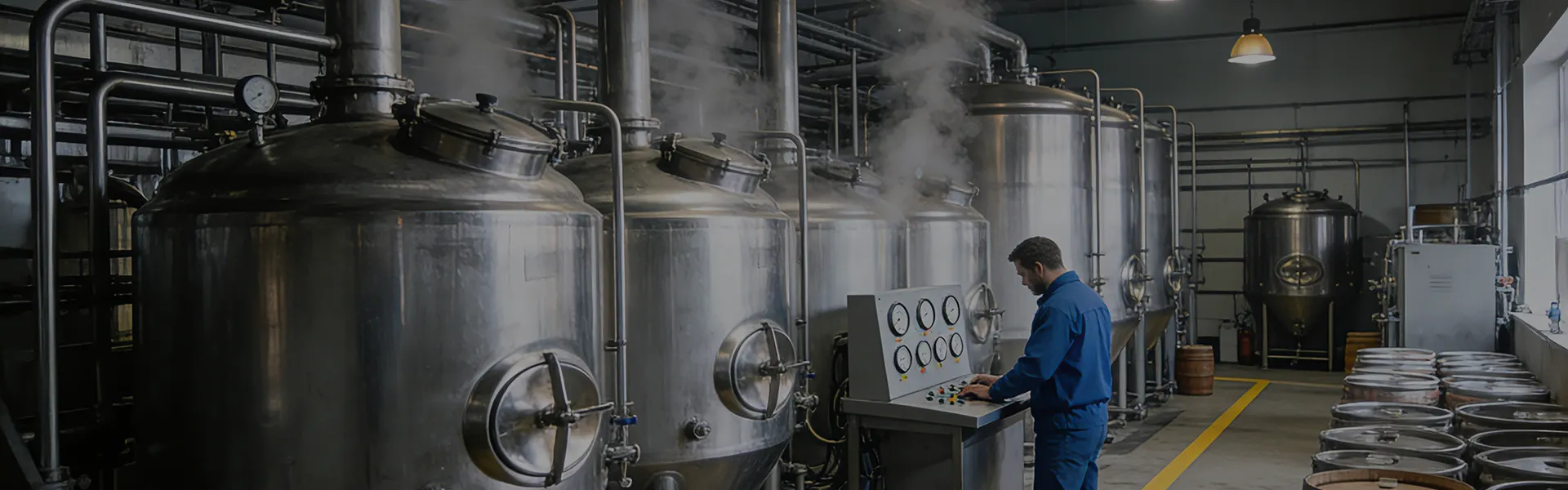
Distilled-spirit facilities involve flammable liquids and vapor, heat, pressure, electrical equipment and cleaning chemicals. Engage local fire, electrical, licensing, environmental and insurance specialists before releasing equipment for fabrication. In the United States, the TTB distilled spirits resource is an official regulatory starting point.
Company-level CE or ISO claims do not establish model-level approval. Request applicable declarations, material records, electrical documents, pressure-test records and destination-market evidence for the exact supplied equipment.
Complete-system project checklist
- Define spirit mix, recipes, batch sizes and annual operating calendar.
- Calculate residence times and working volumes from preparation through packaging.
- Match fermentation, still, receiver, storage and packaging capacity.
- Verify utilities, building constraints, access and expansion space.
- Specify controls, CIP, documentation, installation boundaries and training.
- Confirm local approvals before fabrication and site work.
Preguntas frecuentes
What is included in a complete craft distillery system?
The scope can include preparation, fermentation, stills, condensers, receivers, spirit-safe transfer, proofing, filtration, storage, CIP, controls and packaging interfaces.
How do I size craft distillery equipment?
Use the feedstock and batch schedule, fermentation residence time, still run and cleaning time, utilities, storage and packaging demand. Nominal still size alone is insufficient.
Can one craft still produce several spirits?
Some hybrid systems support multiple modes, but flexibility depends on the installed components, controls, cleaning and approved process. Confirm exact operating modes before purchase.
Explore the ZR Brew distillery equipment range and the commercial distillery selection guide. For a process-specific schedule and layout, ponte en contacto con el equipo del proyecto ZR Brew.
Author: ZR Brew Technical Team, Brewing, Fermentation and Beverage Equipment Engineering Team.


 Publicado