Gin Distillery Equipment and Botanical Systems
ZR Brew Technical Team
Equipo de ingeniería de equipos para la elaboración de cerveza, la fermentación y las bebidas
Updated: September 25, 2026
Gin distillery equipment must preserve botanical character while delivering repeatable distillation, safe spirit handling, efficient cleaning and consistent proofing. A commercial system is more than a still: it connects base-spirit preparation, maceration or vapor infusion, botanical separation, condensation, collection, filtration, proofing and storage.
Gin production equipment map
| Escenario |
Equipment scope |
Design question |
| Base spirit |
Fermentation, wash transfer, boiler or feed vessel |
How will the neutral or spirit base be supplied at the required batch rhythm? |
| Botanical preparation |
Weighing, maceration vessel, baskets and loading access |
Which botanicals need liquid contact, vapor contact or separate handling? |
| Destilación |
Pot still, column, gin basket, swan neck, dephlegmator and condenser |
How will vapor path, reflux and copper contact be controlled? |
| Recolección |
Receivers, pumps, tanks, measurement and filtration |
How will cuts, blending, traceability and product protection be managed? |
| Proofing and storage |
Treated water, blending tank, spirit storage and CIP |
Can the system mix, clean and verify each batch without cross-contamination? |
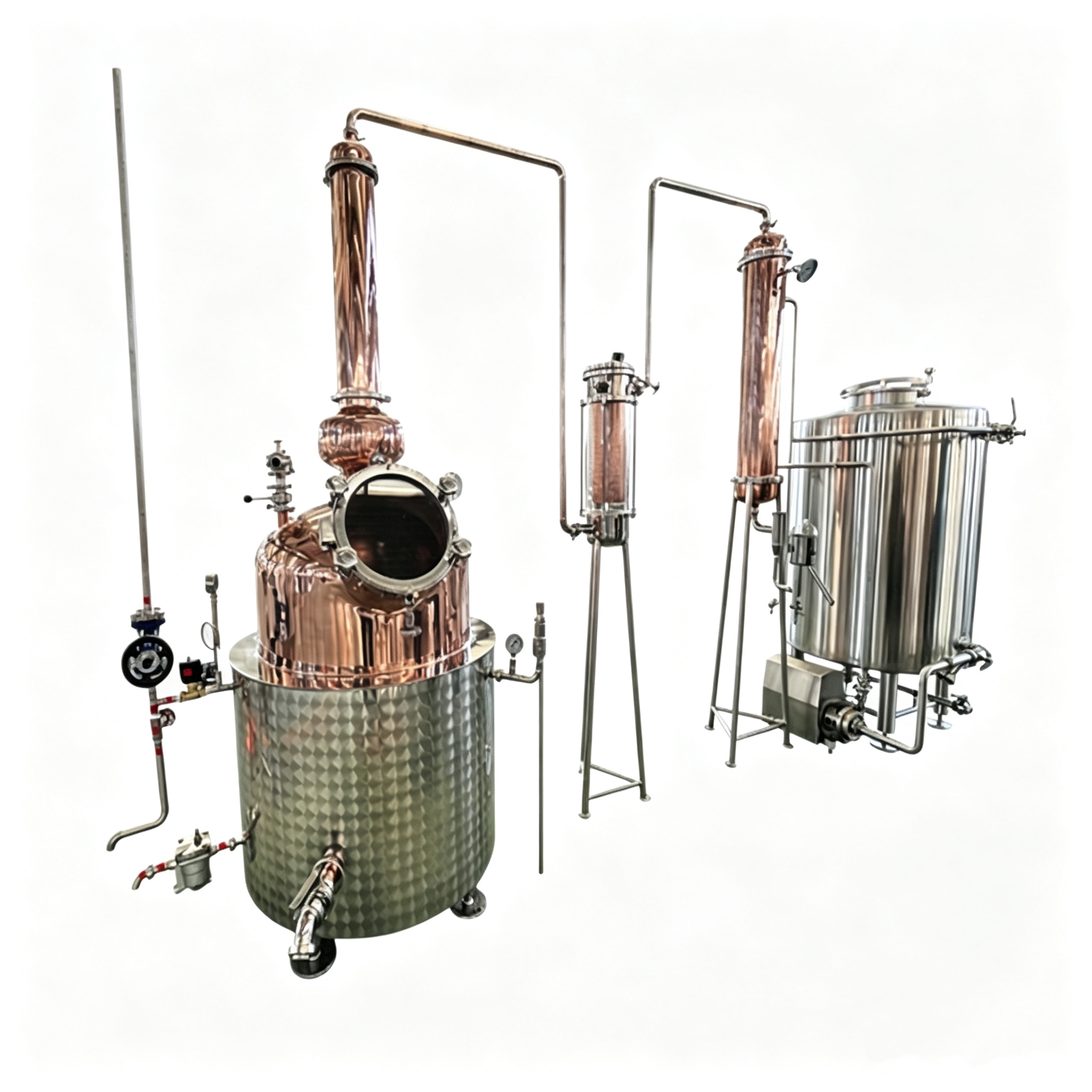
Maceration versus vapor infusion
Maceration places botanicals in the spirit or wash before distillation. It can provide a strong, integrated extraction, but the recipe must define botanical loading, soak time, temperature, agitation and solids handling. Vapor infusion passes vapor through a basket or botanical chamber, which can support a lighter aromatic profile and separate fragile ingredients from the liquid charge. The correct method depends on the recipe and the producer’s sensory target, not on a universal equipment rule.
A gin basket needs enough access for loading and unloading, a stable vapor path, drainage and cleaning provisions. Confirm basket volume and mesh or support details for the actual botanicals; do not assume a catalog basket suits every plant material.
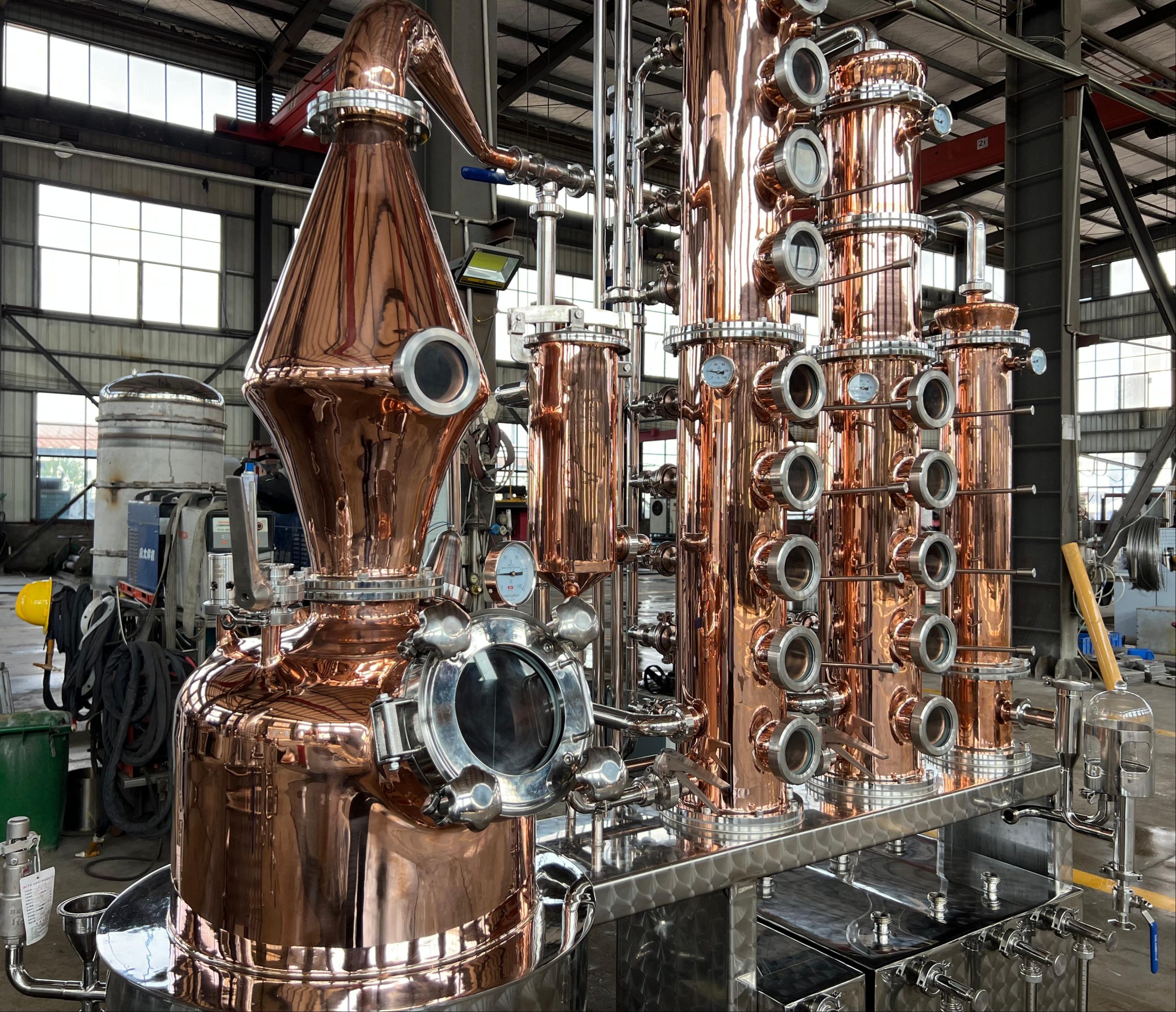
Pot, column and hybrid gin stills
Pot stills offer a straightforward batch path, while columns and hybrid systems add options for reflux, separation and repeatability. ZR Brew publishes distillery equipment from approximately 100L to 5000L with red copper, SUS304, SUS316 and copper-stainless hybrid options depending on the model. Configurable components can include a still pot, onion head, swan neck, column, dephlegmator, gin basket, condenser, CIP, piping and collection tanks.
Heating may be steam, direct fire or project-specific. Controls may use Schneider PID or Siemens PLC components depending on the selected model. Confirm the exact heating duty, condenser capacity, receiver arrangement, instrumentation, pressure protection and cleaning method in the project specification.
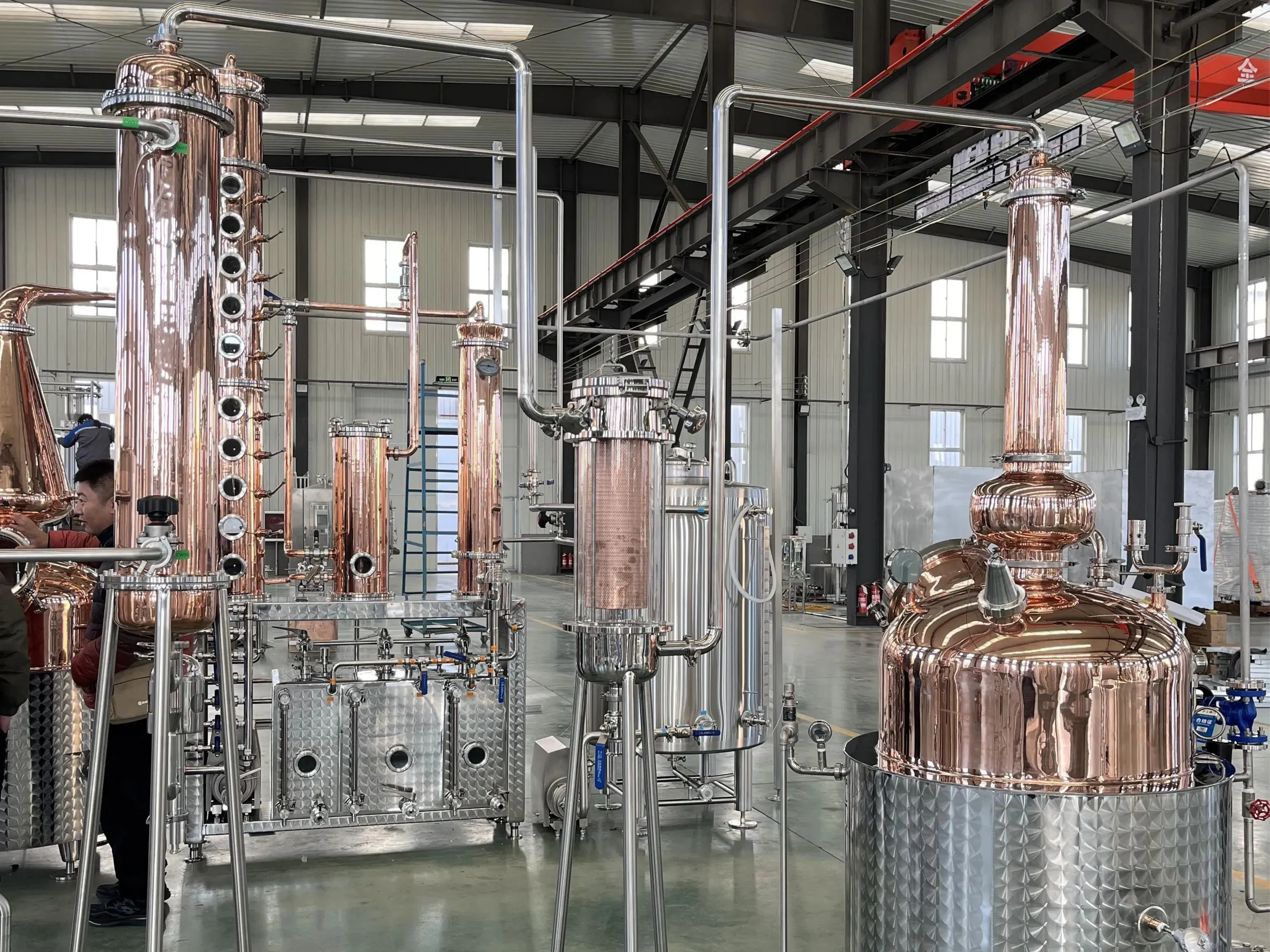
Proofing, filtration and cleaning
After botanical distillation, define the collection, blending, proofing-water, filtration and storage steps as one controlled handoff. Use treated water suitable for the product, measure additions, and document the verification method. Filtration should follow the desired sensory and visual result rather than a generic recipe.
CIP planning is especially important for botanical oils and fine solids. Specify spray coverage, chemical compatibility, drainability, hose connections, rinse verification and access to the basket and vapor path. A system that is difficult to clean can create carryover between recipes and reduce the practical production schedule.
Utilities, safety and compliance
Plan steam or fuel, electrical supply, cooling water, process water, compressed air, ventilation, drainage and fire protection before ordering equipment. Distilled-spirit facilities involve heat, pressure, flammable vapor and cleaning chemicals. Engage local licensing, fire, electrical and insurance specialists for the exact site.
In the United States, the TTB distilled spirits resource is an official regulatory starting point. Company-level certification statements do not establish model-level approval; request the applicable documents for the exact equipment and destination.
How to write a gin equipment brief
- Define the base spirit, botanical recipe, target profile and batch calendar.
- Choose maceration, vapor infusion or a hybrid process and document botanical loading.
- Specify still configuration, basket, heating, condenser, receivers, controls and CIP.
- Calculate utilities, room access, drainage, ventilation, storage and future expansion.
- Define proofing water, filtration, measurement, packaging handoff and batch records.
- Confirm local licensing and safety requirements before fabrication is released.
Preguntas frecuentes
What is the main difference between maceration and vapor infusion?
Maceration extracts botanicals by soaking them in the liquid charge, while vapor infusion moves vapor through a basket or botanical chamber. The recipe, ingredient sensitivity and desired profile determine the better fit.
Does every gin still need a gin basket?
No. A basket is useful for vapor infusion, but a maceration process may place botanicals directly in a suitable vessel. Select the equipment from the validated process.
How should gin distillery equipment capacity be selected?
Match working volume to base-spirit supply, botanical loading, run time, cleaning, condenser duty, proofing, storage and packaging demand. Nominal vessel size alone is not enough.
Review ZR Brew’s distillery equipment range and commercial distillery equipment selection guide. For a botanical process scope and layout, ponte en contacto con el equipo del proyecto ZR Brew.
Author: ZR Brew Technical Team, Brewing, Fermentation and Beverage Equipment Engineering Team.


 Publicado