Before requesting a quote for a liquid mixing tank, define ten items: liquid and process, working volume, agitator, heating or cooling jacket, insulation, pressure rating, material and finish, ports and valves, controls, and site utilities. A brief with these fields lets a manufacturer quote a custom vessel; a capacity figure alone does not.
Why “1000 liters, stainless” is not a quotable request
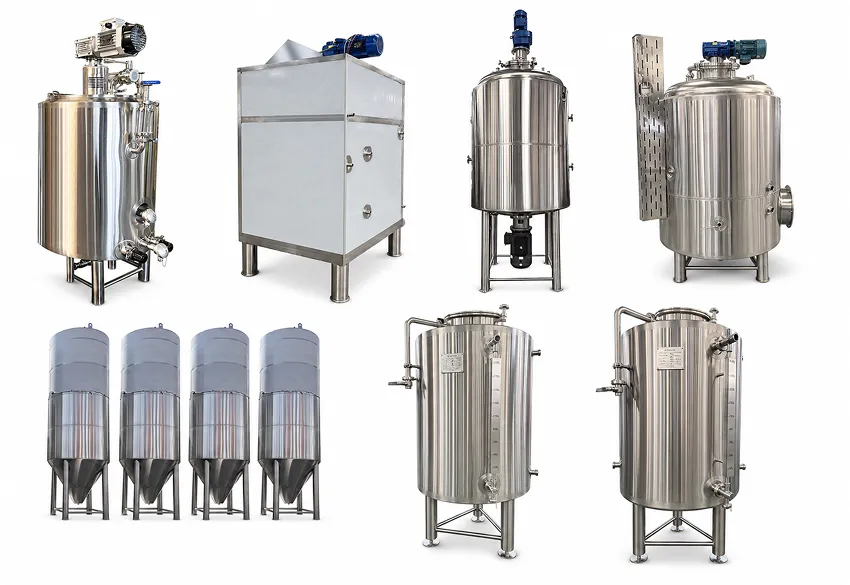
Mixing tanks are usually built to order. ZR Brew’s public catalog lists no fixed model numbers for its custom stainless steel vessels, and the vessel line is described as engineered per project. That means the quotation starts from your brief rather than from a model list.
Compared with buying from a fixed-size catalog, a custom vessel lets you set the agitator, jacket, ports and finish for your own liquid. The cost is that you must write those choices down before anyone can price the tank. The steps below turn that into a worksheet. Each step ends with a check so you know it is finished.
Step 1: Describe the liquid and the process
Write the liquid’s name, its approximate viscosity (a measured value or a plain description such as “thin like water” or “thick like syrup”), and its operating temperature range. Add whether powders or solids enter the tank, and whether the process is batch or continuous. State how you clean the vessel, for example CIP or manual.
Step 2: Separate working volume from nominal capacity
Buyers often quote “2000 L” and mean three different things: the liquid they process, the liquid they want to store, or the total internal volume. Write the minimum batch, the maximum batch and the headspace you need as separate numbers. Headspace matters more in a mixing tank than in a storage tank because the surface moves while the agitator runs.
Step 3: Choose the agitator by what the liquid does
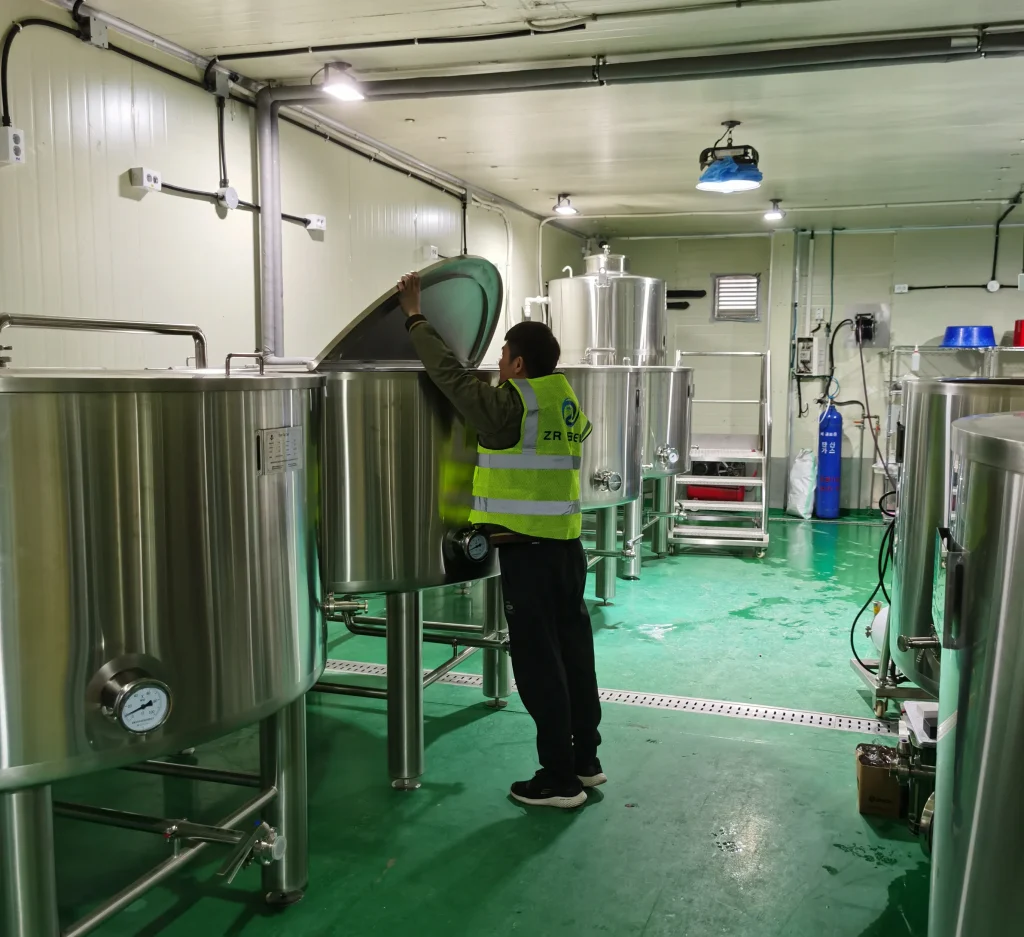
Specify the agitator’s mounting position (top, side or bottom entry), whether speed is fixed or variable, and whether the liquid is sensitive to shear. Also say if the agitator must keep running at the minimum fill level. Agitation is one of the parameters ZR Brew configures per project. Specific agitator types and speed ranges are not published; request a drawing.
Step 4: Decide what the jacket has to do
State whether the liquid must be heated, cooled or both, which medium you have on site, and the target temperature. A jacket carries the heating or cooling medium around the vessel wall. Say if you need one at all; a plain vessel with no jacket is a legitimate choice for mixing at ambient temperature.
The “double-layer” trap. Buyers searching for a double-layer or heated tank often mean two different things. A jacketed tank has a second wall with a channel for a heating or cooling medium. An insulated tank has a second wall filled with insulation to slow heat exchange with the room. A quote request that says only “double-layer” leaves the manufacturer guessing, so write “jacket for [medium]” or “insulation only”.
Step 5: Say whether insulation is needed
Insulation matters when the liquid must hold a temperature over hours, or when the vessel sits somewhere condensation or hot surfaces are a problem. Insulation is a separate line item in ZR Brew’s configurable vessel parameters, so specify it apart from the jacket.
Step 6: State the pressure condition
Write whether the vessel runs at atmospheric pressure, under pressure, or under vacuum, and give the maximum pressure if there is one. Pressure rating is engineered per project. Pressure-test records, material certificates and the applicable standards are confirmed for each order rather than assumed.
Step 7: Match material and finish to the liquid
Name the stainless steel grade your liquid chemistry requires and tell the supplier why. If the liquid is acidic, salty or cleaned with aggressive agents, say so. A grade suited to one liquid is not automatically suited to another. Specify the finish for the liquid-contact surface and the exterior separately, since they serve different purposes.
Step 8: Build a port and valve schedule
This is the step most briefs skip, and it is where quotes diverge the most. List every opening in a table like the one below. Fill in the blanks from your own process; the entries shown are prompts, not ZR Brew specifications.
| Port |
Purpose |
| Manway |
Access and cleaning |
| Inlet |
Liquid entry |
| Outlet |
Discharge |
| CIP Spray |
Limpieza |
| Temperature Probe |
Process monitoring |
| Level Sensor |
Fill control |
| Sampling Valve |
Quality checks |
| Vent |
Pressure relief |
Step 9: Define the controls
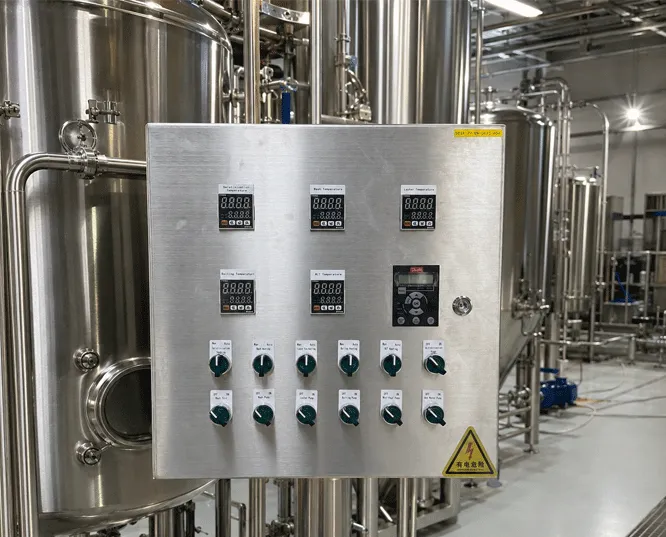
State whether the agitator runs on/off or at variable speed, whether temperature is controlled automatically, and whether level is monitored. Control requirements are configured per project. Specific control brands and levels for custom vessels are not published; request a drawing.
Step 10: Write down the site conditions
Give the destination country, available utilities, doorway and ceiling clearances, and whether you want installation guidance. ZR Brew‘s quotation depends on destination-country utilities, shipping conditions, installation requirements and applicable certification needs. Regulations differ by market, and the company exports to 30+ countries and regions, so name yours.
What ZR Brew configures on a custom vessel
The public category page lists these engineered variables for custom stainless steel vessels. Everything not listed as published below is marked accordingly.
| Parámetro |
Configurable per Project |
| Capacidad |
Yes |
| Material Grade |
Yes |
| Pressure Rating |
Yes |
| Cooling or Heating Structure |
Yes |
| Agitation |
Yes |
| Dimensions |
Yes |
| Ports and Valves |
Yes |
| Acabado superficial |
Yes |
| Aislamiento |
Yes |
| Control Requirements |
Yes |
Stated applications include brewing, fermentation, beverage mixing, liquid storage, sanitary processing and temperature-controlled production. Plain liquid storage, including water storage, follows the same worksheet with the agitator and controls steps marked “not needed”.
Price: what to expect
ZR Brew publishes no price list for custom vessels. Quotations are itemized against production capacity, vessel quantity, material grade, component selection, destination utilities, shipping, installation and certification needs.
Preguntas frecuentes
Can I get a price from capacity alone?
No. ZR Brew quotes each vessel from its configuration, and no public price list exists. A brief covering the ten items above gets an itemized quotation.
Does ZR Brew have fixed model numbers for mixing tanks?
No fixed model catalog is published for custom-engineered stainless steel vessels. Vessels are designed per project.
What is the difference between working volume and tank capacity?
Working volume is the liquid you actually process. Nominal capacity is the size label, and total internal volume is larger because of headspace. State working volume and headspace separately.
Does a double-layer tank always have a heating or cooling jacket?
No. A double wall can hold a heating or cooling medium (jacket) or insulation. Say which one you need.
Which documents should I ask for?
Ask for drawings, material certificates, pressure-test records and the applicable standards for your destination market.


 Publicado