Vodka Distillery Equipment and Process Design
ZR Brew Technical Team
Equipo de ingeniería de equipos para la elaboración de cerveza, la fermentación y las bebidas
Updated: September 23, 2026
Vodka distillery equipment must connect raw-material preparation, fermentation, distillation, rectification, spirit handling, proofing, filtration, storage, and packaging as one controlled process. The correct system depends on feedstock, batch size, product specification, utility limits, local law, and the cleaning plan rather than still capacity alone.
Vodka process flow and equipment map
| Process stage |
Core equipment |
Design decision |
| Raw-material preparation |
Grain handling, mill, cooker or mash vessel, pumps, and heat exchange |
Feedstock form, solids handling, heating method, and batch cadence. |
| Fermentación |
Fermentation tanks, cooling, transfer piping, and temperature controls |
Fermentation residence time, tank count, cleaning turnaround, and yeast handling. |
| Destilación |
Still pot or feed system, column, condenser, receivers, and controls |
Batch or continuous operation, heating source, throughput, and cut management. |
| Rectification |
Rectification column, dephlegmator, condenser, and instrumentation |
Required separation performance, reflux control, and repeatability. |
| Polishing and proofing |
Filtration, treated water system, blending/proofing tank, and measurement |
Water quality, filtration objective, mixing accuracy, and resting time. |
| Storage and packaging |
Spirit tanks, transfer equipment, filler, closure, labeler, and case handling |
Batch traceability, hazardous-area controls, package format, and line speed. |
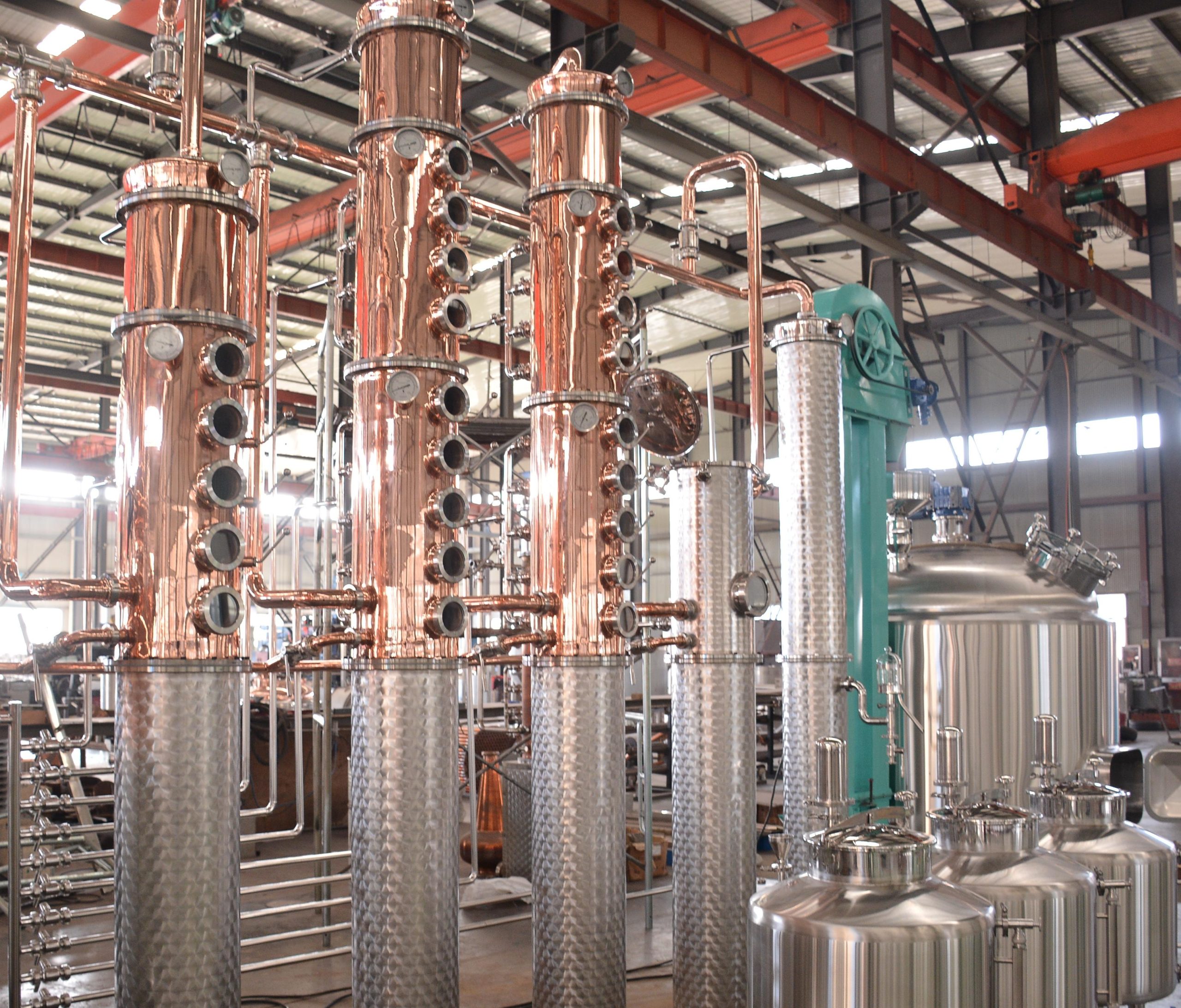
Start upstream: mash and fermentation set the still schedule
A distillation system cannot be sized independently from the fermenters. Define feedstock, fermentable volume per batch, fermentation duration, solids content, transfer method, cleaning time, and the number of batches available to the still each week. Too little fermentation capacity starves the still; excessive tank volume ties up capital and floor space.
Grain-based production may require milling, cooking, conversion, cooling, and solids-capable pumping. A process based on another permitted feedstock can require a different preparation train. The final design must follow the producer’s recipe, jurisdiction, and validated process rather than a generic equipment list.
Pot, column, and rectification equipment
The still configuration determines how feed enters, how heat is applied, how vapor and liquid contact are controlled, and how fractions are collected. Vodka production generally prioritizes repeatable separation and a clean base spirit, so column design, reflux control, condenser duty, receiver arrangement, and instrumentation deserve the same attention as vessel volume.
ZR Brew publicly lists distillery equipment from 100L to 5000L, with red copper, SUS304, SUS316, and copper-stainless hybrid options depending on the model. Published examples include a 1500L direct-fire vodka configuration and a 5000L PLC-controlled industrial vodka system. Those descriptions are model-specific; alcohol strength, throughput, energy demand, and compliance must be confirmed for the selected process.
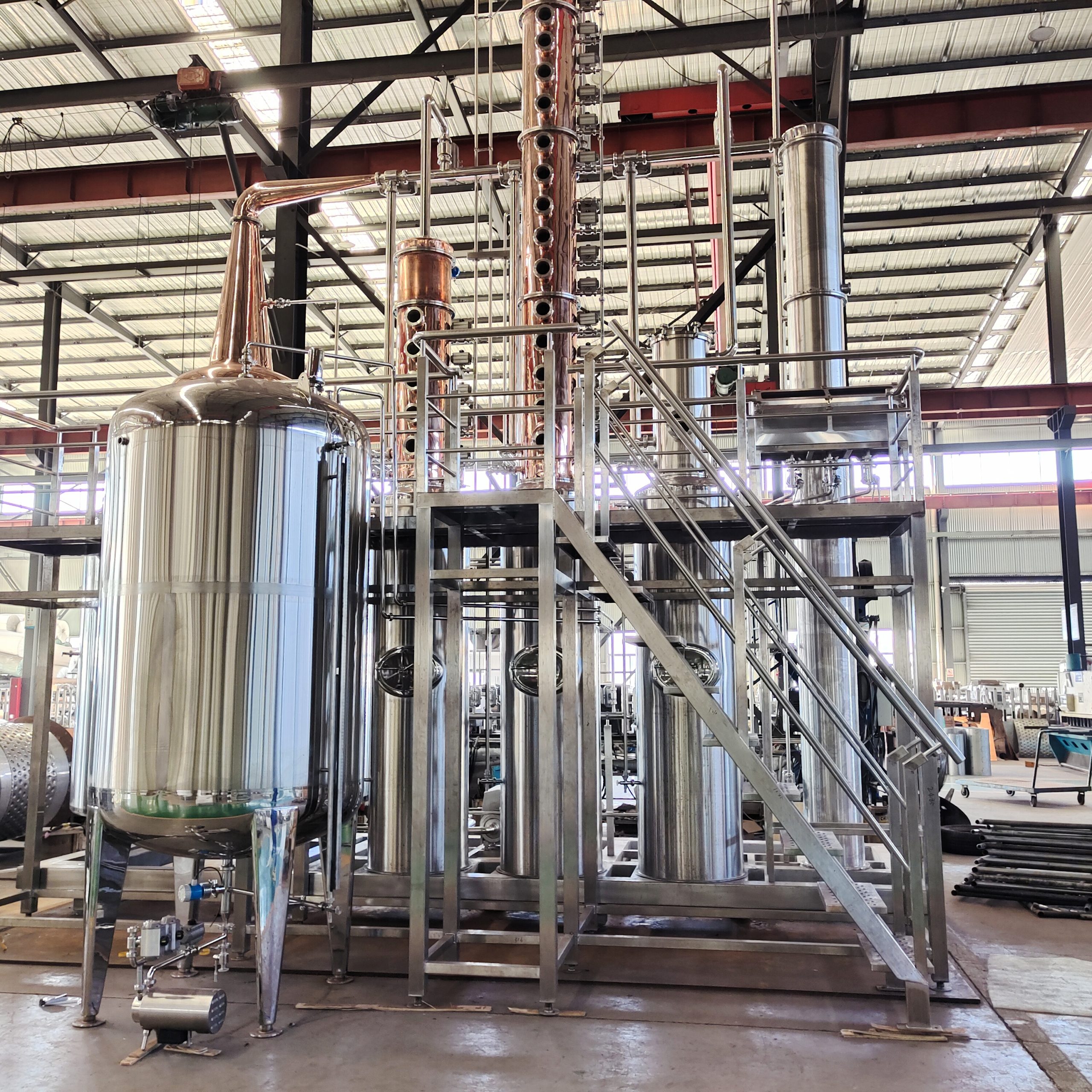
Heating and condenser utilities
Steam, direct fire, and other project-specific heating arrangements are published across ZR Brew models. Selection affects room classification, ventilation, control response, maintenance, installation, and local approval. The condenser must be matched to vapor load and available cooling-water conditions; inadequate heat rejection can restrict throughput even when the still body is large enough.
Prepare a utility schedule covering electrical supply, steam or fuel, cooling water, treated process water, compressed air, drainage, ventilation, and fire-protection interfaces. Separate clean process-water duties from cooling and cleaning circuits on the layout.
Proofing, polishing, and storage
After distillation and rectification, the production line needs controlled spirit collection, compliant storage, treated water for proofing, mixing, measurement, optional polishing, and transfer to packaging. Tank material, seals, hoses, pumps, instruments, and fittings must suit the spirit concentration at their actual service point.
Do not treat filtration as a universal recipe. Define the product objective first, then select media, temperature, flow, contact, and verification around that objective. The producer is responsible for validating sensory and analytical results and for meeting applicable labeling and composition rules.
Copper Rivet project: an upstream integration example
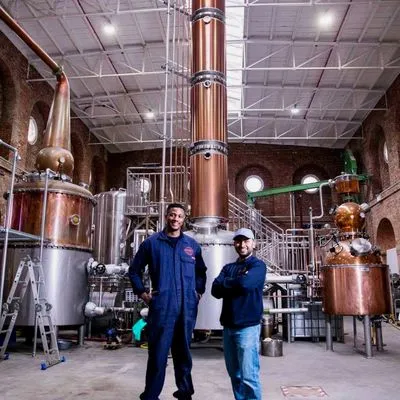
For the verified Copper Rivet Distillery project in Chatham, United Kingdom, ZR Brew supplied a 3000L distillery brewkit with a steam-heated two-vessel brewhouse, a 40HL hot-liquor tank, a cold-liquor tank, six 60HL fermentation tanks, and filtration equipment. The public record confirms a coordinated upstream brewing and fermentation system; it does not disclose production output, alcohol yield, or return on investment.
Safety, licensing, and compliance come before layout approval
Distilled-spirit facilities involve flammable liquid and vapor, pressure, heat, electrical equipment, cleaning chemicals, and regulated production records. Engage the local authority, fire professional, electrical designer, insurer, and licensing specialists before equipment is ordered. In the United States, the Alcohol and Tobacco Tax and Trade Bureau provides the official distilled spirits regulatory starting point. Requirements differ by country and site.
Company-level CE or ISO claims do not establish model-specific approval. Request the applicable declarations, material records, electrical documentation, pressure-test records, and destination-market evidence for the exact supplied equipment.
Build a project-ready vodka equipment brief
- Define feedstock, recipe, legal product category, annual target, and operating days.
- Map batch volumes and residence times from preparation through fermentation, distillation, proofing, storage, and packaging.
- Specify separation objective, still mode, heating, condenser utilities, controls, collection, and cleaning.
- List room dimensions, access, floor loading, drainage, ventilation, hazardous-area constraints, and future expansion.
- Request an itemized scope covering tanks, piping, controls, utilities, installation boundaries, documentation, training, and commissioning.
- Verify all required licenses and equipment approvals before fabrication is released.
Common planning mistakes
- Sizing the still without matching fermentation volume and weekly batch availability.
- Comparing systems by boiler volume while ignoring column configuration, condenser duty, controls, and receiver capacity.
- Leaving proofing water, storage, filtration, CIP, and bottling outside the equipment budget.
- Assuming a supplier’s company-level certificate proves compliance for every vessel and destination.
- Approving a layout before ventilation, fire protection, electrical classification, drainage, and access are reviewed.
Preguntas frecuentes
What equipment is required to make vodka commercially?
A complete line can include feedstock preparation, fermentation tanks, distillation and rectification equipment, condensers and receivers, spirit-safe transfer, treated-water and proofing equipment, filtration, storage, CIP, controls, and packaging. The exact scope depends on process and law.
Is stainless steel or copper better for vodka equipment?
Material selection is component- and process-specific. ZR Brew publishes copper, SUS304, SUS316, and hybrid configurations. Compare product-contact duty, fabrication, cleaning, maintenance, sulfur-management objectives, and lifecycle cost rather than choosing one material for the entire plant.
How should vodka still capacity be selected?
Calculate feed available per operating period, required separation stages, heat-up and run time, cleaning and changeover time, condenser capacity, storage, staffing, and packaging demand. Nominal vessel size alone does not determine output.
Can one still produce several spirits?
Some configurations are designed for multiple spirit styles, but flexibility depends on column arrangement, removable components, controls, cleaning, and the producer’s approved process. Confirm the exact operating modes before purchase.
Explore ZR Brew’s distillery equipment range and review the commercial distillery equipment selection guide. For a process-specific equipment schedule and layout, ponte en contacto con el equipo del proyecto ZR Brew.
Author: ZR Brew Technical Team, Brewing, Fermentation and Beverage Equipment Engineering Team. The team supports equipment selection, process planning, manufacturing, installation, and commissioning for distillery and beverage projects.


 Publicado