

 Get Free Quote
Up to 8 Batches Per Day at 2,500L Batch Volume
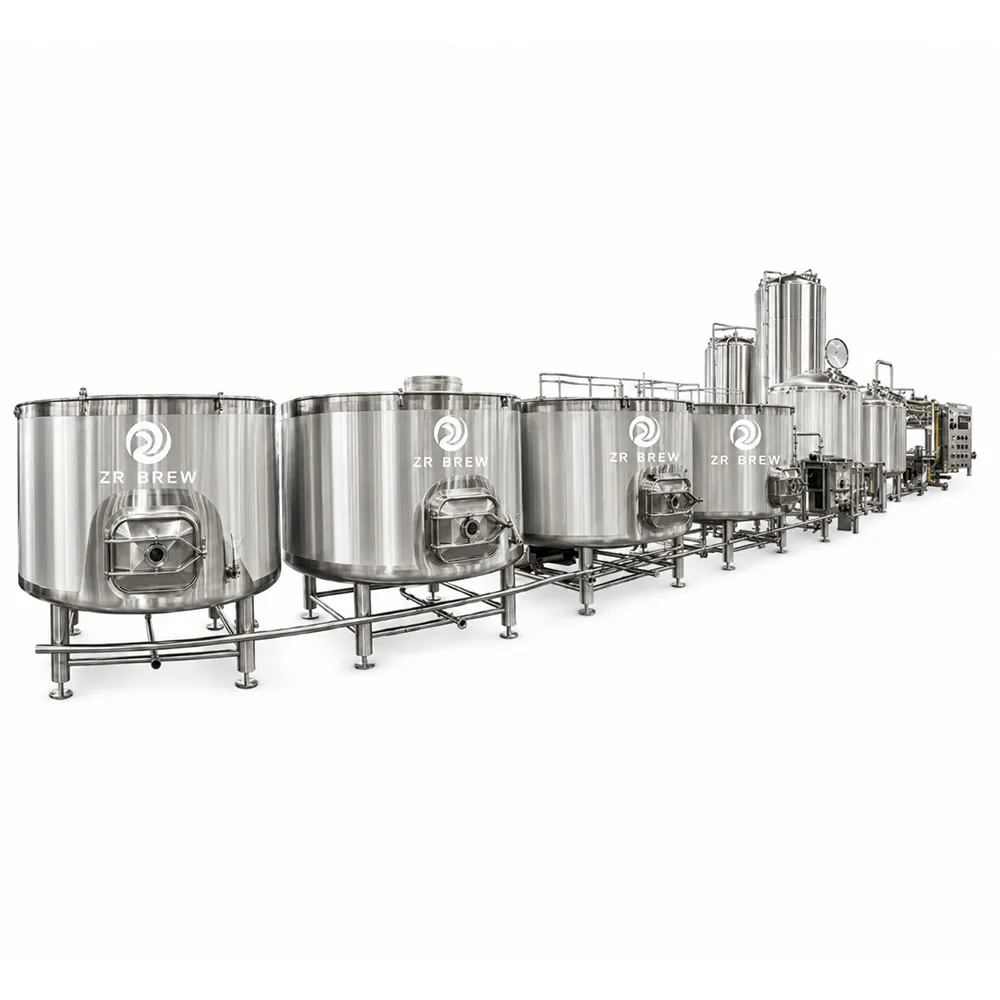
The ZR-KBC-2500L supports production of up to 8 separate 2,500L batches in a single operating day — a confirmed throughput specification that positions this system for producers requiring reliable, high-volume kombucha output on a continuous commercial production schedule. This output level is suitable for beverage brands supplying regional retail, food service, or export markets.
SUS304 Sanitary Stainless Steel for Food-Grade Compliance
The system is constructed from SUS304 food-grade stainless steel as standard, with SUS316 available for production environments requiring enhanced acid and chloride resistance. Both options meet the material standards expected for commercial kombucha production, where the acidic pH of the fermentation liquid places specific demands on vessel material durability and surface finish.
Open and Pressure Fermenter Configuration for Kombucha Process Flexibility
The fermentation system includes both an open fermenter and a pressure fermenter as standard — a configuration that reflects the specific dual-stage fermentation requirements of commercial kombucha production: primary aerobic fermentation followed by secondary carbonation under pressure. This integrated fermenter combination eliminates the need for separate equipment sourcing across fermentation stages.
Steam Heating with Kettle Heat Exchanger for Consistent Thermal Management
The brewhouse kettle is equipped with steam heating, an insulation layer, and a plate heat exchanger. This heating configuration ensures even thermal distribution for the sweet tea brewing stage, with the heat exchanger enabling rapid cool-down to fermentation temperature — reducing cycle time between brew and fermentation.
PLC Automation Option for Full Production Line Control
Unlike the semi-automatic PID configurations used across the ZR BREW distiller series, the ZR-KBC-2500L offers PLC Siemens full automation as a confirmed available option. This allows buyers to automate temperature control, batch sequencing, CIP cycles, and fermentation monitoring — reducing labor requirements for high-throughput production shifts.
Integrated CIP System for Hygienic, Efficient Cleaning Between Batches
The standard configuration includes a dedicated CIP cleaning system that enables sanitation of the kettle, fermentation tanks, and pipe circuits without full disassembly. For a system running up to 8 batches per day, efficient CIP capability is not optional — it is a direct operational requirement for maintaining the consistent microbial hygiene standards that kombucha production demands.