Financing Brewery Equipment: Loans vs Leasing
ZR Brewing Technical Team
Team für Brau-, Gär- und Getränketechnik
Updated: September 9, 2026
Financing brewery equipment is a capacity and cash-flow decision, not simply a choice between a bank loan and a lease. A brewery startup should compare the useful life of each vessel, the timing of deposits and installation, the expected production ramp, and the consequences of taking on collateral or a long fixed payment.
Start with a project cash-flow map
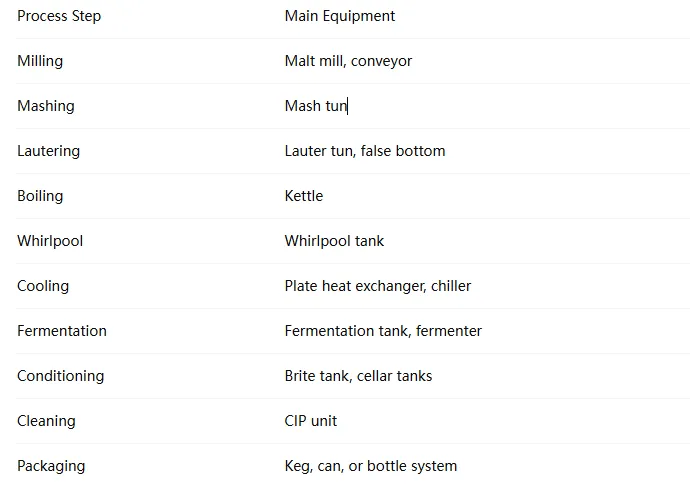
List the brewhouse, hot liquor tank, cellar vessels, glycol system, packaging line, utilities, freight, installation and commissioning. Then separate the cash events: design deposit, fabrication milestones, shipping, site preparation, final acceptance and working capital for the first production cycles. A financing plan that covers equipment but ignores installation and utilities can create a second funding gap.

Use the brewery equipment cost guide to build a line-item budget, then request a supplier quotation that states capacity, materials, controls, delivery scope and commissioning assumptions.
When a brewery equipment loan fits
A term loan is often suitable when the equipment will remain productive for many years and the brewery can contribute a deposit. The borrower owns the equipment, may have more flexibility to modify it, and can align the repayment period with the expected service life. The trade-off is underwriting, interest expense, possible personal or business guarantees, and security over equipment or other assets.
- Choose a repayment period that matches realistic useful life rather than the shortest available term.
- Model interest-rate changes and a slower-than-planned taproom or wholesale ramp.
- Keep a contingency for commissioning changes, spare parts and compliance work.
When leasing brewery equipment fits
A lease can reduce the initial cash payment and may simplify budgeting during a staged capacity build. It can be useful for a packaging or utility module that will be refreshed on a predictable cycle. Read the end-of-term purchase option, maintenance obligations, insurance requirements, residual-value assumptions and early-termination language carefully. A low monthly payment can still produce a high total cost.
Staged purchases and refurbished equipment
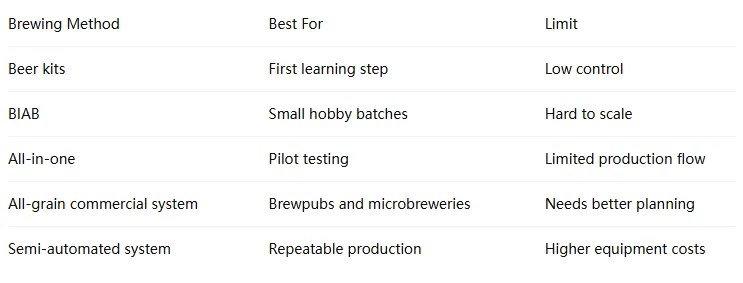
Staging purchases can protect cash flow: fund the brewhouse and essential cellar first, then add tanks or packaging automation when demand is proven. Confirm that the first phase leaves space, electrical capacity, drainage and controls for the next phase. Refurbished equipment can lower the capital requirement, but budget for inspection, replacement seals, control upgrades, freight and validation. Compare the warranty and commissioning support with a new system before deciding on headline price alone.
A practical loan-versus-lease checklist
- Calculate total cash paid, including fees, interest, deposits, freight, tax and installation.
- Stress-test production, selling price and payment timing at a slower ramp.
- Confirm who owns the equipment, who insures it and who pays for maintenance.
- Check collateral, guarantees, covenants and the cost of early repayment.
- Ask the equipment supplier to confirm scope, acceptance tests, training and service response.
For safety and installation planning, review the Health and Safety Executive lifting-planning guidance alongside the rules that apply in your jurisdiction.
Build a finance-ready equipment brief
Give lenders and lessors one consistent brief: target annual output, product mix, vessel sizes, utilities, site readiness, delivery milestones, supplier warranty and the founder’s cash contribution. Ask ZR Brewing to validate the equipment scope and staged expansion assumptions before you compare offers. The best financing structure is the one that keeps the brewery solvent through commissioning while preserving room to expand when demand is real.


 Veröffentlicht