Brewery glycol chiller sizing starts with the cooling jobs that can happen at the same time, not with brewhouse volume alone. List every tank, product temperature, cooling time, room load, pipe loss, and future vessel before converting the peak load into chiller capacity.
Published by the ZR Brew Technical Team | Updated August 14, 2026
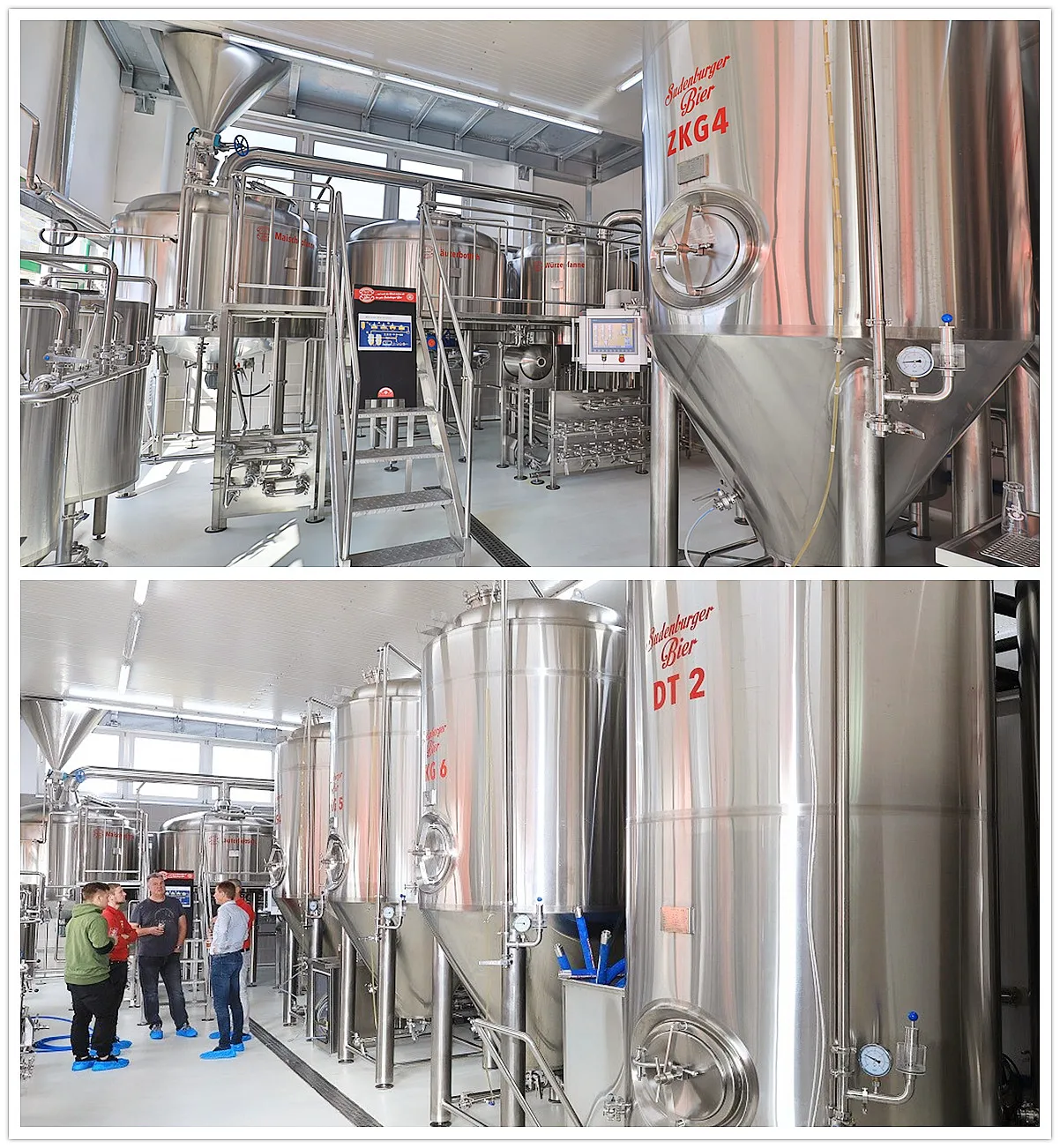
A 20HL brewery project in Sweden with fermentation capacity and glycol-cooling support.
What Brewery Glycol Chiller Sizing Must Cover
A brewery glycol loop usually serves several loads with different timing. Fermentation removes metabolic heat over many hours. Crash cooling removes stored heat from beer and stainless steel in a shorter window. Cold rooms, bright tanks, transfer lines, and exposed piping add separate loads. The chiller must handle the credible simultaneous peak, while pumps and distribution piping must deliver enough flow to the active users.
This distinction matters because two breweries with the same annual output can need different chillers. A brewery that crashes several tanks overnight has a different peak from one that staggers cooling across the week. Begin with the production schedule, then calculate the equipment.
Step 1: Build a Brewery Glycol Chiller Sizing Schedule
Create one row for every cooled vessel or area. Record usable volume, starting temperature, target temperature, allowed cooling time, coolant supply temperature, and the hours when that load is active. Include fermentation tanks, bright beer tanks, cold-liquor tanks, cold rooms, process-water loads, and packaged-product cooling where applicable.
Load
Input needed
Timing question
Common omission
Fermentation heat
Batch size and fermentation profile
Which vessels ferment together?
Counting only crash cooling
Crash cooling
Product mass, temperature drop, and hours
How many tanks crash at once?
Ignoring vessel metal
Bright tank holding
Tank size and cellar conditions
Is the tank jacket always active?
Assuming zero heat gain
Cold room
Envelope, doors, lights, people, and product
When are doors and packaging busiest?
Using floor area alone
Piping and reservoir
Pipe length, insulation, ambient temperature
Does the loop run continuously?
Leaving distribution losses out
Future tanks
Planned volume and process duty
Will they overlap current production?
Adding capacity without adding flow
Use the busiest realistic production block rather than adding every nameplate load. Adding impossible combinations oversizes the plant; omitting overlapping loads creates slow crash cooling and unstable cellar temperatures.
Step 2: Calculate the Product Cooling Load
For beer or wort, calculate sensible cooling with:
Q = m x Cp x Delta T / t
Here, m is the product mass, Cp is its specific heat, Delta T is the required temperature reduction, and t is the permitted cooling time. Keep units consistent. The result can be converted to kW, BTU/h, or refrigeration tons for comparison with supplier data.
Add the thermal mass of the tank when the vessel itself must cool during the same period. Stainless steel has a lower specific heat than liquid, but a large vessel shell, cone, fittings, and internal hardware still contribute. Use the equipment drawing or supplier mass rather than guessing.
Keeping this calculation visible makes brewery glycol chiller sizing auditable when a tank size, cooling window, or product temperature changes.
Brewery Glycol Chiller Sizing Example Structure
Suppose the schedule calls for one fermenter to move from its current beer temperature to the crash target within a defined number of hours. Calculate the beer load, calculate the vessel load, and divide both by that same time. Do not publish a final capacity from volume alone. The product temperature, tank construction, cooling window, and glycol temperature are required inputs.
Step 3: Add Fermentation Heat
Fermentation is not a one-time temperature change. Yeast releases heat while converting sugars, and the rate changes through the fermentation cycle. The design load should reflect the active phase and the number of vessels that can reach that phase together.
Request a heat-release profile from the brewery process engineer, yeast supplier, or an experienced refrigeration designer. When no verified profile is available, mark the input as provisional and run a sensitivity check. Do not substitute an unexplained fixed allowance for all beer styles and gravities.
Step 4: Include Rooms, Pipes, Pumps, and Ambient Heat
A chiller plant also absorbs heat that does not originate in the beer. Cold-room calculations should include walls, roof, floor, door openings, infiltration, lights, people, motors, and warm product entering the room. A refrigeration contractor can calculate these items from the building envelope and operating schedule.
For the glycol loop, include heat gain through the reservoir and distribution piping. Insulation thickness, vapor sealing, pipe length, ambient humidity, and outdoor routing affect this load. Pump energy also enters the fluid as heat. Long, poorly insulated runs can consume capacity that was expected to cool tanks.
Use glycol concentration and thermal-property data from the selected fluid supplier. Increasing concentration changes heat capacity, viscosity, pressure drop, and pump duty. The concentration must protect against the lowest expected fluid temperature without being higher than necessary. The Dow heat-transfer-fluid resource library is one example of manufacturer property and application data; use the documentation for the fluid actually selected.
Step 5: Find the Credible Simultaneous Peak
Place each calculated load on a 24-hour or weekly schedule. Add loads that genuinely overlap. A useful scenario might include one tank in crash cooling, several active fermentations, the cold room at its busy period, and normal pipe heat gain. A second scenario might test two crashes after a production delay.
The largest credible total becomes the base peak load. Document why each load is included. This makes the selection reviewable and allows the brewery to change the schedule when the installed chiller approaches its limit.
This schedule is the decision point in brewery glycol chiller sizing: it separates loads that can overlap from equipment that is merely connected to the loop.
Step 6: Apply Design Margin Without Hiding Missing Data
A margin covers reasonable uncertainty, fouling, changing ambient conditions, and measured variation. It should not replace missing calculations. First establish the load from documented inputs; then agree on margin with the refrigeration designer and equipment supplier.
Expansion should be modeled as a separate scenario. Add the planned tanks, their process timing, extra pipe length, and required pump flow. A larger compressor alone will not help if the reservoir, pump, main header, branch valves, or electrical service cannot support the future load.
Step 7: Check Capacity at the Actual Design Conditions
Chiller nameplate capacity changes with leaving-fluid temperature and outdoor or condenser conditions. Compare selections at the required glycol supply temperature, concentration, flow rate, and the site’s summer design condition. A catalog rating at warmer fluid or cooler ambient air is not the brewery’s usable capacity.
Ask the supplier to state:
net cooling capacity at the specified leaving and return fluid temperatures;
glycol type and concentration used for the rating;
required evaporator flow and pressure drop;
ambient or condenser-water condition;
compressor staging and minimum stable load;
pump head at design flow, reservoir volume, controls, and electrical demand.
For refrigeration-system design references and climatic design conditions, consult the current ASHRAE Handbook and have a qualified refrigeration professional apply the relevant local requirements.
Step 8: Size Flow and Distribution With the Chiller
Cooling capacity and glycol flow are linked by the fluid temperature difference across the load. After establishing the peak kW or BTU/h, use the selected glycol properties and design Delta T to calculate total flow. Then calculate pressure drop through the longest or most restrictive circuit, including pipe, fittings, control valves, jackets, and heat exchangers.
Verify each tank branch can be balanced. Oversized mains with uncontrolled short branches may still starve a remote jacket. Variable-speed pumping, differential-pressure control, and properly selected valves can improve part-load operation, but the control sequence must match the brewery schedule.
A complete brewery glycol chiller sizing review therefore closes with both thermal capacity and hydraulic performance, not compressor tons alone.
How the West Coast Bryggeri Configuration Informs the Load List
ZR Brew’s documented West Coast Bryggeri project in Sweden uses a 20HL brewing system, a 40HL hot-liquor tank, two 20HL fermentation tanks, eight 40HL fermentation tanks, a cold-liquor tank, and glycol-cooling support. This configuration shows why brewhouse size is only the starting point: the fermentation inventory and operating schedule drive the possible simultaneous cooling load.
The public project record does not disclose chiller capacity, production increase, or return on investment, so those values should not be inferred. For a comparable project, the sizing worksheet must use the buyer’s fermentation profile, crash schedule, utility temperatures, climate, and expansion plan.
Common Brewery Glycol Chiller Sizing Mistakes
Sizing from brewhouse volume. Fermentation and crash schedules can dominate the peak.
Using catalog capacity without rating conditions. Leaving-fluid temperature and ambient conditions change available output.
Ignoring tank metal and piping heat gain. Both extend pull-down time.
Adding every load at 100 percent. This can produce an unrealistic and inefficient selection.
Adding a percentage for expansion. Future tanks also change flow, pipe, controls, power, and scheduling.
Checking compressor capacity but not pump head. Remote jackets still need design flow.
Choosing glycol concentration by habit. Fluid properties must match freeze protection and operating temperature.
tank list, working volumes, jacket areas, and vessel masses;
wort and beer starting and target temperatures;
fermentation profiles and maximum simultaneous active tanks;
crash-cooling schedule and permitted pull-down time;
cold-room dimensions, insulation, door use, and product load;
glycol type, concentration, supply temperature, and return target;
pipe lengths, elevations, insulation, fittings, and valve schedule;
site summer conditions, power supply, and condenser-water data if used;
planned future tanks and the date they are expected to operate.
ZR Brew can coordinate the tank list, utility interfaces, and layout information for a turnkey brewery project. Final refrigeration calculations and local code compliance should be reviewed by a qualified refrigeration professional. Send the production schedule and equipment list to begin a project-specific review.
Before requesting quotations, keep the brewery glycol chiller sizing worksheet with the production schedule so every supplier prices the same operating conditions.
Frequently Asked Questions
Can a brewery glycol chiller be sized only by brewhouse capacity?
No. Brewhouse size does not show how many fermenters run together, how quickly tanks must crash, or how much heat enters through rooms and piping. Brewery glycol chiller sizing requires the production and cooling schedule.
Should all cooling loads be added at full capacity?
Only loads that can occur together should be combined. Build credible operating scenarios and use the largest documented simultaneous peak.
Why does glycol concentration affect chiller and pump selection?
Concentration changes freeze protection, heat capacity, viscosity, heat transfer, and pressure drop. Use the selected fluid supplier’s data at the actual operating temperature.
How should future expansion be included?
Add the planned vessels and their timing to a second load schedule. Recheck chiller capacity, pump flow and head, reservoir, headers, valves, controls, and electrical service.
What capacity should be compared on supplier quotations?
Compare net capacity at the same glycol type, concentration, leaving temperature, return temperature, flow, and site design ambient or condenser condition. Nameplate tons without those conditions are not directly comparable.


 Pubblicato