Copper Distillery Equipment vs Stainless Steel
ZR Brew Technical Team
Brewing, Fermentation and Beverage Equipment Engineering Team
Updated: October 9, 2026
Copper distillery equipment, stainless steel stills and hybrid systems each solve different process and maintenance priorities. The best material choice depends on where vapor or liquid contact occurs, the spirit style, cleaning method, fabrication requirements, local compliance and lifecycle maintenance. A practical specification can use more than one material in the same system.
Copper, stainless steel and hybrid systems compared
| Factor |
Copper |
Stainless steel |
Hybrid |
| Process role |
Provides copper contact in selected vapor or liquid paths. |
Offers stable, corrosion-resistant vessel and piping construction. |
Places copper where process contact is required and stainless where durability or fabrication is preferred. |
| Cleaning |
Requires chemistry and methods suitable for copper surfaces. |
Generally supports established stainless cleaning programs. |
Cleaning must be compatible with both materials and all seals. |
| Maintenance |
Needs surface inspection and appropriate care. |
Often selected for durability and routine sanitation. |
Requires attention to material transitions and component-specific service. |
| Fabrication |
Useful for still pots, helmets, columns and vapor-path components. |
Common for vessels, frames, piping, tanks and utilities. |
Allows component-by-component optimization. |
| Cost decision |
Evaluate initial fabrication and ongoing care. |
Evaluate fabrication, finish and service environment. |
Compare total installed scope, not material price alone. |
Why distillers specify copper contact
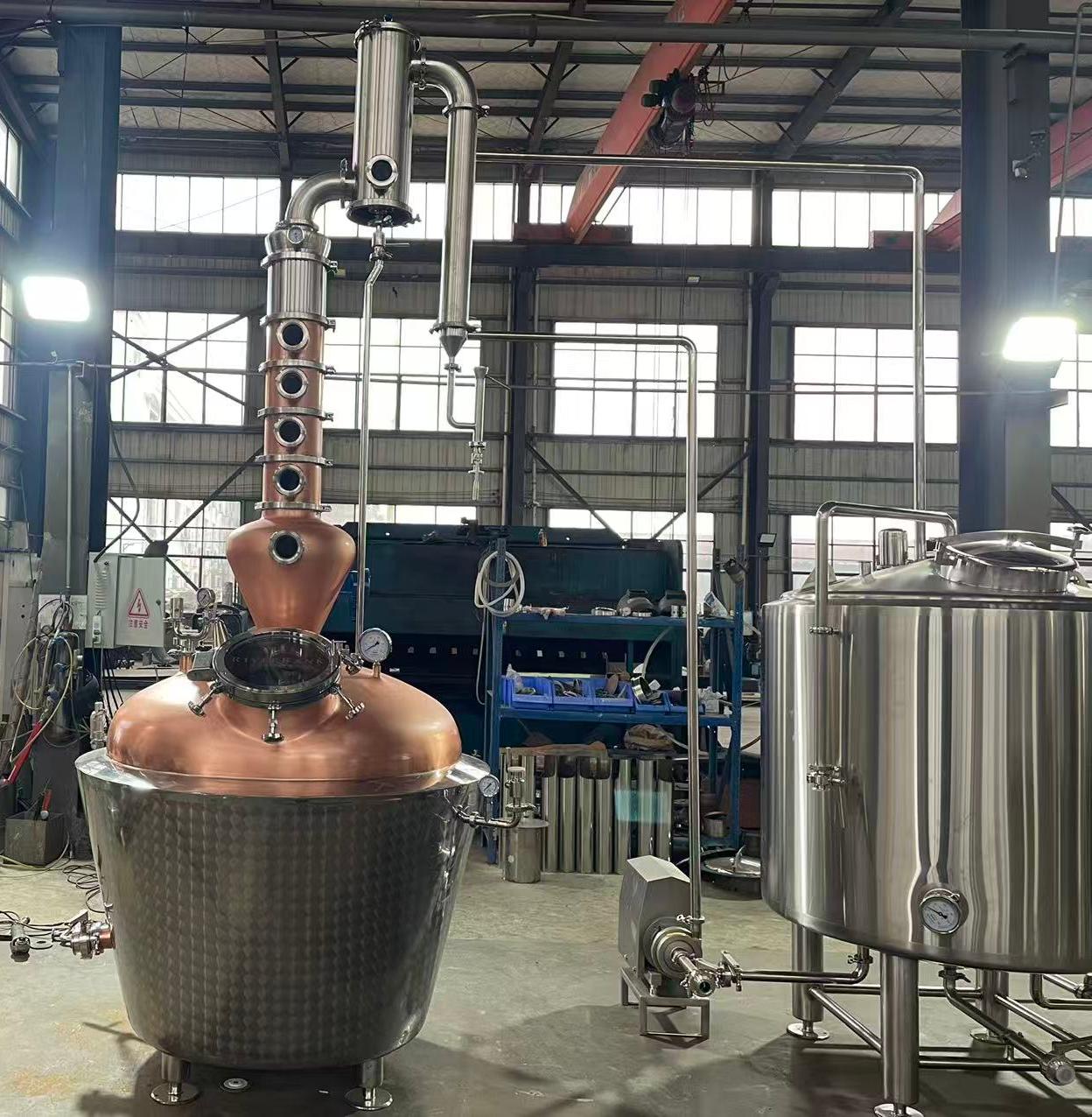
Copper is commonly selected for parts of the still where vapor or liquid contact supports the producer’s process objectives, including management of sulfur-related compounds. The result depends on feedstock, fermentation, still design, contact area, operation and cleaning; copper alone does not guarantee a particular flavor or product quality.
Specify where copper contact is required: still pot, helmet, onion head, swan neck, column sections, plates or other components. That is more useful than asking whether the entire system is simply “copper.”
Where stainless steel is practical
SUS304 and SUS316 can be appropriate for tanks, vessels, frames, piping and selected still components, subject to the actual service, concentration, temperature and cleaning chemistry. Stainless construction can simplify fabrication and routine sanitation in many plant areas, but grade and finish must be confirmed for each product-contact duty.
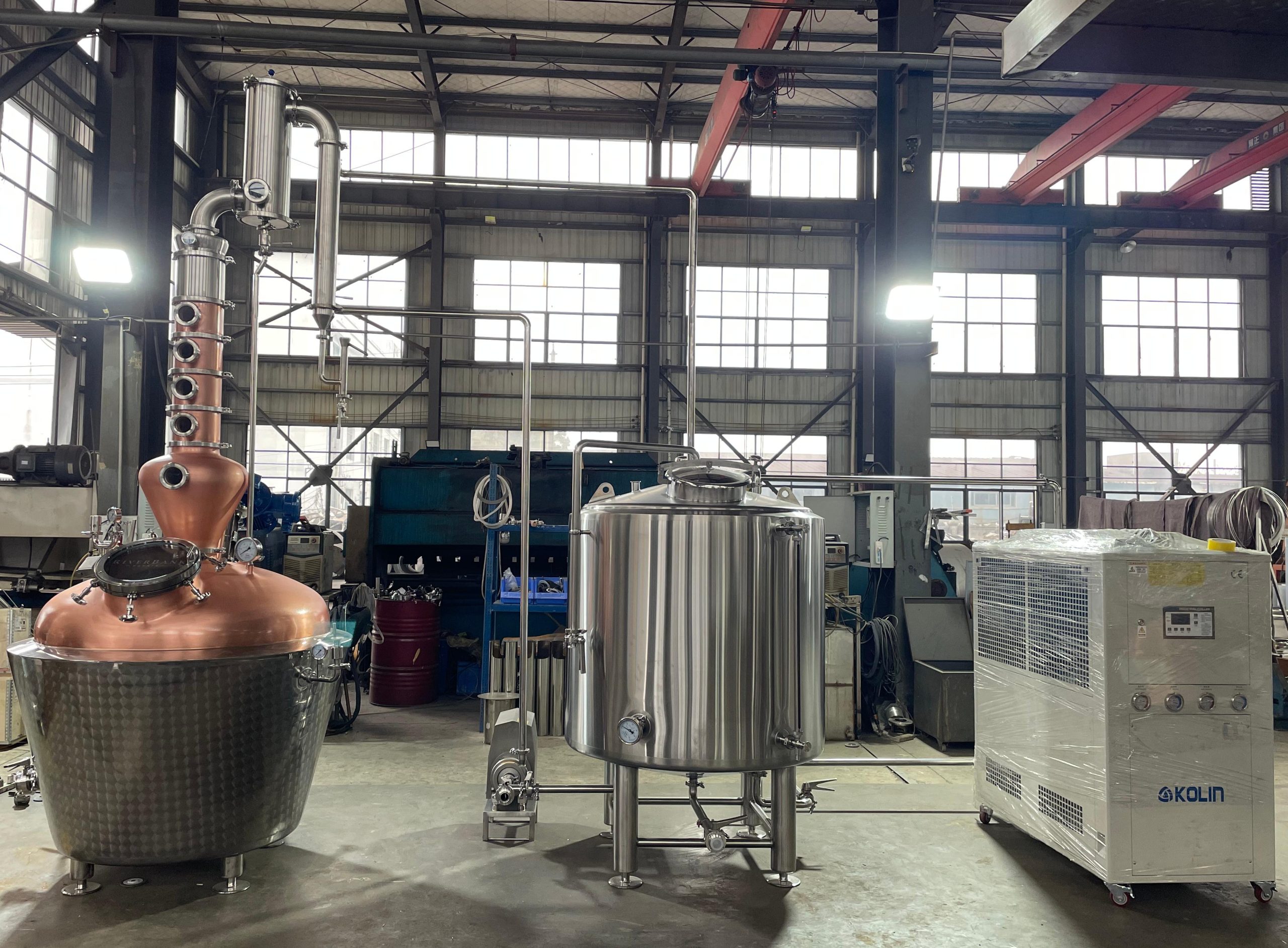
A stainless vessel can still be part of a process that uses deliberate copper contact elsewhere. This is why hybrid systems are common in commercial equipment planning.
Hybrid construction: specify by component
A hybrid design may combine a stainless pot with copper helmet or column sections, stainless collection and storage vessels, and copper components in the selected vapor path. The exact arrangement should follow the recipe and operating modes. Confirm joints, gaskets, drains, inspection access, cleaning and replacement requirements at each material transition.
ZR Brew publishes distillery equipment from approximately 100L to 5000L with red copper, SUS304, SUS316 and copper-stainless hybrid options depending on the model. Configurable components include still pots, onion heads, swan necks, columns, dephlegmators, gin baskets, condensers, CIP, piping and collection tanks.
Cleaning and maintenance differences
Copper surfaces should be inspected and cleaned with methods approved for the equipment and process. Avoid transferring a stainless-only cleaning program without confirming compatibility. Stainless systems also require correct concentration, temperature, contact time, rinsing and verification; “stainless” does not mean maintenance-free.
For mixed-material systems, document separate limits for copper, stainless steel, seals, sight glasses and instruments. The CIP plan must reach every product-contact surface while remaining drainable and verifiable.
Lifecycle cost questions to ask
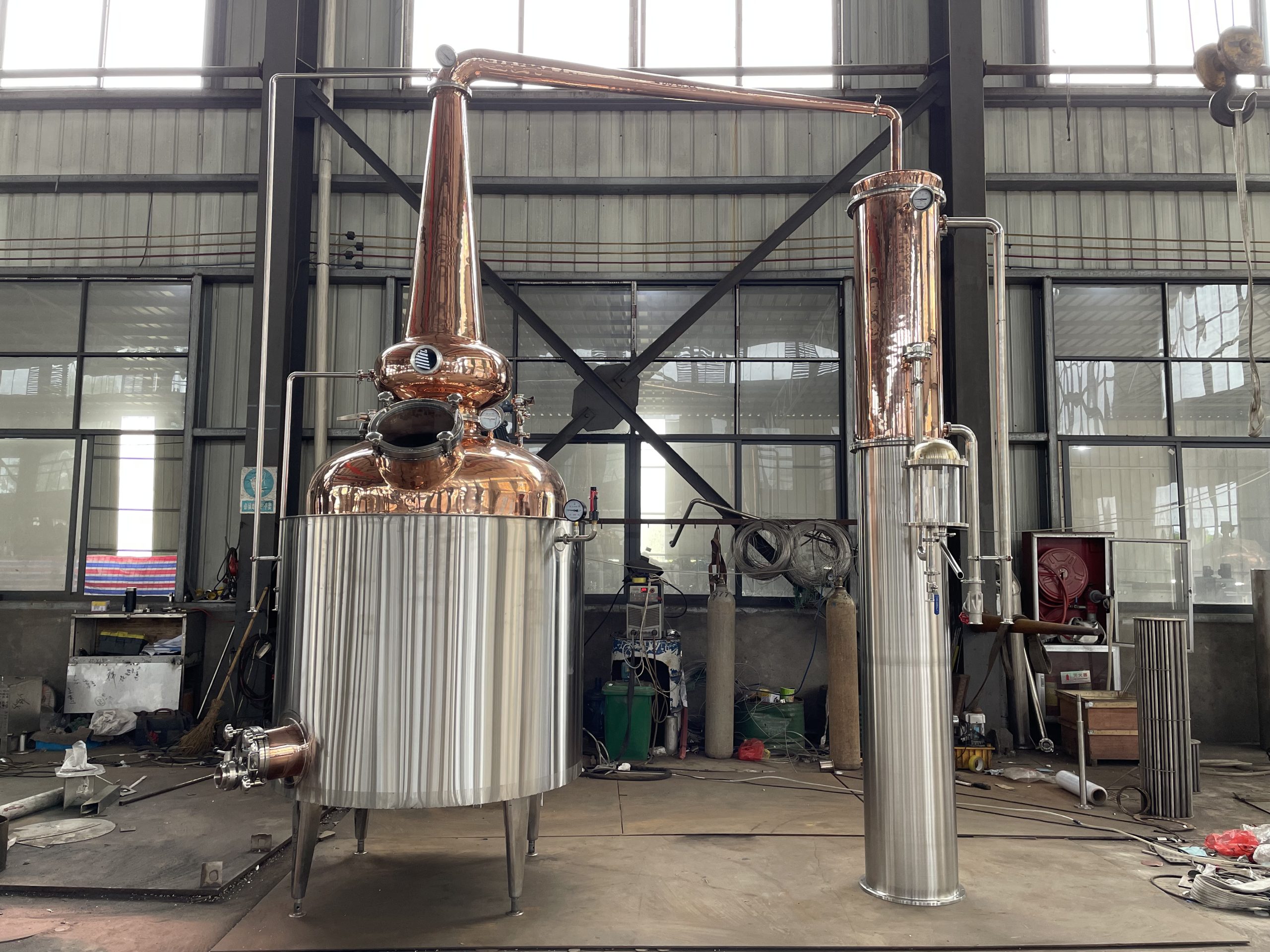
- Which components genuinely require copper contact for the intended process?
- What stainless grade, surface finish and welding documentation are included?
- How will each material be cleaned, inspected and repaired?
- Are replacement parts and skilled service available for the selected construction?
- Do the condenser, receivers, tanks, piping and controls match the same operating scope?
- Which model-specific compliance documents apply at the destination?
Safety and compliance
Material choice does not replace pressure, fire, electrical and licensing review. Distilleries handle heat, flammable liquid and vapor, pressure and cleaning chemicals. Engage qualified local specialists before approving the layout or fabrication. In the United States, the TTB distilled spirits resource is an official regulatory starting point.
Company-level CE or ISO claims do not prove model-level certification. Request applicable declarations, material records, pressure-test documents and electrical information for the exact supplied equipment.
FAQ
Is copper always better than stainless steel for a still?
No. Copper and stainless steel perform different roles. The appropriate choice depends on the process, contact location, cleaning, fabrication and maintenance plan.
Can a stainless steel still include copper contact?
Yes. Hybrid systems can use copper in selected vapor-path components and stainless steel in vessels, piping or support equipment. The configuration must be specified component by component.
Does copper equipment require more maintenance?
Copper requires material-appropriate inspection and cleaning. Maintenance frequency depends on use, process conditions and cleaning practices; compare the full lifecycle plan rather than assuming one universal interval.
Explore ZR Brew’s distillery equipment range and complete craft distillery planning guide. For a component-level material schedule, contact the ZR Brew project team.
Author: ZR Brew Technical Team, Brewing, Fermentation and Beverage Equipment Engineering Team.


 Published