Specifying a 45HL–150HL commercial system means choosing brewhouse vessel count, heating method, and control level against your target batches per day, not picking a single “commercial” machine size. Published four-vessel configurations at 20HL–50HL support up to roughly six batches per day; larger systems need the same capacity math worked through.
What “45HL–150HL Commercial” Actually Covers
Brewery equipment is generally split into four capacity bands: home and pilot systems at 50L–200L, nano brewery systems at 2HL–10HL, microbrewery systems at 12HL–40HL, and commercial brewery systems at 45HL–150HL. The full standard project range runs from 50L pilot systems up to 150HL commercial installations, covering two-vessel, three-vessel, four-vessel, and five-vessel brewhouse structures depending on the target scale.
A practical way to approach a commercial-scale spec:
- Fix your target output in barrels or hectoliters per year, then back-calculate batches per week.
- Pick a vessel count (two through five) based on how many batches per day that output requires.
- Choose a heating method against your site’s utility access (electric supply, steam boiler, or gas/direct-fire).
- Decide between PID and PLC control based on batch count and staffing model.
- Confirm material grade, working pressure, and automation component brand before requesting a formal quotation.

Vessel Count: Two, Three, Four, or Five Vessels
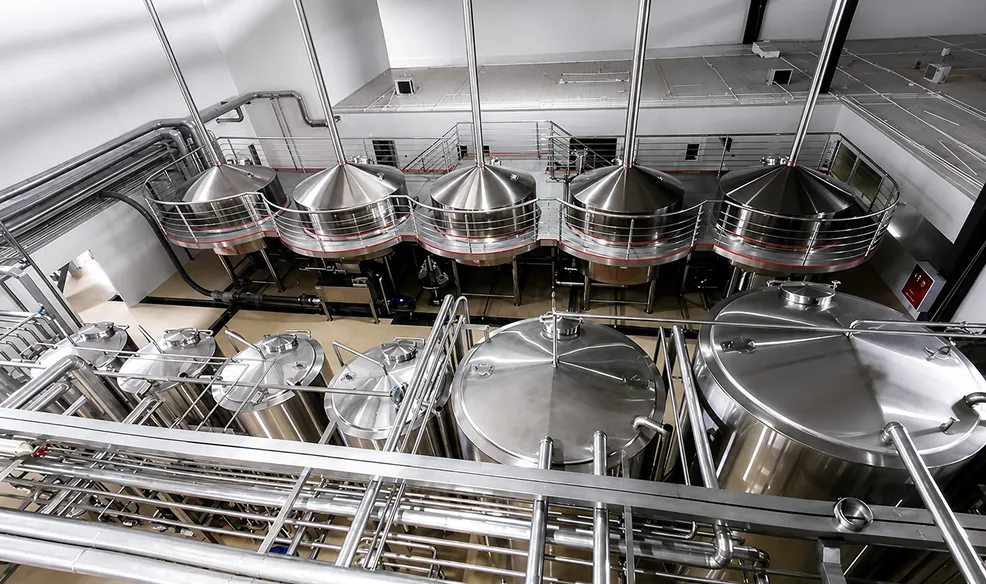
More vessels generally mean shorter turnaround per batch because mashing, lautering, boiling, and whirlpooling can overlap across separate tanks rather than sharing one or two. The trade-off is capital cost and floor space — a five-vessel brewhouse costs more and needs more room than a two-vessel system producing the same annual volume, just spread over more brew days.
At commercial scale, this decision matters more than at nano or micro scale because the gap between “just enough vessels” and “one more vessel” translates into real throughput differences. A four-vessel structure is a common mid-point: enough separation to avoid one process step blocking the next, without the footprint of a five-vessel system.

Batches Per Day: What’s Published, and Where the Data Stops
This is the number most commercial buyers actually care about, and it’s also where public information runs out fastest. Published configuration data covers two points: a 10HL four-vessel system supporting up to approximately four batches per day, and a 20HL–50HL four-vessel system designed for up to approximately six batches per day — both subject to the selected process, operating schedule, and system configuration.
That second figure sits right at the edge of the 45HL–150HL commercial band on its lower end. For 60HL, 100HL, or 150HL configurations, batches-per-day figures are not publicly disclosed. That’s not evasive — it genuinely depends on mash regime, lautering method, wort transfer piping diameter, and CIP cycle length, all of which are project-specific at this scale. If a supplier hands you a single batches-per-day number for a 100HL system without asking about your process first, treat it as a starting estimate, not a spec.
Heating Method Trade-offs at Commercial Volume
Heating options published for brewery equipment include electric, steam, and direct-fire, selected according to system size and site conditions.
Electric heating is the simplest to install where three-phase power is already adequate, and it avoids boiler permitting. At commercial batch sizes, though, the electrical load climbs fast, and some sites can’t supply enough amperage without an infrastructure upgrade.
Steam heating scales well for larger, multi-vessel commercial systems and is often paired with a central steam generator serving several tanks at once — useful when you’re also running a hot liquor tank and CIP system off the same boiler. The trade-off is the boiler itself: capital cost, maintenance, and in some jurisdictions a separate compliance and inspection regime.
Direct-fire heating keeps upfront cost lower in some configurations but concentrates heat unevenly if the burner and vessel design aren’t matched carefully, and it ties you to a gas supply.
None of these is a universal right answer at 45HL–150HL. The choice depends on what utilities your site already has, not on which method is theoretically “most efficient.”
PID vs PLC Control: Where the Line Actually Sits
Control options are PID or PLC, with automation components sourced from Siemens, Schneider, Allen-Bradley, or another agreed brand depending on the project. PID control handles individual temperature and process loops well and keeps the system simpler to operate and troubleshoot — it’s a reasonable fit where one or two people are running each batch manually through the sequence.
PLC control coordinates multiple loops and sequences across the whole brewhouse, which starts to matter once you’re running several batches a day and can’t afford an operator manually walking each vessel through its steps. At 45HL–150HL, six batches a day with a four-vessel brewhouse means overlapping process stages happening simultaneously — that’s where PLC sequencing earns its cost premium over PID.
Compared with the supplier-catalogue pages that dominate current search results for commercial brewing equipment, this is usually the trade-off left unexplained: control level isn’t a checkbox, it’s a function of how many overlapping batches your vessel count and schedule actually produce.
Material and Construction
Brewery equipment is manufactured in food-grade stainless steel, normally SUS304, with other materials subject to project confirmation. At commercial scale this is standard practice across the industry — SUS316 or heavier gauge material would only apply to specific process requirements (certain acidic adjuncts, for example), and that’s a project-level conversation, not a default spec.
| Category |
Batch Range |
Typical Vessel Count |
Material |
Heating |
Control |
Published Batches/Day |
| Home & Pilot |
50L–200L |
2-vessel |
SUS304 |
Elettrico |
PID |
Not publicly disclosed |
| Nano Brewery |
2HL–10HL |
2 to 3-vessel |
SUS304 |
Electric, steam |
PID or PLC |
Not publicly disclosed |
| Microbrewery |
12HL–40HL |
3 to 4-vessel |
SUS304 |
Electric, steam, direct-fire |
PID or PLC |
Up to ~4 (10HL, 4-vessel) |
| Commercial |
45HL–150HL |
4 to 5-vessel |
SUS304 (SUS316 on request) |
Steam, electric, direct-fire |
PID or PLC |
Up to ~6 (20HL–50HL, 4-vessel) |
The commercial-band batches-per-day figure above only carries down to the 50HL end of the range and is drawn from a published 20HL–50HL configuration, not from a 100HL or 150HL system specifically. Treat it as a lower-bound reference point, not a spec for the top of the band.
Getting a Quotation for a 45HL–150HL Project
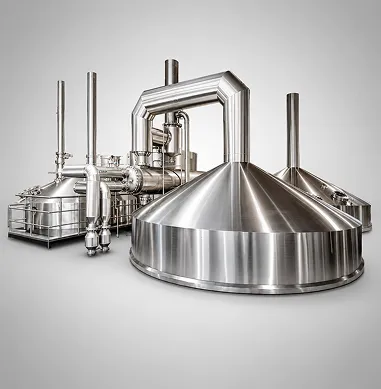
Commercial brewing equipment is configured and quoted according to production capacity, process requirements, vessel quantity, heating method, automation level, material grade, component selection, destination-country utilities, shipping conditions, installation requirements, and applicable certification needs. There’s no standardized public price list at this scale — project quotations are itemized by materials, components, and lead time once your configuration is defined, so the honest answer here is to bring your batches-per-day target and utility constraints to the quotation conversation rather than expecting a fixed sticker price.
FAQ
Q: What vessel count is standard for a 100HL commercial brewhouse?
A: Brewhouse structures at commercial scale are offered as two-vessel, three-vessel, four-vessel, or five-vessel configurations. Which one fits a 100HL target depends on your target batches per day and site footprint, not a fixed rule tied to volume alone.
Q: Can a commercial system run on electric heating instead of steam?
A: Electric, steam, and direct-fire heating are all offered depending on system size and site conditions. Electric works where the site has adequate three-phase power; steam is more common at the larger end of the commercial band, particularly where a central boiler also feeds CIP and hot liquor systems.
Q: Is CE certification enough to confirm compliance for my market?
A: CE is claimed at the company level, and the applicable directive or certificate scope needs confirming per machine and destination market. Request the specific certification document for your equipment and country before finalizing a purchase.
Q: How many batches per day can a 150HL system run?
A: This figure is not publicly disclosed. Published batches-per-day data currently stops at a 20HL–50HL four-vessel configuration (up to roughly six batches per day); for 60HL and above, this needs confirming directly against your process during the quotation stage.


 Pubblicato