Beer ferments are the stage where wort transforms into finished beer through the activity of yeast. Choosing the right fermenter directly affects fermentation control, beer quality, cleaning efficiency, and production stability. For breweries, homebrewers, and craft beer producers, a reliable stainless steel fermenter provides better control than basic plastic containers.
Many brewers struggle with inconsistent fermentation temperature, difficult cleaning, oxygen exposure, and limited expansion when using simple fermentation containers. These problems can influence flavor, yeast performance, and batch consistency. A professionally designed stainless steel conical fermenter helps solve these challenges by providing a sanitary fermentation vessel, efficient temperature management, and a scalable solution for home brew and commercial brewery applications.
A fermenter is a specialized vessel used during the fermentation process to convert wort into beer. Modern breweries and craft beer producers commonly choose stainless steel fermenters, especially conical fermenters, because they provide durability, sanitation, yeast collection, and better fermentation control.
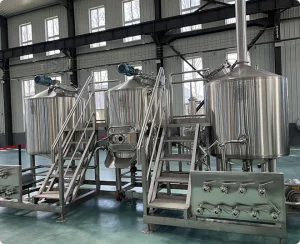
What Is a Fermenter and Why Is It Important in the Brewing Process?
A fermenter is one of the most important pieces of brewing equipment because it provides the controlled environment where yeast converts sugars in wort into alcohol and carbon dioxide. During this stage, the brewer manages temperature, yeast activity, pressure, and time to achieve the desired beer profile.
In a professional brewery, the fermentation vessel is not simply a storage tank. It is a precision-controlled environment designed to protect beer quality. A properly selected brewery fermenter helps maintain stable conditions during active fermentation and supports repeatable results from batch to batch.
For craft beer producers, the fermentation stage determines many important characteristics, including:
- Flavor development
- Aroma expression
- Alcohol content
- Carbonation potential
- Clarity
- Yeast performance
The choice between plastic buckets, glass carboys, and stainless steel fermenters depends on production goals. While plastic buckets and glass carboys can work for small-scale homebrewing, commercial breweries and serious homebrewers usually prefer stainless solutions because they offer stronger durability and easier sanitation.
How Does a Stainless Steel Fermenter Support Better Beer Fermentation?
A stainless steel fermenter provides advantages that directly support a controlled fermentation process. Compared with plastic fermenters or basic fermentation buckets, stainless steel offers a stronger, more hygienic surface that is easier to clean and maintain.
ZR Brew designs and manufactures customized stainless steel brewing systems, fermentation tanks, and turnkey brewery solutions for global B2B customers. Our fermentation equipment is developed for craft breweries, brewpubs, microbreweries, commercial breweries, and beverage producers that need stable production performance.
The main benefits of stainless steel include:
| Feature |
Benefit for Brewing |
| Stainless steel construction |
Long service life and corrosion resistance |
| Smooth internal surface |
Easier cleaning and sanitation |
| Conical design |
Better yeast collection and sediment removal |
| Cooling jacket options |
Improved fermentation temperature management |
| Pressure capability |
Supports pressurized fermentation applications |
| Custom capacity |
Fits different brewery production needs |
A quality stainless steel fermenter can support everything from small batch home brew projects to large commercial brewery production. The same basic principle applies: stable fermentation creates more consistent beer.
Why Are Conical Fermenters Popular Among Breweries and Homebrewers?
A conical fermenter has a cone-shaped bottom that allows yeast, trub, and other sediment to collect naturally at the lowest point of the tank. This conical design has become one of the most common choices for modern breweries.
Traditional fermentation vessels often required transferring beer between multiple containers. A conical fermenter simplifies this brewing process by combining fermentation, yeast collection, and conditioning functions into one vessel.
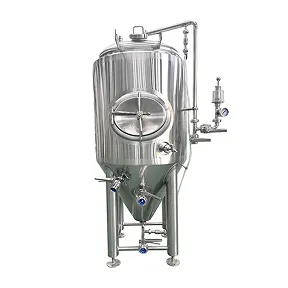
The main advantages of a conical fermenter include:
1. Efficient Yeast Collection
During fermentation, yeast settles toward the conical bottom. The brewer can remove collected yeast through a valve without disturbing the entire batch.
This helps reduce:
Sediment contact time
Unwanted flavors
Manual handling
Beer loss during transfers
2. Better Control During Fermentation Stages
A conical fermenter supports different fermentation stages in one tank, including:
Primary fermentation
Yeast settling
Conditioning
Secondary fermentation
For breweries producing different beer styles such as lager, ale, IPA, and hazy beer, this flexibility is valuable.
3. Easier Cleaning and Maintenance
Professional conical fermenters often include sanitary fittings such as tri-clamp connections, spray balls, and CIP-compatible designs.
This allows breweries to improve cleaning efficiency while maintaining consistent hygiene standards.
| المعدات |
Main Function |
Typical Application |
| Fermenter |
Converts wort into beer through yeast activity |
Primary fermentation |
| Unitank |
Combines fermentation and conditioning functions |
Breweries needing flexible production |
| Bright tank |
Stores, carbonates, and conditions finished beer |
Before packaging |
A unitank is a type of fermenter designed to handle both fermentation and conditioning in one vessel. Many craft breweries choose unitanks because they reduce transfer steps and improve production efficiency.
A bright tank, sometimes called a brite tank, is normally used after fermentation. Beer can be clarified, carbonated, and prepared for packaging into bottles, cans, or kegs.
ZR Brew provides customized fermentation vessels and brewery systems based on production requirements, including fermentation tanks, bright tanks, and complete brewing solutions.
How Does a Brewery Fermenter Work During the Brewing Process?
A brewery fermenter plays a central role in turning prepared wort into finished beer. After the brewing process is completed, cooled wort is transferred into the fermentation vessel, where yeast begins consuming fermentable sugars and creating alcohol and carbon dioxide.
The fermentation process normally includes several stages:
- Wort transfer – Cooled wort enters the fermenter after the brewing stage.
- Yeast pitching – The brewer adds selected yeast to start fermentation.
- Active fermentation – Yeast converts sugars into alcohol and CO₂ while producing flavor compounds.
- Conditioning stage – The beer matures, allowing flavors to stabilize.
- Packaging preparation – Finished beer moves to a keg, bottle, can, or brite tank.
A well-designed fermenter gives the brewer better control throughout these stages. It provides a stable environment where yeast can work efficiently while protecting the beer from contamination and unnecessary oxygen exposure.
For professional breweries, fermentation vessels are designed around production requirements. A small craft brewery may need compact fermenters for flexible recipes, while commercial breweries often require larger stainless steel tanks that support multiple batches and continuous production.
ZR Brew manufactures customized stainless steel fermentation tanks for global customers, helping breweries select suitable vessel sizes, layouts, cooling systems, and configurations according to their production goals.
How Does a Conical Fermenter Improve Craft Beer Production?
A conical fermenter is especially popular among craft beer producers because it supports flexible brewing operations.
Craft breweries often create different beer styles, including:
- Lager
- IPA
- Hazy IPAs
- Ale
- Seasonal specialty beers
Each style may require different fermentation conditions.
A conical fermenter helps brewers manage these differences by providing:
Yeast Management
Yeast can settle naturally into the cone section, allowing easier removal and reuse when appropriate.
Better Batch Control
Each batch can be monitored separately, helping brewers maintain consistent quality.
Reduced Transfer Requirements
Traditional brewing setups may require moving beer between multiple containers. A conical system can reduce unnecessary transfers.
This lowers the chance of:
- Oxygen exposure
- Contamination
- Beer loss
For growing breweries, fewer transfer steps can improve efficiency and simplify daily operations.
How to Choose the Right Fermenter for Home Brew and Commercial Brewing?
Selecting the right fermenter depends on your production goals, brewing frequency, beer styles, available space, and future growth plans. A small home brewer may need a simple solution for experimenting with recipes, while a commercial brewery requires equipment designed for repeated production and stable quality.
Before choosing a fermentation vessel, consider these important factors:
| Selection Factor |
Why It Matters |
| Batch size |
Determines the required tank capacity |
| Beer style |
Different yeast strains may require different fermentation conditions |
| Available space |
Affects tank dimensions and brewery layout |
| Cleaning method |
Influences sanitation efficiency |
| Temperature control |
Helps maintain consistent fermentation |
| Future expansion |
Allows the brewery to increase production |
For homebrewing, smaller fermenters may be practical because they are easy to move and operate. Many homebrewers begin with plastic buckets, glass carboys, or compact stainless options before upgrading.
However, breweries planning long-term growth usually choose stainless fermenters because they provide better durability, easier sanitation, and more professional process control.
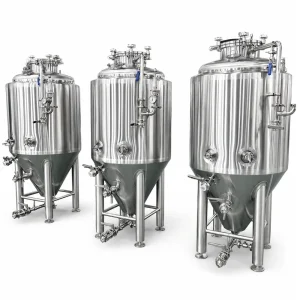
Can You Use a Fermenter for Pressurized Fermentation?
Modern brewing technology allows some breweries to use pressurized fermentation to improve production flexibility. However, not every fermenter is designed for this purpose.
A fermenter used for pressure applications must have:
- Suitable tank construction
- Pressure-rated components
- Safety valves
- Pressure monitoring equipment
- Proper sealing systems
Some breweries use a spunding valve to control pressure during fermentation. This allows the brewer to manage natural CO₂ retention and fermentation conditions.
Benefits of fermenting under pressure may include:
- Better CO₂ management
- Reduced oxygen exposure
- Improved production flexibility
- Potential reduction in additional carbonation steps
However, breweries must always confirm the pressure rating and operating requirements of the specific fermentation vessel.
ZR Brew can customize fermentation equipment according to different brewing requirements, including standard fermentation tanks and systems designed for specific pressure-control applications.
FAQ:
What is the best fermenter for craft beer?
The best fermenter for craft beer depends on production goals, but many breweries choose stainless steel conical fermenters because they provide better sanitation, yeast collection, temperature control options, and long-term durability.
Are stainless steel fermenters better than plastic buckets?
For professional brewing, stainless steel fermenters generally provide better durability, easier cleaning, stronger construction, and more customization options. Plastic buckets can still be suitable for beginner homebrewing and small experimental batches.
What is the difference between a fermenter and a unitank?
A fermenter is mainly used for the fermentation stage, while a unitank combines fermentation and conditioning functions in one vessel. Unitanks help breweries reduce transfers and simplify the brewing process.
How long does beer fermentation take in a fermenter?
Fermentation time depends on yeast type, beer style, temperature, and recipe design. Many beer fermentations may take several days to several weeks, depending on the desired result.
Can a fermenter be used for making beverages other than beer?
Yes. Stainless steel fermentation tanks can also be used for beverages such as cider, wine, kombucha, and other fermented products when the vessel design matches the production requirements.
Do commercial breweries need stainless steel conical fermenters?
Most commercial breweries prefer stainless steel conical fermenters because they support repeated production cycles, easier cleaning, temperature management, and scalable brewery operations.


 نُشر
نُشر