Brewing great beer sounds exciting, but choosing the wrong equipment can waste money, space, and time. A poor layout slows every brew. Weak tanks create quality risks. The solution is a clear brewery equipment list designed around your capacity, beverage type, and future growth.
A brewery uses brewhouse equipment, fermentation tanks, cooling systems, transfer pumps, cleaning systems, packaging machines, and quality-control tools. The main equipment includes a malt mill, mash tun, lauter tun, brew kettle, whirlpool, heat exchanger, fermenter, bright beer tank, chiller, CIP system, kegging equipment, bottle filler, control panel, and storage tanks.
ما هي المعدات المستخدمة في مصنع الجعة؟ معدات مصنع الجعة التي تحتاجها لتصنيع جعة أفضل
What Is the Main Brewery Equipment List for a New Brewery?
When people ask, “What equipment is used in a brewery?” they often expect one simple list. In real projects, the answer depends on the size of the brewery, the beer style, the packaging method, and the business model. A brewpub may need compact tanks and beer towers. A commercial brewery may need larger beer tanks, automatic controls, and faster packaging.
Here is a practical equipment list for a new brewery:
| Process Stage |
Necessary Equipment |
Main Purpose |
| Raw material preparation |
Malt mill |
Crush malt before mash |
| Brewhouse |
Mash tun, lauter tun, brew kettle, whirlpool |
Produce wort |
| التبريد |
Heat exchanger, chiller |
Cool wort before fermentation |
| التخمير |
Fermenter, yeast system |
Ferment wort into beer |
| Conditioning |
Bright beer tank |
Clarify, carbonate, and store bright beer |
| التنظيف |
CIP system |
Clean tanks and pipes |
| Packaging |
Kegging system, bottle filler, bottle caps |
Fill keg or bottle products |
| Quality control |
Hydrometer, thermometer, lab tools |
Check process stability |
| Automation |
Control panel |
Monitor temperature and operation |
As a professional brewery and beverage equipment manufacturing plant, we usually begin with the customer’s target output. Do you want to brew beer for a taproom, regional distribution, kombucha production, cider, or cold brew coffee? Each answer changes the right equipment, tank volume, floor layout, and future expansion plan.
Why Is the Brewhouse the Heart of Brewery Equipment?
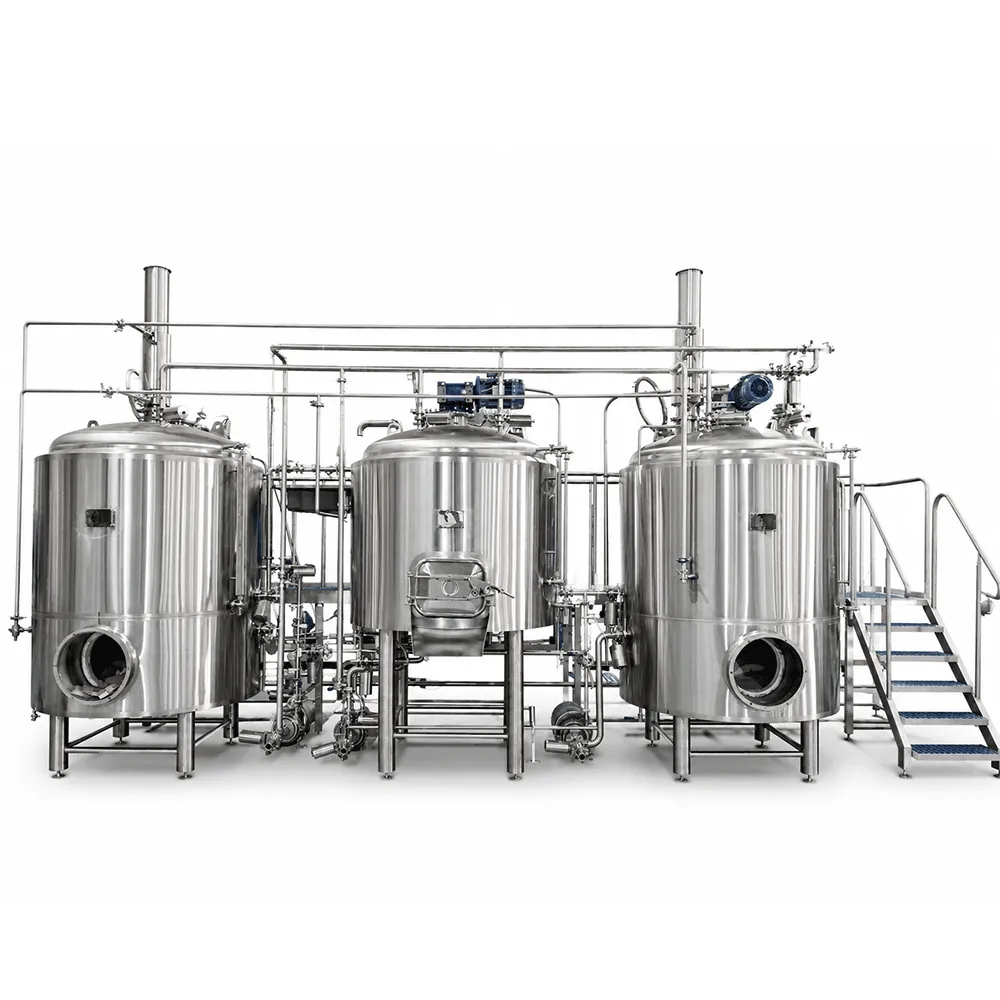
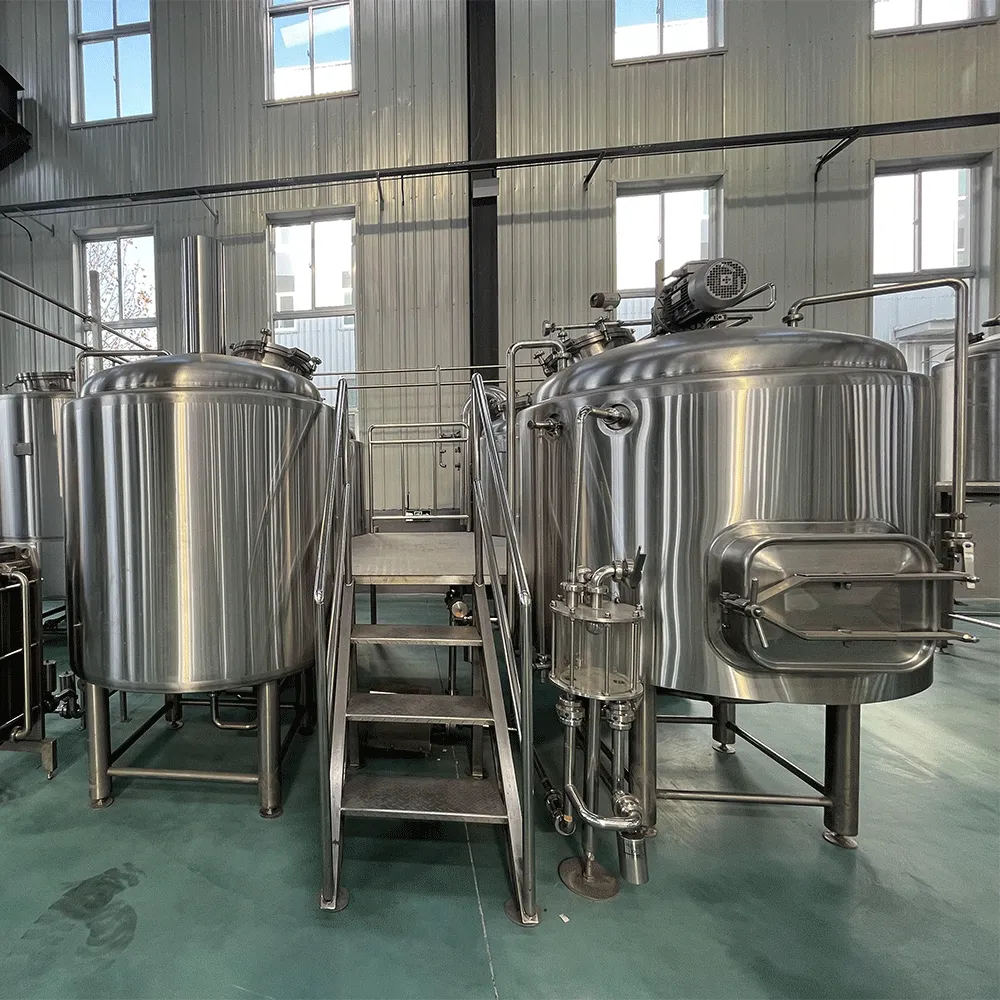
The brewhouse is where the brewing process starts. It turns water, malt, and hop additions into wort. For most beer brewing projects, the brewhouse includes a mash tun, lauter tun, brew kettle, whirlpool, hot liquor tank, and pumps. In smaller systems, some vessels can be combined to save space and cost.
A 2-vessel brewhouse may be enough for a brewpub or microbrewery. A 3-vessel or 4-vessel brewhouse is better when the brewery needs more daily batches. If you plan to brew several recipes in one day, the brewhouse design matters a lot. It affects labor, speed, heat use, and product consistency.
The material also matters. Most professional systems use sanitary stainless steel because it is strong, clean, and suitable for beverage contact. Smooth welding, correct polishing, safe valves, and good insulation help every brew stay stable from mash to transfer.
What Happens in the Mash Tun and Lauter Tun?
The mash tun mixes crushed malt with hot water. This step creates mash. During this stage, natural enzymes in malt help convert starch into sugars. Those sugars later feed yeast during fermentation. If the mash temperature is unstable, the final beer may taste thin, heavy, sweet, or unbalanced.
The lauter tun separates clear wort from the grain bed. This step must be gentle but efficient. Good false bottoms, proper rakes, and controlled flow help the brewer collect wort with less blockage and better sugar extraction. For all-grain brewing, this is one of the most important steps.
For B2B customers, we pay close attention to vessel geometry, heating method, mixing system, and cleanability. A beautiful tank is not enough. The right equipment must support repeatable brew results, low waste, and easy operation for the production team.
Why Do Breweries Need a Brew Kettle and Whirlpool?
The brew kettle, sometimes called a boil kettle, heats wort to a strong boil. This step helps develop flavor, remove unwanted compounds, and prepare the wort for hop use. A stable heat source is important because weak boiling can affect aroma and quality.
Hop additions usually happen in the kettle. Early hop additions support bitterness. Later additions support aroma. For craft breweries, the kettle design can influence flavor expression and production speed. Steam heating, electric heating, and direct fire heating may all work, but the best choice depends on local energy supply, batch size, and project budget.
After boiling, wort moves to the whirlpool. The whirlpool helps collect hop matter and solids in the center, making it easier to send cleaner wort to the heat exchanger. This simple step protects the chiller and improves the next stage of the brew.
How Do Chillers and Heat Exchangers Protect Fermentation?
Hot wort cannot go straight into the fermenter. It must cool quickly to the correct yeast temperature. This is why a heat exchanger and chiller are so important. If cooling is slow or unstable, the brew may face contamination risk or poor fermentation control.
The chiller provides cold water or glycol to help manage cooling and tank temperature. In a commercial brewery, the chiller must be sized carefully. If it is too small, fermentation temperature may rise during peak activity. That can damage flavor and create production delays.
A good cooling plan is not only about one piece of equipment. It includes pipe size, pump flow, glycol tank volume, insulation, and control logic. For beverage startups and engineering contractors, this is where early planning can prevent expensive changes later.
What Fermentation Equipment Does a Brewery Use?
Fermentation is where wort becomes beer. The fermenter gives yeast a clean, controlled space to work. Temperature, pressure, tank shape, and sanitation all affect the final product. For many breweries, fermentation capacity is the real production bottleneck, not the brewhouse.
A common mistake when opening a brewery is buying a brewhouse that can brew faster than the fermenters can handle. If you can brew three batches per day but have only a few small tanks, your production flow will stop. The better plan is to match brewhouse output with enough fermentation and conditioning volume.
Most beer tanks for fermentation include cooling jackets, pressure relief valves, sample valves, manways, spray balls, and sanitary fittings. For kombucha producers, cideries, wineries, and cold brew coffee producers, tank design may change slightly, but the same ideas remain: clean contact surfaces, stable temperature, and safe transfer.
What Is a Bright Beer Tank and When Do You Need One?
A bright beer tank stores finished beer after fermentation. It helps with clarification, carbonation, and serving or packaging. In many breweries, the bright beer tank sits between the fermenter and the packaging line.
Bright beer is usually clearer and more stable before kegging or bottling. If you run a taproom, a bright tank can connect to beer towers for direct serving. If you package into beer bottles, cans, or kegs, the bright tank gives you a steady supply for filling.
Not every small homebrewing setup needs a bright tank. But a professional brewing operation usually benefits from one. It improves scheduling, helps separate fermentation from packaging, and gives the brewer more control before the beer reaches customers.
ما هي المعدات المستخدمة في مصنع الجعة؟ معدات مصنع الجعة التي تحتاجها لتصنيع جعة أفضل
What Small Tools Are Needed to Brew Beer Correctly?
Large tanks get attention, but small tools protect quality. A hydrometer helps measure sugar content and fermentation progress. A thermometer helps monitor mash, cooling, and tank temperatures. Flow meters, sample valves, pressure gauges, and sight glasses also help the team see what is happening.
For home brewing or pilot testing, a brewing kit may include a small kettle, fermenting bucket, airlock, sanitizer, hydrometer, thermometer, siphon, bottle filler, beer bottles, and bottle caps. This setup helps people learn how to brew beer at home before investing in larger systems.
For commercial projects, small tools become part of quality control. They help the brewer confirm each batch before transfer. They also reduce guesswork. That matters because making beer is both creative and practical. Good data keeps creativity under control.
How Does Cleaning and CIP Equipment Keep Beer Safe?
Clean equipment is non-negotiable. Every tank, pipe, valve, and filling line must be cleaned correctly. A CIP system, short for clean-in-place, helps circulate cleaning solution through tanks and pipelines without taking everything apart.
Before each brew, the team must sanitize the contact surfaces. Poor cleaning can cause sour flavors, haze, off-aromas, or spoiled beer. The Brewers Association provides many resources on brewery production, sanitation, quality, and draught beer handling, showing how important cleanliness is across the whole beer chain.
A professional CIP setup usually includes cleaning tanks, pumps, heating, valves, and return lines. For larger breweries, automation can make cleaning more consistent. For smaller breweries, a simple mobile CIP cart may be enough. The goal is the same: protect wort and beer from contamination.
What Packaging Equipment Is Used for Bottle, Keg, and Draft Beer?
Packaging turns finished beer into sellable product. A brewery may use kegging, bottling, canning, or direct draft service. Each format needs different equipment. Kegging is common for taprooms and brewpubs. A bottle line is useful for retail sales, gifts, and local distribution.
For bottle packaging, the brewery may need a bottle rinser, bottle filler, capper, bottle caps, labeler, date printer, and packing table. For keg packaging, the system may include a keg washer, keg filler, carbon dioxide supply, and pressure controls. For draft service, clean lines, correct pressure, and balanced gas are essential.
Here is a simple comparison:
| Packaging Method |
Best For |
Equipment Needed |
Key Benefit |
| برميل |
Taproom, bars, restaurants |
Keg washer, keg filler, CO2 system |
Fast serving and lower packaging waste |
| زجاجة |
Retail, gifts, local sales |
Bottle filler, capper, labels, beer bottles |
Familiar format for customers |
| Draft |
Brewpub, taproom |
Bright tank, beer towers, draught lines |
Fresh serving experience |
| هل يمكن |
Wider distribution |
Can rinser, filler, seamer |
Portable and retail friendly |
The right packaging choice depends on your sales channel. A taproom may begin with keg and draft. A growing craft brand may later add bottle or can filling.
How Should You Choose Equipment When Starting a Brewery?
Starting a brewery is not just buying tanks. It is planning a production business. You need to think about recipe range, daily batch target, floor space, drainage, steam or electric power, cooling load, packaging format, labor, local permits, and installation support.
If you are opening a brewery for commercial sales, you should also check local regulations. In the United States, for example, the TTB explains that brewers must qualify before producing beer for sale. Other countries have their own licensing, tax, safety, and labeling rules.
From our project experience, the best customers prepare three numbers before asking for a quote:
- Target annual output
- Expected number of beer styles or beverage types
- Planned packaging format: keg, bottle, can, or draft
These numbers help us recommend the right equipment and avoid overbuying or underbuilding. A good supplier should ask about your business model before recommending tank sizes.

ما هي المعدات المستخدمة في مصنع الجعة؟ معدات مصنع الجعة التي تحتاجها لتصنيع جعة أفضل
What Is the Difference Between Homebrewing and a Commercial Brewery System?
Homebrewing teaches the basic brewing process. You can brew beer in small batches with simple tools. You may use a small brew kettle, plastic fermenter, manual bottle filler, and basic cooling method. It is a great way to understand flavor and process.
A commercial brewery is different. It needs stronger tanks, sanitary piping, safe pressure design, larger cooling capacity, reliable pumps, and a control panel. It also needs efficient cleaning, predictable transfer beer steps, and equipment that can handle repeated production.
The main difference is risk. At home, one failed batch is disappointing. In a commercial brewery, one failed batch can cost money, time, and customer trust. That is why the equipment needed for business should be built around durability, sanitation, and stable performance.
How Can a Turnkey Brewery Solution Reduce Project Risk?
A turnkey brewery solution brings the main equipment, layout design, installation guidance, and process planning together. Instead of buying different equipment from many suppliers, the customer works with one team. This reduces communication errors and makes the system easier to install.
For craft breweries, brewpubs, beverage startups, kombucha producers, cideries, wineries, distilleries, and cold brew coffee brands, turnkey support can save time. It also helps project investors and engineering contractors control risk during design, procurement, shipping, installation, and commissioning.
Our role as a manufacturer is not only to sell brewery equipment. We help customers plan capacity, select tank types, optimize the layout, match the chiller, arrange the brewhouse, and prepare for future expansion. The result is a brewery that can grow with the business.
Sample Case Study: A 1000L Craft معدات مصانع الجعة Plan
Imagine a customer wants to build a 1000L craft brewery for a taproom and local keg sales. The goal is to brew several core beers and a few seasonal products. The customer needs stable beer quality, simple operation, and room to expand.
A practical system may include:
| المعدات |
Suggested Setup |
| Brewhouse |
1000L 2-vessel or 3-vessel system |
| Hot water |
HLT matched to daily brew plan |
| التخمير |
4–8 fermenters depending on sales target |
| Conditioning |
1–2 bright beer tanks |
| التبريد |
Glycol chiller and insulated piping |
| التنظيف |
Mobile or fixed CIP system |
| Packaging |
Kegging first, bottle filler later |
| التحكم |
Semi-automatic or automatic control panel |
This layout helps the brewery begin with manageable investment. Later, the owner can add more fermenters, a larger packaging line, or extra serving tanks. That is why early equipment planning should always include future growth.
FAQs About Brewery Equipment
What is the most important piece of equipment in a brewery?
The brewhouse is often seen as the main equipment because it creates wort, but fermentation tanks are just as important. If the fermenter capacity is too small, the whole brewery slows down. A balanced system matters more than one impressive tank.
Can I brew beer with homebrewing equipment first?
Yes. Many brewers start with homebrewing equipment to learn the process. But when you sell beer, you need commercial-grade brewing equipment with better sanitation, pressure safety, temperature control, and production reliability.
How many fermenters does a new brewery need?
It depends on the batch size, fermentation time, and sales target. A brewery that wants to brew often needs more fermenters than beginners expect. As a simple rule, tank planning should match your expected weekly production, not just your brewhouse size.
Do I need a bottle filler or kegging system first?
If your first sales channel is a taproom or local bars, kegging may come first. If your brand focuses on retail shelves or gift packs, a bottle filler may be more important. Many startups begin with kegs and add bottle equipment later.
What equipment is needed for a brewpub?
A brewpub usually needs a compact brewhouse, fermenters, bright tanks, chiller, CIP system, control panel, kegging tools, and beer towers. The system should fit the floor plan and support direct serving.
What should I check before buying brewery equipment?
Check tank material, welding quality, polishing, insulation, cooling design, valve quality, control system, supplier experience, installation support, spare parts, and after-sales service. Also confirm that the equipment fits your building layout and production goal.
Key Takeaways
- Brewery equipment should match your business model, not just your budget.
- The main equipment includes the brewhouse, fermentation tanks, cooling system, CIP, packaging equipment, and quality-control tools.
- The brewhouse creates wort, but fermentation capacity often controls real production output.
- Clean design, sanitary fittings, and reliable CIP protect beer quality.
- Keg, bottle, can, and draft systems require different packaging equipment.
- Homebrewing tools are useful for learning, but commercial production needs stronger and safer systems.
- A turnkey brewery solution can reduce project risk by combining equipment design, layout planning, installation support, and future expansion planning.
- The right equipment helps you brew more consistently, serve customers better, and build a stronger beverage business.


 نُشر
نُشر