Choosing equipment should feel exciting. But mismatched tanks, weak heating, slow cooling, and limited space can turn each brew day into a long and costly struggle.
Good home brewing equipment should match your batch size, brewing method, available power, cooling needs, cleaning process, and future plans. A complete setup normally includes a kettle, mash equipment, a wort chiller, a fermenter, transfer parts, temperature control, and safe packaging equipment.
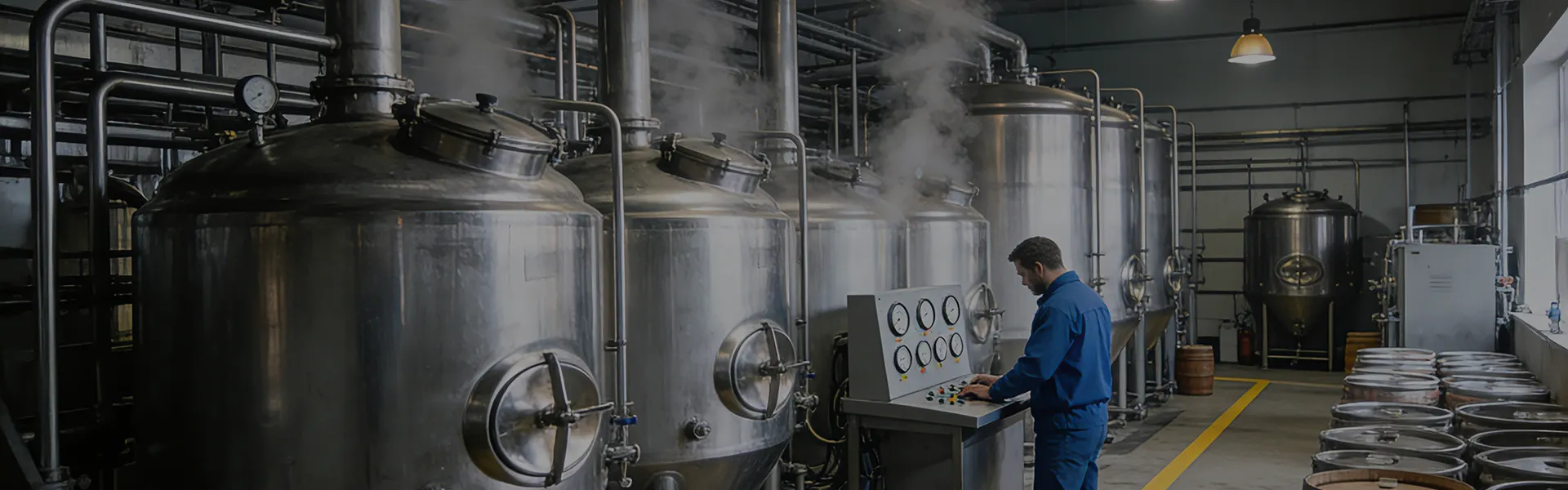
%home brewing equipment and brew tanks for homebrew beer production
Many people start with a basic kit and a simple recipe. That is a sensible first step. However, buyers who want better control, repeatable results, larger batches, or future commercial production need to look beyond a single brew pot.
You should treat the equipment as one connected production line. Water moves into the mash stage. Sweet wort moves into the boil. Cooled liquid enters the fermenter. Finished beer then moves into bottles, cans, or a keg.
A weak point at any stage can slow the whole process.
As a professional brewery and beverage equipment manufacturing plant, we plan systems around the full workflow. We consider sanitary design, vessel size, heating power, cooling load, transfer routes, room layout, cleaning access, and future growth. This approach helps home brewers, beverage startups, taprooms, and pilot breweries avoid equipment that becomes too small too quickly.
What Home Brewing Equipment Do You Really Need?
A new brewer may see hundreds of products in a homebrew shop. Some are essential. Others solve very specific problems.
A basic setup for making extract beer may include:
- A large brew kettle
- A thermometer
- A fermenter
- An airlock
- A transfer hose
- A hydrometer
- Cleaning and sanitizing products
- Bottles or a keg
- Basic brewing supplies
The American Homebrewers Association’s equipment guide explains that the boil takes place in the brew pot and that the liquid is later transferred into a fermentation vessel. It also notes that a mash tun becomes important when a brewer moves into all-grain production.
Essential Equipment by Process Stage
| Production Stage |
Main Equipment |
Main Purpose |
Common Buying Risk |
| Water Preparation |
Water container or hot liquor tank |
Holds and heats brewing water |
Not checking water volume |
| Mashing |
Mash tun or grain basket |
Converts grain starches into sugars |
Too little grain capacity |
| Boiling |
Kettle and heating source |
Boils wort and supports hop additions |
Weak heating or boilovers |
| Arrefecimento |
Immersion or plate chiller |
Lowers liquid temperature |
Cooling too slowly |
| Fermentação |
Bucket, carboy, or conical tank |
Holds beer while yeast works |
Poor temperature control |
| Transfer |
Pump, hose, fittings, and racking equipment |
Moves liquid between vessels |
Hard-to-clean flow paths |
| Packaging |
Bottles, cans, or keg equipment |
Stores and serves finished beer |
Buying before choosing the packaging type |
A beginner does not need every advanced tool on day one. Still, each part should work with the others.
For example, a large kettle will not solve a production problem when the fermenter is too small. A fast heating element will not shorten the day if the wort chiller cannot remove heat quickly. A polished tank will not protect product quality if valves, hose connections, and seals are difficult to sanitize.
The best buying decision starts with the process, not the product catalog.
Should You Choose an All-in-One or Multi-Vessel Brewing System?
An all-in-one brewing system combines several functions in one main vessel. It may heat water, hold the grain, support recirculation, boil the wort, and sometimes pump liquid through an integrated loop.
A multi-vessel setup separates these jobs. It may use a hot liquor tank, mash tun, and boil kettle. This layout needs more space, but it gives the brewer more control and can support a larger brew schedule.
System Comparison
| System Type |
Main Advantage |
Main Limitation |
Best Suited To |
| Extract Kit |
Simple and low-cost entry |
Limited process control |
People new to brewing |
| Brew-in-a-Bag |
Simple all-grain method |
Grain handling can become difficult |
Small batches |
| All-in-One Electric Unit |
Compact and easy to manage |
One vessel may limit workflow |
Home use and recipe testing |
| Two-Vessel System |
Better separation of process stages |
More fittings and cleaning |
Advanced home use |
| Three-Vessel System |
Greater control and easier scaling |
Higher space and utility needs |
Pilot and professional brewing |
| Small Commercial Brewhouse |
Repeatable production and sanitary layout |
Requires site planning |
Taprooms and beverage startups |
The American Homebrewers Association identifies brew-in-a-bag as an all-grain method that can reduce space and equipment requirements. Its batch-sparge guide also explains how a separate mash vessel is used to hold the grain and separate liquid from the grain solids.
Commercial examples show how broad this category has become. Anvil offers compact electric all-in-one units in several home-scale sizes, while Blichmann offers modular systems that extend from homebrewing into pilot and commercial applications. These are examples of market formats, not brands connected with ZR Brew.
An all-in-one unit is often a good choice when:
- Your room is small
- You make one batch at a time
- You prefer electric brewing
- You want fewer separate vessels
- You do not expect rapid production growth
A multi-vessel setup becomes more useful when:
- You need better control over each stage
- You want to improve repeatability
- You plan to make several batches
- You need larger grain capacity
- You may move from a home brewery into a taproom or pilot facility
The right answer depends on your next two or three years, not only your next recipe.
How Large Should the Kettle, Mash Tun, and Fermenter Be?
The finished beer volume should not equal the maximum vessel volume. Every vessel needs extra room.
The kettle needs space for foam and movement during the boil. The mash tun needs enough room for grain and water. The fermentation vessel needs headspace for foam, gas, and active yeast.
A system designed for 5 gallon production should therefore use vessels larger than five gallons.
Why Grain Capacity Matters
Two recipes with the same finished volume may need different amounts of malt.
A strong all-grain beer may place far more material in the grain bed than a lighter recipe. A compact grain basket may handle a simple pale ale but struggle with a high-gravity stout.
Ask the supplier about:
- Maximum grain weight
- Recommended water-to-grain range
- False-bottom or basket design
- Drainage area
- Pump-flow control
- Recirculation method
- Risk of a stuck grain bed
Why Fermentation Capacity Matters
One production vessel can complete a batch in one day. A fermentation tank may remain occupied for days or weeks.
This difference matters when you plan frequent production.
A small brewhouse with several fermenters can often support a better schedule than a larger brewhouse with only one tank. Commercial breweries calculate cellar capacity carefully because tank occupancy controls how often they can package and start new products.
At ZR Brew, we ask about the recipe cycle, planned production frequency, and packaging schedule before recommending tank quantities. The same method is useful even for a serious home brewer.
What Happens During the Mash, Wort, and Boiling Stages?
The mash combines crushed grain with warm water. Enzymes then help change grain starches into fermentable sugars.
The sweet liquid produced during this stage is called wort. The American Homebrewers Association describes mashing as the process that produces sugar-rich liquid for yeast to ferment later.
Step 1: Prepare the Water
The brewer heats the required water in the main vessel or a separate hot liquor tank.
Water volume, temperature, and mineral condition can influence the brewing process. For a simple home brew, the brewer may use one water source and make small adjustments. A growing beverage business may need filtration, softening, or a complete water-treatment plan.
Step 2: Conduct the Mash
The grain enters the mash tun or grain basket. The brewer holds the mixture within the selected temperature range.
The vessel should distribute heat evenly. Poor temperature control can create different conditions in different parts of the grain. This can reduce repeatability.
Useful design features may include:
- Insulation
- A clear temperature display
- Slow and controlled recirculation
- A suitable false bottom
- Easy grain removal
- Accessible cleaning points
Step 3: Separate the Liquid
The brewer separates the wort from the spent grain. In a traditional system, the liquid drains through the lower screen. In a basket system, the brewer lifts or drains the grain section.
A pump can improve movement, but excessive pump flow may compact the grain. Faster is not always better.
Step 4: Boil the Wort
The wort enters the brew kettle. The boil supports recipe development, concentration, sanitation, and hop use.
The brewer must leave enough free space. A vessel filled too close to the top may overflow when foam rises. The Brewers Association has published dedicated safety guidance because kettle boilovers can create burn and workplace risks.
Step 5: Create a Controlled Transfer
After boiling, the brewer may whirlpool the liquid or allow solids to settle. The goal is to move cleaner liquid through the cooling stage and into the tank.
Each valve, pipe, pump, and hose should support cleaning. Complex fittings that trap liquid may create more problems than they solve.
Is Electric Brewing Better Than Propane Brewing?
Neither method is always better. The correct choice depends on batch size, room conditions, available electrical power, ventilation, fuel cost, and operator preference.
Electric brewing offers clean control and can work well indoors when the electrical system is suitable. Propane can deliver strong heat, but it needs safe fuel handling, outdoor use or proper ventilation, and careful flame control.
Electric Heating
An electric system may use:
A submerged heating element
An element mounted through the vessel wall
A heating surface under the tank
A jacketed or external heating loop
Electric systems can offer stable control. They also avoid an open flame. However, the buyer must confirm voltage, current, plug type, circuit protection, and available building power.
Anvil’s official product range, for example, includes all-in-one systems with different capacities and electrical arrangements. Blichmann also markets electric home and pilot equipment. These examples show why buyers must compare the actual power requirements rather than choosing by vessel size alone.
Propane Heating
A gas burner can be simple and powerful. It is common in traditional outdoor beer making setups.
However, buyers must consider:
- Flame safety
- Carbon monoxide
- Ventilation
- Burner clearance
- Fuel storage
- Weather
- Heat loss
- Local fire rules
A larger brew also creates more steam. Indoor production may need a hood, exhaust system, or steam condenser.
Which One Should You Select?
Choose electric when you want compact controls, indoor operation, and repeatable heating, and when your electrical service can support the load.
Choose gas when the site has suitable ventilation, safe fuel infrastructure, and a process that benefits from strong direct heat.
For pilot or commercial projects, do not select the heat source alone. Confirm the full utility plan first.
Why Are the Wort Chiller and Fermenter So Important?
Many first-time buyers spend most of their budget on the kettle. Yet cooling and fermentation often have a greater effect on product control.
A wort chiller lowers the boiled liquid to a suitable temperature before yeast is added. The cooling method may use an immersion coil, counterflow design, or plate chiller.
The American Homebrewers Association’s all-grain guide instructs brewers to move cooled liquid into a clean and sanitized fermentation vessel after the boil.


 Publicado