Starting a brewery is an exciting opportunity for entrepreneurs, craft beer lovers, investors, and beverage producers. As the global craft beer market continues to develop, more people are exploring how to build their own microbrewery, brewpub, taproom, or commercial brewery.
However, opening a brewery is not only about having a good beer recipe. It also requires careful business planning, suitable brewery equipment, a practical production layout, local licensing research, financial preparation, and long-term operational thinking.
This guide explains the key steps involved in starting a brewery and how a professional brewery equipment manufacturer can help you turn your brewing idea into a practical production system.
Understanding Your Brewery Business Model
Before investing in equipment or renting a building, you should first define what type of brewery you want to build. Different brewery models require different equipment configurations, floor space, investment budgets, and sales strategies.
Common brewery business models include:
Microbrewery
A microbrewery usually focuses on small to medium batch beer production. It may sell beer through distributors, local restaurants, bars, or its own taproom. This model is suitable for craft beer startups that want flexible production and local brand development.
Brewpub
A brewpub combines beer production with food and on-site consumption. In this model, beer is brewed and sold mainly in the same location. A brewpub requires not only brewing equipment but also customer seating, kitchen planning, service areas, and a comfortable drinking environment.
Taproom Brewery
A taproom brewery focuses on producing beer and selling it directly to customers in an on-site tasting room. This model is popular among craft beer brands that want to build a local community and improve profit margins through direct sales.
Contract Brewing
In a contract brewing model, one company owns the beer brand and recipe, while another brewery produces the beer. This can reduce the initial investment in production equipment, but the brand owner still needs to manage marketing, sales, distribution, and quality control.
Regional or Commercial Brewery
A regional or commercial brewery usually has a larger production capacity and supplies beer to multiple markets. This type of project requires a more complete brewhouse system, larger fermentation capacity, automation, packaging equipment, CIP cleaning, cooling systems, and professional plant layout design.
Key Questions Before Building a Brewery
Before starting your brewery project, you should answer several important questions:
What type of beer will you produce?
What is your expected daily, monthly, and annual output?
Will you sell beer on-site, through distributors, or both?
Do you need a taproom, restaurant, or packaging line?
What is your available floor space and ceiling height?
What is your estimated investment budget?
Do you prefer manual, semi-automatic, or automatic control?
Will your brewery need future expansion?
These questions will directly affect your equipment selection, tank quantity, brewhouse structure, heating method, cooling capacity, utility requirements, and overall project cost.
Planning the Cost of Starting a Brewery
The cost of opening a brewery can vary widely depending on location, building conditions, production capacity, automation level, equipment materials, local labor costs, and business model.
Common brewery startup costs may include:
Building rental, purchase, or construction
Brewhouse equipment
Fermentation tanks and bright beer tanks
Cooling system and glycol tank
Steam boiler or electric heating system
Sistema de limpeza CIP
Malt milling system
Packaging equipment
Sistema de tratamento de água
Drainage and ventilation
Licenses, permits, insurance, and professional consulting
Interior decoration for taprooms or brewpubs
Raw materials and initial inventory
Staff recruitment and training
Marketing and brand promotion
For small craft breweries, investors often start with a compact brewhouse and several fermenters, then expand tank capacity after sales become stable. For commercial breweries, it is better to plan the full production flow from the beginning, including raw material handling, brewing, fermentation, cooling, cleaning, packaging, storage, and future expansion.
Creating a Brewery Brand
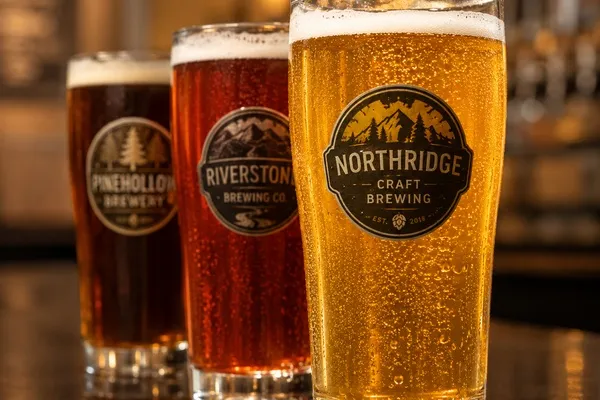
A successful brewery needs more than equipment. It also needs a clear brand identity. Your brewery name, logo, packaging, taproom style, and beer story all influence how customers remember your brand.
A good brewery brand name should be:
Easy to remember
Easy to pronounce
Relevant to your beer style or brand story
Suitable for labels, packaging, signs, and social media
Available for trademark and domain registration
Flexible enough for future product expansion
Your logo and visual design should match your positioning. For example, a traditional craft brewery may prefer classic colors, vintage elements, hops, barrels, or local cultural symbols. A modern brewery may use cleaner lines, bold typography, and a more industrial visual style.
Branding is especially important for brewpubs, taprooms, and craft beer brands because customers often choose beer based on both taste and emotional connection.
Creating a Brewery Brand
Choosing the Right Brewery Location
Location is one of the most important decisions in a brewery project. A good location can improve customer traffic, reduce logistics costs, and support future production growth.
When choosing a brewery location, consider:
Local Regulations
Alcohol production and sales are regulated differently in each country, state, or city. Before signing a lease or purchasing a building, you should check whether the location can legally be used for beer production, alcohol sales, food service, or public consumption.
Floor Space and Ceiling Height
Brewery equipment requires enough space for installation, operation, cleaning, maintenance, and future expansion. Fermentation tanks, bright beer tanks, boilers, platforms, and piping systems may also require sufficient ceiling height.
Utilities
A brewery requires reliable water, electricity, drainage, ventilation, compressed air, steam or electric heating, and cooling capacity. If the building does not support these utilities, renovation costs may increase significantly.
Customer Access
For brewpubs and taprooms, customer access is very important. Parking, nearby restaurants, tourism areas, local population, and surrounding businesses may all influence sales.
Logistics
For production breweries, logistics efficiency matters. You should consider the movement of malt, packaging materials, finished beer, kegs, bottles, cans, and waste materials.
Brewery Floor Plan and Production Layout
A practical brewery layout can improve production efficiency, reduce labor intensity, and make daily cleaning easier. Poor layout design may cause operation inconvenience, safety risks, and higher long-term costs.
A complete brewery layout may include:
Malt storage area
Milling area
Brewhouse area
Fermentation area
Bright beer tank area
CIP cleaning area
Cooling system area
Boiler or heating system area
Packaging area
Cold storage
Taproom or tasting area
Office and laboratory area
Drainage and utility zones
For small breweries, space efficiency is very important. For commercial breweries, the layout should also consider future expansion, pipe routing, material flow, and automated control.
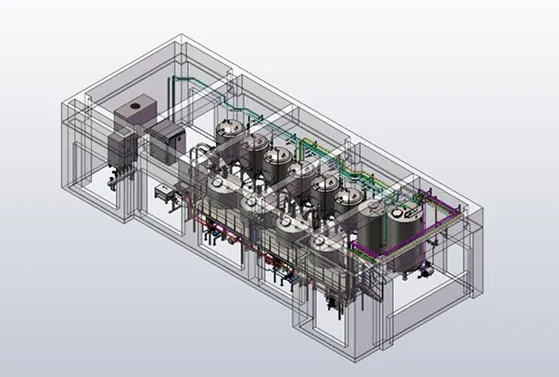
ZR Brew can support brewery owners with customized 2D and 3D layout design based on building dimensions, production goals, tank quantity, and process requirements.

Brewery Floor Plan and Production Layout
Writing a Brewery Business Plan
A brewery business plan is essential for investors, banks, partners, and internal project management. It helps clarify your goals, budget, market positioning, production plan, and expected return.
A brewery business plan usually includes:
Executive Summary
This section summarizes the brewery concept, business model, location, target market, production scale, investment needs, and expected development plan.
Business Overview
This includes company name, legal structure, ownership, location, contact information, and management team.
Brewery Concept
This explains your beer style, brand story, customer experience, taproom concept, production scale, and market positioning.
Market Analysis
This section studies local beer demand, craft beer trends, target customers, pricing levels, sales channels, and regional competition.
Customer Analysis
Define your target customers clearly. They may include local beer drinkers, restaurants, bars, supermarkets, distributors, tourists, or beverage brands.
Competitor Analysis
Analyze other breweries, bars, restaurants, beverage brands, and imported beer competitors in your market.
Marketing Strategy
This includes brand promotion, launch events, social media, distributor cooperation, beer festivals, taproom activities, and packaging strategy.
Operation Plan
This section explains daily brewing operations, staffing, raw material sourcing, production scheduling, quality control, cleaning, maintenance, and distribution.
Financial Forecast
Your financial plan should include investment costs, equipment costs, expected sales, operating expenses, labor costs, profit margin, cash flow, and return period.
A clear business plan helps investors understand that your brewery project is not only a dream, but a carefully planned business.
Essential Brewery Equipment
The right brewery equipment is the foundation of stable beer production. Equipment selection should match your beer style, production capacity, building conditions, budget, and future expansion plan.
Common brewery equipment includes:
Malt mill
Mash tun
Lauter tun
Kettle
Whirlpool tank
Hot liquor tank
Cold liquor tank
Plate heat exchanger
Fermentation tanks
Bright beer tanks
Yeast propagation system
Glycol cooling system
Sistema de limpeza CIP
Steam boiler or electric heating system
Pumps, valves, pipes, and fittings
Control system
Beer filtration system
Keg washing and filling system
Bottling or canning line
Wastewater treatment support equipment
For a small craft brewery, a 2-vessel or 3-vessel brewhouse may be enough. For a commercial brewery, a 4-vessel or 5-vessel brewhouse can improve brewing efficiency and support multiple batches per day.
New Brewery Equipment or Used Brewery Equipment?
Some startup breweries consider buying used brewery equipment to reduce initial investment. Used equipment may be suitable in some cases, but buyers should carefully check tank condition, welding quality, pressure rating, control system, spare parts, sanitation standards, and whether the equipment matches the building layout.
New customized brewery equipment has several advantages:
Designed according to your capacity requirement
Better match with your floor plan
More reliable sanitary design
Easier installation and commissioning
Clear warranty and after-sales support
More suitable for future expansion
Better compatibility between brewhouse, tanks, cooling, CIP, and control systems
For investors who want a long-term brewery operation, a customized new system is often more reliable than buying mismatched second-hand equipment.
Legal and Licensing Requirements
Beer production and alcohol sales are regulated industries. Before opening a brewery, you should research local legal requirements carefully and consult professional legal advisors when needed.
Possible legal requirements may include:
Brewery production license
Alcohol sales license
Food service license for brewpubs
Business registration
Tax registration
Building and fire safety approval
Environmental and wastewater approval
Employee health and safety requirements
Product labeling compliance
Insurance
Requirements vary by country, region, and business model. This article is for general reference only and should not be considered legal advice. Always consult local authorities or professional advisors before starting a brewery project.
Financial Forecast and Production Planning
A brewery project should be supported by realistic financial projections. You need to estimate both investment cost and future operating performance.
Important financial factors include:
Brewhouse capacity
Fermentation tank quantity
Brewing frequency
Beer loss during production
Raw material cost
Labor cost
Utility cost
Packaging cost
Distribution cost
Taproom revenue
Wholesale pricing
Seasonal demand
Expansion plan
A professional brewer can help estimate production capacity and beer output. A financial advisor can help convert sales assumptions into cash flow and profit forecasts.
For example, the number and size of fermentation tanks will directly affect how much beer you can produce each month. If fermentation capacity is too small, the brewhouse may not be fully used. If the brewhouse is too small, large fermentation tanks may not be filled efficiently. That is why capacity planning is very important before purchasing equipment.
Why Work With a Professional Brewery Equipment Manufacturer?
Starting a brewery involves many technical details. A professional brewery equipment manufacturer can help reduce project risk and make the whole process easier.
ZR Brew provides customized stainless steel brewing and fermentation equipment for craft breweries, brewpubs, taprooms, commercial breweries, distilleries, wineries, cideries, kombucha producers, and other beverage projects.
Our engineering team can support:
Brewery capacity planning
Brewhouse configuration
Fermentation tank selection
2D and 3D layout design
Heating method selection
Cooling system design
CIP cleaning system planning
Control system configuration
Stainless steel vessel customization
Packaging equipment matching
Installation and commissioning support
Long-term technical service
Whether you are planning a small craft brewery or a complete commercial brewery system, ZR Brew can help you design a practical turnkey solution based on your production goals, site conditions, and investment plan.
Start Your Brewery Project With ZR Brew
Building a brewery requires passion, planning, equipment, technology, and reliable partners. Before making a final investment decision, you should define your business model, estimate your production capacity, prepare your budget, check legal requirements, and choose a suitable brewery equipment solution.
ZR Brew helps global beverage producers build efficient, sanitary, and customized brewing systems. From brewhouse equipment and fermentation tanks to cooling, CIP, control, packaging, and complete turnkey brewery solutions, we provide professional support for every stage of your brewery project.
Contact ZR Brew to discuss your brewery plan and get a customized brewing equipment solution for your project.


 Publicado