A good spirit starts long before the first drop comes out of the still. Poor equipment can waste mash, energy, time, and flavor. The right distilling equipment helps your distillery control quality, reduce risk, and build a stronger beverage business.
Distilling equipment is used to heat fermented liquid, separate alcohol vapor, condense it into spirit, and collect the finished product. A complete commercial setup may include a boiler, pot still, column, condenser, cooling system, fermenter, control panel, filter, and storage tanks, depending on the target spirit.
Estrutura do artigo
1. What Is Distilling Equipment?
2. How Does a Still Work in Commercial Distillation?
3. Copper or Stainless Steel: Which Material Is Better?
4. Pot Still or Reflux Still: Which One Fits Your Spirit?
5. What Equipment Does a Craft Distillery Need?
6. How Do Whiskey, Brandy, Rum, Gin, and Vodka Systems Differ?
7. Why Are Boiler, Condenser, Column, and Temperature Control Important?
8. What Should Buyers Know About Fermentation Before Distillation?
9. How Do Sanitary Design, CIP, Filter, and Carbon Treatment Support Quality?
10. How Can ZR Brew Support Custom Distillery Equipment Projects?
11. Frequently Asked Questions About Distilling Equipment
What Is Distilling Equipment?
Distilling equipment is the system used to turn fermented liquid into a finished spirit. In simple terms, the equipment heats a wash or mash, creates alcohol vapor, guides the vapor through a still or column, cools it inside a condenser, and collects the liquid spirit. The process is called distillation.
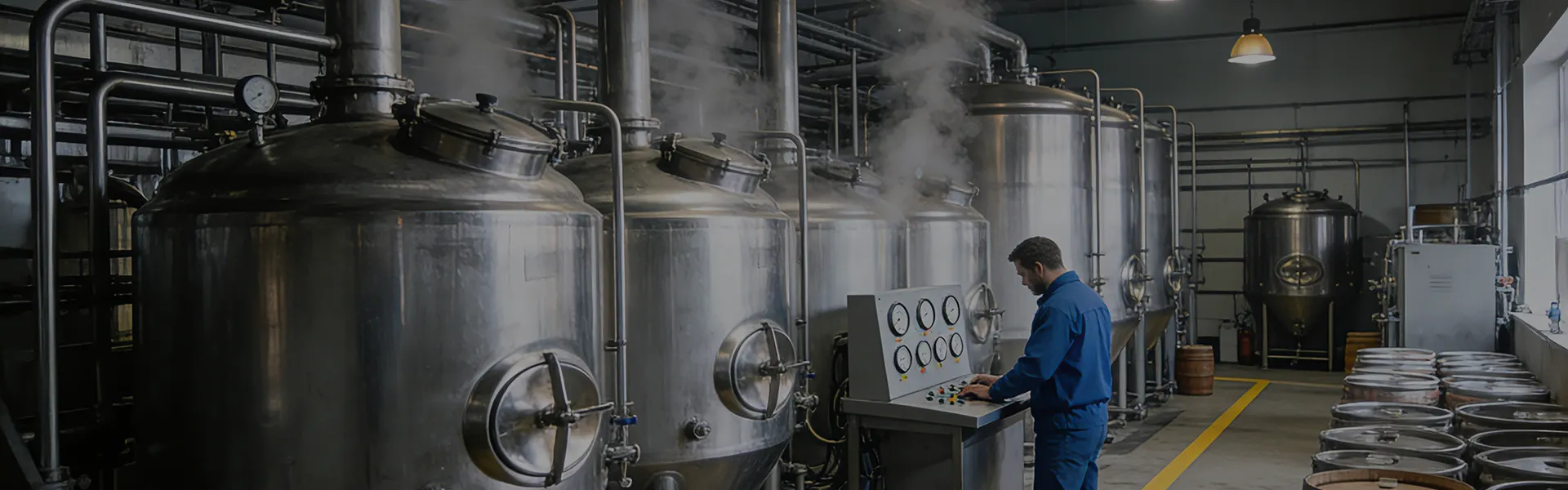
For a commercial distillery, the system is more than one shiny still. A full line may include a mash tank, fermenter, boiler, pot still, reflux column, condenser, collection tank, thermometer, hydrometer, pump, CIP cleaning system, filter, and storage vessels. Each part affects flavor, safety, output, and daily workflow.
At ZR Brew, we see distillery equipment as a production system, not just a single alcohol still. Our work focuses on customized equipment for licensed distilleries, spirits manufacturers, beverage investors, wineries, cideries, and project contractors who need stable performance and long-term support.
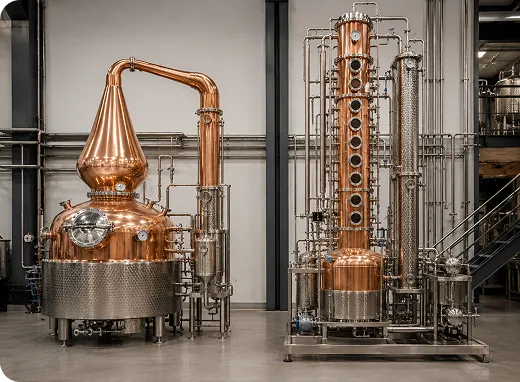
Equipamento para destilarias
How Does a Still Work in Commercial Distillation?
A still works by using heat to separate alcohol from a fermented liquid. Alcohol has a different boiling behavior than water and many other compounds. When the wash is heated, alcohol-rich vapor rises. That vapor moves through the still body, swan neck, column, or pipe system. Then it reaches the condenser, where it cools and returns to liquid form.
The basic idea sounds easy. The real work is harder. A distiller must control heat, vapor movement, reflux, cooling, and collection. Small changes can affect aroma, proof, mouthfeel, and final spirit character. That is why precise temperature control matters in both craft and large-scale production.
Commercial distilling is also about repeatability. A seasoned distiller may know the art of distillation by smell and taste, but the equipment must still support stable heating, sanitary transfer, clean condensation, and safe operation batch after batch.
Copper or Stainless Steel: Which Material Is Better?
Copper is widely used in traditional spirit production because it supports heat transfer and helps shape spirit flavor. A copper still, especially a copper pot still, is often selected for whiskey, brandy, rum, and gin projects where aroma and character matter. Red copper also gives the equipment a classic distillery look.
Stainless steel offers strength, durability, and easier cleaning. It is commonly used for tanks, columns, piping, storage vessels, and large industrial systems. Stainless steel is also practical for high-volume beverage production because it is tough, sanitary, and easier to maintain over time.
Many modern systems use stainless steel and copper together. For example, a buyer may choose a stainless steel boiler with copper vapor-contact sections. This copper and stainless steel structure can balance cost, flavor development, cleaning, and production stability.
Material Comparison Table
| Material |
Best For |
Main Advantage |
Buyer Note |
| Red copper |
Whiskey, brandy, rum, gin |
Traditional flavor and aroma support |
Needs careful cleaning |
| Stainless steel |
Vodka, neutral spirit, large systems |
Sanitary, strong, durable |
Less traditional flavor impact |
| Copper and stainless steel |
Multi-spirit production |
Balanced performance |
Good for custom projects |
| Stainless steel alcohol distiller |
Commercial repeat production |
Easy cleaning and durability |
Match design to target spirit |
Pot Still or Reflux Still: Which One Fits Your Spirit?
A pot still is often used for flavorful spirits. It is a good choice for whiskey, whisky, bourbon-style products, brandy, and rum. This design helps keep more aroma and body in the spirit. It is popular with craft distilleries that want rich and flavorful spirits.
A reflux still or column system is often used when the goal is higher proof and cleaner alcohol. Vodka and neutral spirit production usually need more separation and purification. A column with plates, dephlegmator, sight glass, and controlled reflux can help the distiller produce a cleaner spirit.
A modular design gives more flexibility. With the right configuration, the same base system can support different products. For example, a multifunctional distiller may use an onion head, swan neck, column, gin basket, condenser, and collecting tank in different combinations.
Still Type Selection
| Still Type |
Common Products |
Main Goal |
| Alambique |
Whiskey, rum, brandy |
Flavor and body |
| Copper pot still |
Craft spirits |
Aroma and tradition |
| Reflux still |
Vodka, neutral alcohol |
Higher proof and purity |
| Gin still |
Gin |
Botanical vapor infusion |
| Modular still |
Multi-spirit production |
Flexible production |
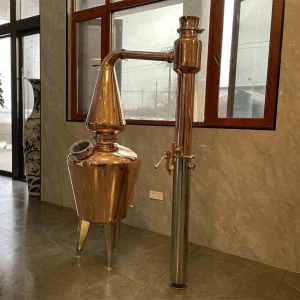
100L Pot Still
What Equipment Does a Craft Distillery Need?
A craft distillery needs more than the main still. It needs a complete system that supports fermentation, heating, vapor control, cooling, collection, cleaning, and storage. Good equipment and supplies help the team work faster and safer.
A basic commercial setup may include:
- Mash or mixing tank
- Fermentation tank or fermenter
- Boiler or steam generator
- Pot still or column still
- Dephlegmator or reflux section
- Condenser
- Collection tank
- Filter or carbon filter
- Pumps and pipe system
- Control cabinet
- Storage tank
- CIP cleaning connection
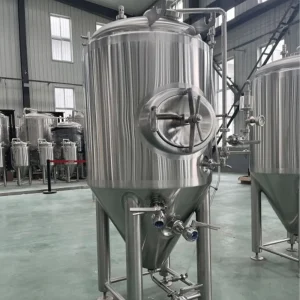
300L Side Manhole Fermenter
For small producers, a 100L or 250L system may be enough for pilot batches and boutique spirits. For growing brands, 1000L, 1500L, or 5000L systems may better match commercial output. The right choice depends on product type, building layout, utilities, batch plan, and budget.
How Do Whiskey, Brandy, Rum, Gin, and Vodka Systems Differ?
Different spirits need different equipment design. A whiskey system usually starts with grain mash, yeast, fermentation, and a still that can keep flavor. Many whiskey producers prefer pot-style designs because they support fuller body and rich aroma.
Brandy and rum also often need flavor-focused distillation. Brandy may come from fruit wine or grape wine. Rum starts with sugarcane-based materials. Both products can benefit from copper contact and careful heating.
Gin is different because botanical ingredients are part of the process. A gin system often includes a botanical basket, where vapor passes through herbs, spices, citrus peel, or other botanicals. Vodka production, on the other hand, often focuses on purity. A vodka distiller may use a tall column, more reflux, and strong separation to achieve a cleaner profile.
Why Are Boiler, Condenser, Column, and Temperature Control Important?
The boiler creates the heat that drives distillation. If heating is unstable, vapor flow becomes unstable. That can affect separation and product quality. For commercial projects, steam heating is common because it supports even heating and safer process control. Some systems may use direct fire or electric heating depending on design and local site conditions.
The condenser turns alcohol vapor back into liquid. If the condenser is too small, poorly cooled, or badly matched to the still, vapor may not condense efficiently. That can reduce output and create safety concerns. A good condenser should match the boiler power, batch size, and cooling water conditions.
The column controls separation. Plates, copper mesh, sight glass sections, reflux control, and dephlegmator design all affect how the vapor moves. Better control can help the distiller create clean vodka, flavored gin, or richer barrel-aged spirits with more consistency.
What Should Buyers Know About Fermentation Before Distillation?
Distillation does not fix every problem. If fermentation is poor, the final spirit may also suffer. Good mash preparation, yeast health, sanitation, temperature control, and fermentation time all matter before distilling begins.
For spirits production, the fermenter should be food-grade, easy to clean, and sized correctly for the still. If the fermenter is too small, the still may sit idle. If the still is too small, fermented wash may wait too long. A balanced system keeps production smooth.
This is why we design distilling systems together with fermentation and storage equipment. A good line is not only about the still. It is about the whole beverage process, from raw material to final spirit collection.
How Do Sanitary Design, CIP, Filter, and Carbon Treatment Support Quality?
Sanitary design is important in every beverage plant. Smooth welds, good gaskets, clean pipe routes, proper flange connections, and easy drain points help reduce cleaning time and contamination risk. A system that is easy to clean is easier to operate every day.
CIP, or cleaning in place, can help clean tanks, pipes, and selected equipment surfaces without taking the whole system apart. This is especially useful for larger systems and frequent batch production.
Filters can also support final quality. Some vodka or neutral spirit producers use carbon treatment or a carbon filter for polishing. This does not replace good fermentation or good distillation, but it can be part of the finishing process when the product requires a cleaner profile.
Is Home Distilling the Same as Commercial Distilling?
No. Home brewing and home distilling are very different. In many places, brewing beer at home may be allowed under certain limits, but distilling alcohol at home may require permits or may be illegal. Buyers who search for a moonshine distiller, spirits at home, or home use still should always check local law before buying or operating equipment.
Some small stills may be used for distilled water or essential oil extraction where local law allows it. But alcohol production is highly regulated in many countries and regions. A legal distillery should confirm permits, building rules, fire safety, electrical requirements, ventilation, and product labeling rules before operation.
ZR Brew’s main focus is B2B commercial equipment for licensed production, craft distillery projects, beverage investors, and industrial alcohol production facilities. We do not recommend illegal production.
How Can ZR Brew Support Custom Distillery Equipment Projects?
ZR Brew is a professional brewery and beverage equipment manufacturing plant. We provide customized stainless steel brewing systems, fermentation tanks, brewhouse systems, distillery equipment, and turnkey beverage solutions for global B2B customers.
For distillery projects, we can support small craft systems and larger industrial lines. Our distillery equipment range includes small-batch gin systems, pot still designs, multifunctional distillers, and high-volume vodka distillation systems. Capacity planning can be built around the customer’s target spirit, batch output, site layout, heating method, cooling requirement, automation level, and budget.
We also help buyers think beyond the still. A serious project may need fermentation tanks, storage vessels, control panels, pipe systems, CIP, cooling, filtration, installation guidance, and long-term after-sales support. That complete view helps reduce project risk.
Example Planning Scenario: From Small Craft System to Large-Scale Production
A boutique spirits producer may begin with a 100L copper gin system or pot still. This makes sense when the goal is product testing, local tasting room sales, and small-batch spirit crafting. The system should be compact, sanitary, and easy for a small team to operate.
A growing commercial distillery may choose a 250L, 300L, or 1000L multifunctional system. This gives more output and better flexibility across whiskey, brandy, rum, gin, and vodka-style production. A modular layout can help the buyer adjust the vapor path and production target.
A large-scale vodka producer may need a 1500L or 5000L industrial system with stronger automation, higher throughput, and repeatable process control. At this level, the buyer should pay close attention to steam supply, cooling capacity, column design, CIP, storage, and operator training.
Distilling Equipment Buying Checklist
Before you choose a system, ask clear questions. A shiny still may look top-of-the-line, but the real value is in the match between equipment and production needs.
| Question |
Por que é importante |
| What spirit will you produce? |
Whiskey, gin, vodka, rum, and brandy need different designs |
| What batch size do you need? |
A gallon-scale hobby kit is not a commercial solution |
| What heating method is available? |
Steam, electric, gas, or direct fire affect layout and safety |
| Do you need copper or stainless steel? |
Flavor, cleaning, and cost differ |
| How much automation do you want? |
Manual, PID, or PLC control affects labor and consistency |
| Do you need a column or pot still? |
Product purity and flavor depend on structure |
| What cooling capacity do you have? |
Condensation depends on stable cooling |
| Is the system easy to clean? |
Cleaning affects safety and batch repeatability |
| Can it expand later? |
Growth planning saves future cost |
Frequently Asked Questions About Distilling Equipment
What is the best distilling equipment for a craft distillery?
The best equipment depends on your target spirit, batch size, budget, and site layout. A small craft producer may choose a 100L or 250L system, while a growing distillery may need a 1000L multifunctional still or larger vodka production system.
Is copper better than stainless steel for a still?
Copper is often chosen for flavor-driven spirits because it supports traditional distilling character. Stainless steel is strong, sanitary, and easier to maintain. Many commercial systems use stainless steel and copper together for balanced performance.
What is the difference between a pot still and a reflux still?
A pot still is better for rich and flavorful spirits such as whiskey, rum, and brandy. A reflux still or column system gives stronger separation and is often used for vodka or neutral spirit production.
Can one distiller produce whiskey, gin, rum, brandy, and vodka?
A multifunctional distiller can support several spirit types when configured correctly. It may use a column, condenser, dephlegmator, gin basket, onion head, or swan neck depending on the product.
Do I need fermentation equipment for a distillery?
Yes. Fermentation creates the alcohol base that later enters the still. A suitable fermenter, mash system, yeast control, and sanitary process are important for stable production.
Can distilling equipment be used for beverage and non-beverage products?
Some equipment can be designed for beverage production, essential oil extraction, purification, or distilled water, depending on local law and process design. Alcohol production must always follow legal requirements.
Final Summary: What to Remember
- Distilling equipment is a complete production system, not only one still.
- A commercial line may include fermentation, boiler, pot still, column, condenser, filter, storage, controls, and cleaning support.
- Copper supports traditional flavor-focused spirits; stainless steel supports durability and sanitary production.
- Pot still systems suit whiskey, rum, and brandy; reflux and column systems suit vodka and neutral alcohol.
- Gin production often needs a botanical basket for vapor infusion.
- Legal requirements matter, especially for alcohol production.
- Good system design should match your spirit type, batch size, utilities, layout, automation level, and future growth.
- ZR Brew can support customized distillery equipment and turnkey beverage production solutions for global B2B customers.
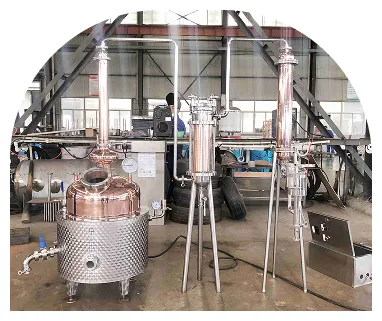
Equipamento para destilarias


 Publicado