Water quality, beverage flavor, and production safety can fail when the wrong equipment is used. That risk grows fast in brewing, spirits, and beverage projects. A clear understanding of a distiller helps you choose cleaner water, better process control, and safer production equipment.
A distiller is a machine or system that uses distillation to separate liquid parts by heating, evaporation, vapor movement, cooling, and condensation. A water distiller makes distilled water by removing many minerals and contaminants. An alcohol distiller separates alcohol from fermented liquid for spirits production under legal control.
Article Outline
- What does distiller mean?
- How does a distiller work?
- What is distillation and why does boiling point matter?
- What is a water distiller and how is distilled water made?
- What contaminant or impurity can distillation help reduce?
- Is distilled water used for drinking water, brewing, or equipment cleaning?
- Water distiller vs reverse osmosis system: which method fits best?
- What is an alcohol distiller in beverage production?
- Pot still vs continuous still: which equipment fits your project?
- How should B2B buyers choose stainless steel distillation and brewing equipment?
- FAQs about distillers, water distillation, and beverage equipment
Wat is een destilleerapparaat? Uitleg over de betekenis, waterdestilleerders, alcoholdestilleerders en destillatie
What Does Distiller Mean?
The simple meaning of distiller is a device, person, or production system that helps separate one liquid part from another. In equipment terms, a distiller heats liquid until part of it becomes vapor, then helps that vapor cool and return to liquid form. This is the basic distiller definition used in water treatment, beverage production, laboratories, and industrial processing.
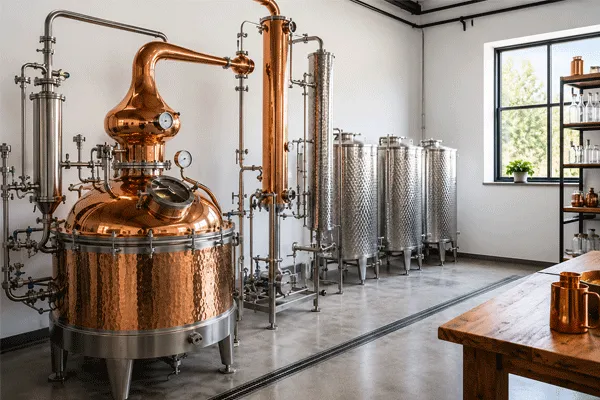
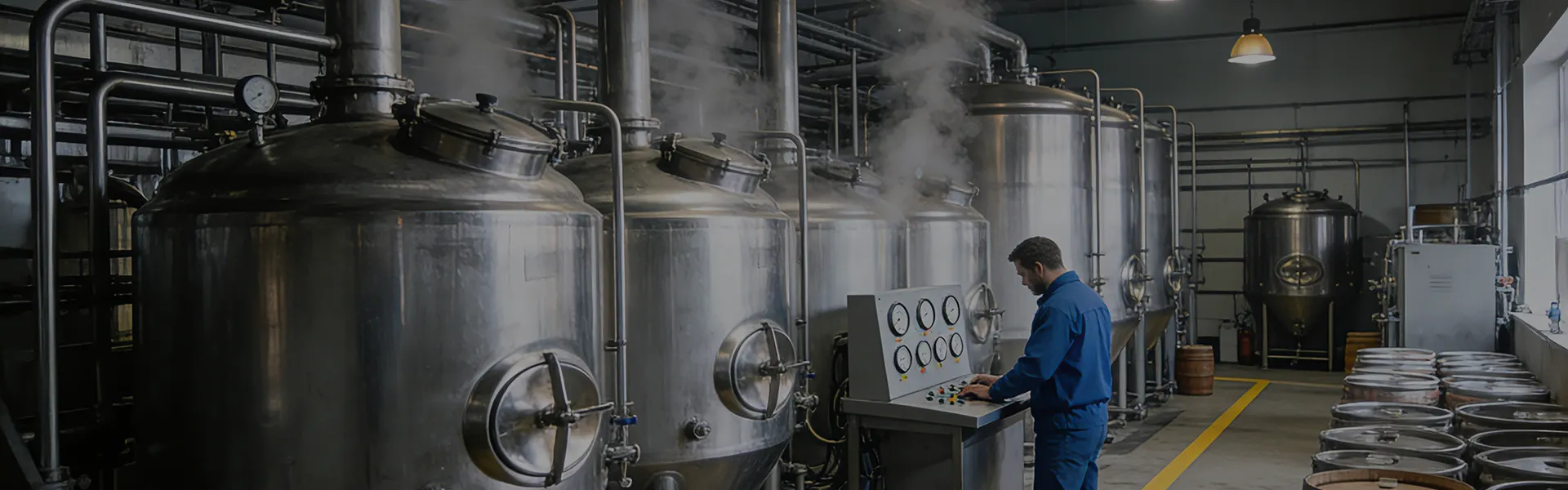
A distiller is not only a small home unit. It can also be a large stainless steel system used in a beverage plant, brewery, winery, distillery, or food processing factory. In our work as a professional brewery and beverage equipment manufacturing plant, we often see buyers use the word in different ways. Some mean a water distiller. Some mean an alcohol production system. Others mean a full stainless steel project with tanks, pumps, pipework, controls, and installation support.
For B2B buyers, the most important point is this: the machine must match the job. A small unit for water at home is very different from a sanitary stainless steel production system for a commercial beverage project.
How Does a Distiller Work?
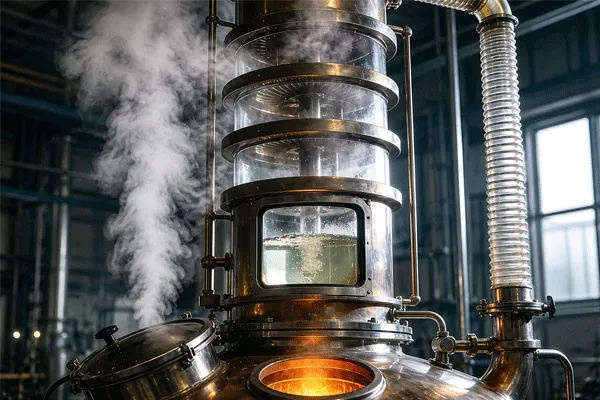
A distiller work cycle is easy to understand. First, the liquid enters a heating area. In a water unit, this area is often called the boiling chamber. A heating element raises the temperature until the target liquid starts to evaporate. When water reaches its boiling point, it becomes water vapor and rises.
Next, the vapor passes into a condenser. The condenser helps the vapor cool. As it cools, the vapor starts to condense into water droplets. These droplets collect as clean output. This step is called condensation. In simple words, the machine turns liquid into vapor, then turns vapor back into liquid.
Here is a basic process chart:
| Step |
What Happens |
Why It Matters |
| Verwarming |
Liquid reaches high temperatures |
Starts evaporation |
| Vapor movement |
Lighter vapor rises |
Separates it from many solids |
| Koeling |
Vapor passes through a condenser |
Prepares it to return to liquid |
| Collection |
Condensed liquid is collected |
Creates the final product |
A good system must control heat, flow, cleaning, and contact surfaces. This is why stainless steel design matters in beverage plants. Clean welds, smooth inner surfaces, and sanitary pipe layout reduce residue and support stable output.
What Is Distillation and Why Does Boiling Point Matter?
Distillation is a separation method. It works because different liquid parts can change into vapor at different temperatures. The boiling point tells us when a liquid starts to vaporize. This is why the process of distillation is used in water purification, alcohol production, essential oil recovery, and many beverage applications.
In water treatment, distillation can help separate water from minerals and many non-volatile substances. In beverage work, it can help separate aroma, ethanol, and other components from a liquid that has already gone through ferment activity. Yeast changes sugars into ethyl alcohol and carbon dioxide during fermentation. After that, distillation may be used in certain spirits projects.
Still, distillation is not magic. Some volatile substances can travel with vapor. That is why many water systems may use an activated carbon stage or carbon filter after distillation. For commercial beverage projects, we look at the full process, not just one machine.
What Is a Water Distiller and How Is Distilled Water Made?
A water distiller is a machine used to make distilled water. It heats tap water or another water source, lets the water evaporate, then collects the cooled vapor as distilled water. The process of water distillation is one of the oldest ways to purify water.
The water distiller works by leaving many dissolved solids behind in the boiling chamber. The output is often called pure water, purified water, or distilled output, depending on the standard and use. According to the FDA, bottled water treated by distillation, reverse osmosis, or other suitable processes may be labeled as purified water when it meets the proper requirements.
A gallon of distilled water may look simple, but the process behind it matters. If the machine is poorly designed, it may be slow, hard to clean, or unstable. For small uses, that may only be inconvenient. For a commercial beverage facility, poor water control can affect cleaning, steam generation, blending, and product consistency.
What Contaminant or Impurity Can Distillation Help Reduce?
A distiller can help reduce many types of contaminant and impurity from water. The CDC explains that distillation systems boil water and collect it as it cools, leaving behind many germs and chemicals. CDC also notes that distillation can remove parasites, bacteria, viruses, and many chemicals, but may not remove some volatile organic compounds and certain pesticides.
Common reduction targets include:
- Minerals that create scale
- Some heavy metals
- Salts and dissolved solids
- Some biological risks
- Some chemical contaminants
The EPA also notes that on-site treatment processes like disinfection, distillation, and filtration may remove contaminants found in well water, depending on the contaminant and local water condition
For B2B plants, the key is testing. Do not choose a system by guesswork. Test the source water, confirm the target water purity, and then select the right treatment train. Sometimes you need distillation. Sometimes you need filtration, softening, UV, or a reverse osmosis system. Sometimes you need several steps together.
Wat is een destilleerapparaat? Uitleg over de betekenis, waterdestilleerders, alcoholdestilleerders en destillatie
Is Distilled Water Used for Drinking Water, Brewing, or Equipment Cleaning?
Yes, distilled water used in different fields has different goals. For drinking water, people may choose it because it has very low mineral content. Drinking distilled water is generally discussed as safe in many consumer contexts, but it does not contain the natural minerals found in many water sources. For daily consumption, buyers should follow local health guidance and water quality advice.
For beverage production, the answer is more practical. Breweries do not always want mineral-free water. Beer needs the right mineral profile for mash performance, mouthfeel, and flavor. A brewery may use treated water, then rebuild the mineral profile. Kombucha, cider, cold brew coffee, wine, and spirits projects may each need different water conditions.
In our projects, water used in cleaning, steam, dilution, blending, and brewing is planned separately. One line may need filtered water. Another may need low-mineral water. Another may need cool water for heat exchange. Good design looks at the full facility, not only the brewhouse.
Water Distiller vs Reverse Osmosis System: Which Water Treatment Method Fits Best?
A water distiller and a reverse osmosis system both support water purification, but they work differently. A distillation unit uses heat, evaporation, and condensation. A reverse osmosis unit pushes water through a membrane. Both can improve water quality, but the best choice depends on source water, target output, production volume, energy cost, and maintenance ability.
The CDC notes that reverse osmosis systems can remove some chemicals and reduce many others, while distillation removes many germs and chemicals but can use more energy and take longer than other systems.
A simple buying comparison:
| Factor |
Water Distillation |
Reverse Osmosis |
| Main method |
Heat and condensation |
Membrane pressure |
| Output |
Very low mineral water |
Low dissolved solids water |
| Energy use |
Often higher |
Often lower |
| Production speed |
Usually slower |
Often faster |
| Maintenance |
Scale cleaning needed |
Membrane and filter changes |
| Best fit |
Small pure output, special uses |
Larger daily water treatment |
For beverage plants, we often suggest water testing before equipment selection. If you want high-quality water for cleaning, brewing, blending, or utility use, the best system may include pre-filtration, softening, RO, UV, carbon polishing, or other steps. Water filtration systems should be designed around the real water report.
What Is an Alcohol Distiller in Beverage Production?
An alcohol distiller is equipment used to separate alcohol and flavor compounds from a fermented liquid. The feed liquid may come from grain mash, fruit wine, sugar wash, or other fermented base. During the distillation process, the system heats the liquid so selected components vaporize, move through the system, and then return to liquid through the condenser.
This is where water and alcohol behave differently. Alcohol has a lower boiling range than water, so controlled heating helps separate alcohol-rich vapor from the wash. In commercial beverage production, this must be done carefully. Safety, legal permits, ventilation, pressure control, and product quality all matter.
In the United States, TTB states that businesses entering the distilled spirits industry must qualify by applying for the proper permit. TTB also warns that producing distilled spirits at home can violate federal law. Local rules vary by country and region, so commercial buyers should always check legal requirements before purchasing equipment.
Pot Still vs Continuous Still: Which Apparatuur Fits Your Beverage Project?
A pot still is a batch system. It is often used for spirits where flavor character matters, such as whiskey, brandy, rum, and craft spirits. A pot still allows the operator to manage cuts, aroma, and body with care. It can be slower, but many producers value its character.
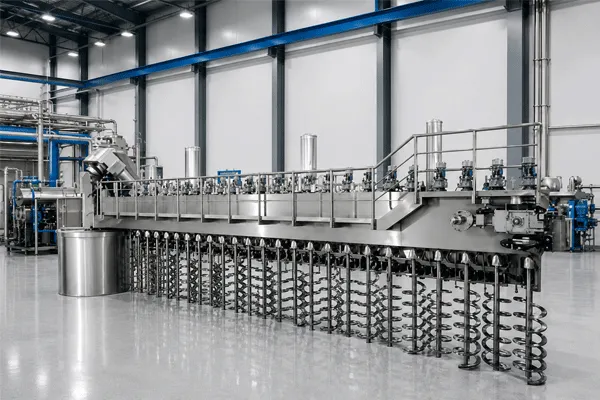
A continuous still works with steady feed and steady output. It is common in larger production where efficiency and repeatability matter. It may suit high-volume spirits, neutral alcohol, or industrial beverage projects. The right choice depends on batch size, product style, flavor goals, labor plan, utility supply, and long-term growth.
A practical decision chart:
| Project Goal |
Better Starting Point |
| Craft flavor and small batches |
Pot still |
| Large output and steady operation |
Continuous still |
| Flexible product testing |
Smaller pilot system |
| Scalable commercial production |
Custom engineered line |
| Visitor-friendly taproom or distillery |
Beautiful stainless steel layout |
As a stainless steel brewery and beverage equipment plant, we do not treat every buyer the same. A brewpub, cidery, kombucha producer, winery, distillery, and cold brew coffee factory each need a different layout. Good planning protects your investment.
Wat is een destilleerapparaat? Uitleg over de betekenis, waterdestilleerders, alcoholdestilleerders en destillatie
How Should B2B Buyers Choose Stainless Steel Distillation and Brewing Equipment?
B2B buyers should start with the product, not the machine. Ask what you want to produce, how much you want to produce, and how you will grow. A 500 L craft project, a 2,000 L commercial line, and a turnkey beverage factory need different tanks, pumps, controls, heating methods, cooling systems, and installation plans.
Important buying points include:
- Sanitary stainless steel design
- Correct tank volume and headspace
- Stable temperature control
- Easy cleaning and CIP planning
- Smooth pipe routing
- Good condenser sizing
- Safe pressure and vapor handling
- Reliable control cabinet design
- Factory testing before shipment
- Installation and after-sales support
Here is how we usually guide global B2B customers:
“Do not only buy a tank. Buy a process that matches your beverage, your building, your labor team, and your growth plan.”
Our manufacturing plant provides customized stainless steel brewing systems, fermentation tanks, brewhouse systems, distillation-related process equipment, and turnkey brewery solutions. We support craft breweries, brewpubs, taprooms, microbreweries, beverage startups, kombucha producers, cideries, wineries, distilleries, cold brew coffee producers, project investors, and engineering contractors.
Case Study: Why Capacity Planning Matters Before Purchasing a System
A beverage startup may first ask for a small brewing or distilling setup because the first budget is limited. That sounds safe. But if the taproom grows fast, the team may soon face a problem: not enough fermentation space, slow cleaning, crowded layout, and high labor cost.
In one typical project plan, we compare three production stages:
| Stage |
Buyer Focus |
Equipment Priority |
| Startup |
Control cost and test recipes |
Flexible tanks and simple layout |
| Growth |
Increase output |
More fermentation tanks and better utilities |
| Commercial scale |
Stable supply |
Automated control, CIP, and expansion space |
This is why customized design matters. A good supplier should ask about recipes, batch frequency, packaging style, building size, drainage, steam, electricity, water source, and local installation conditions. These questions may feel detailed, but they reduce project risk.
For brewing and beverage investors, the cheapest system is not always the lowest-cost system. A well-planned stainless steel line can reduce downtime, protect beverage quality, and make future expansion easier.
FAQs About Distillers, Water Distillation, and Beverage Equipment
Is distilled water the same as bottled water?
Not always. Some bottled water is spring water, mineral water, or treated drinking water. Some bottled water may be labeled as purified if treated by distillation, reverse osmosis, or another suitable process and meets the required standard. Always check the label.
Can I use a distiller to purify contaminated water?
A distiller can reduce many contaminants, but not every contaminant. Some volatile chemicals may pass through with vapor. If the source is contaminated water, test it first and choose the correct treatment system.
Is drinking distilled water safe?
Drinking distilled water is common in some uses, but it has very low mineral content. For regular drinking, follow local health guidance and consider your diet, water source, and personal needs.
Do breweries need distilled water?
Usually not as the only brewing water. Breweries often need controlled mineral content. A brewery may start with treated water, then adjust minerals for beer style and flavor.
What is the difference between water distillation and beverage distillation?
Water distillation focuses on the purification of water. Beverage distillation focuses on separating alcohol, aroma, and flavor compounds from fermented liquid. The equipment design, safety rules, and legal requirements are very different.
What should I check before purchasing a water distiller or beverage system?
Before purchasing a water distiller or commercial beverage system, check source water, target output, energy supply, cleaning method, production volume, installation space, and after-sales support.
Key Takeaways
- A distiller separates liquid components through heating, vapor movement, cooling, and collection.
- Distillation is used in water treatment, beverage production, laboratories, and industrial processing.
- A water distiller can help produce water with low mineral content, but it may not remove every volatile contaminant.
- Distilled water is useful in some cleaning, utility, laboratory, and process applications, but breweries often need adjusted water minerals.
- Beverage distillation must follow safety rules and local legal requirements.
- A pot still suits craft flavor and batch control, while a continuous system suits larger production.
- B2B buyers should choose equipment based on product type, volume of water or beverage, layout, cleaning, utilities, and growth plan.
- A professional stainless steel equipment manufacturer can help reduce risk with customized tanks, brewhouse systems, fermentation tanks, process design, and turnkey installation support.


 Gepubliceerd