Choosing a distiller sounds simple until you discover that the same term describes everything from a small countertop water appliance to a complete commercial spirits production system. Buying the wrong equipment can waste money and limit production. Understanding the differences helps you choose the right solution.
A distiller is equipment that heats a liquid to produce vapor and then cools that vapor to collect a separated liquid. It can be used to produce distilled water, recover solvents, extract aromatic compounds, or manufacture spirits. The right equipment depends on the material being processed, intended product, production capacity, safety requirements, and applicable regulations.
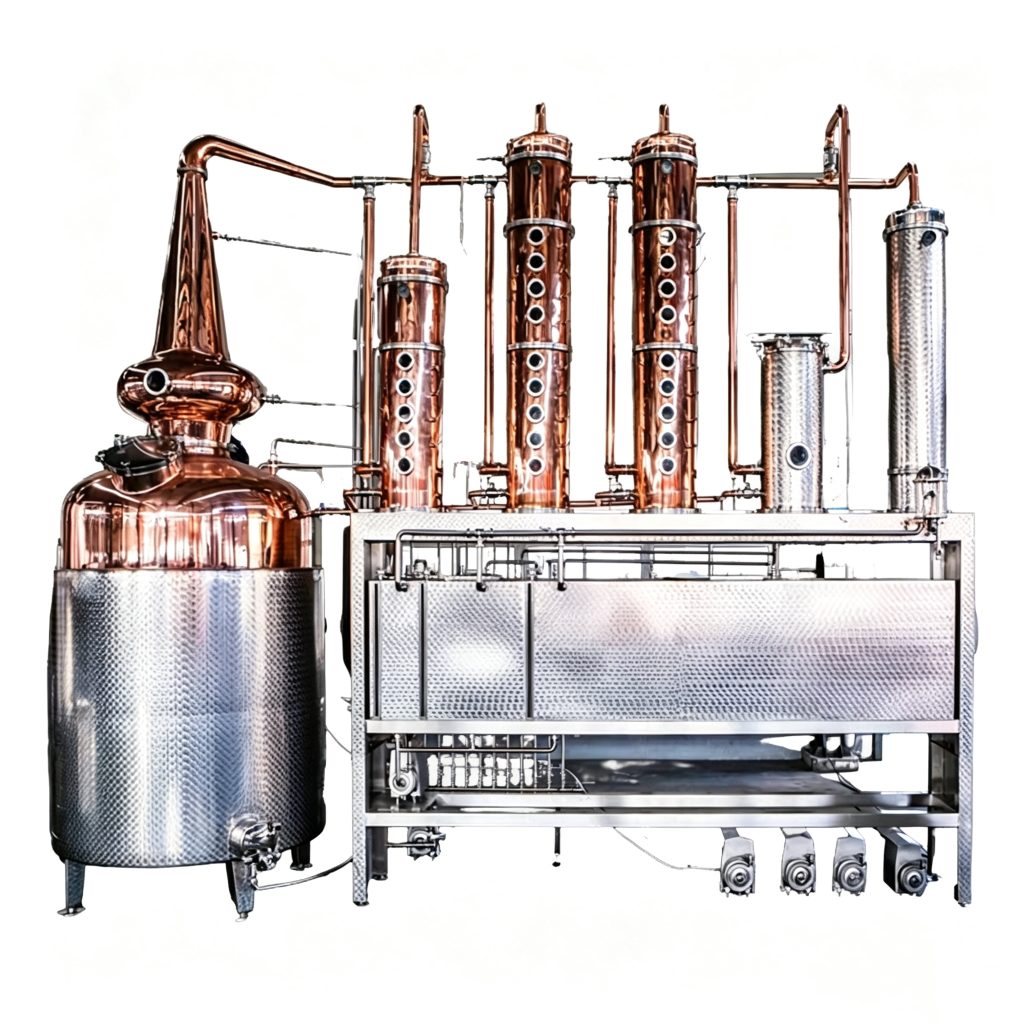
What Is a Distiller and How Does Distillation Work?
The simplest distiller definition is a machine that separates substances through evaporation and condensation. When a liquid mixture is heated, its components enter the vapor phase in different proportions. The vapor then moves into a condenser, where cooling turns it back into liquid.
The basic process involves three main stages:
- Heating: The liquid receives heat inside a boiling vessel or still pot.
- Vapor separation: Vapor travels through a designated path, column, or connecting tube.
- Condensation: A cooling system converts vapor into a collected liquid.
The process used to distill water is different from producing alcoholic spirits. A pure water distiller aims to reduce selected impurities, while a commercial spirit still separates and concentrates alcohol and manages flavor compounds. Neither process should be described as a simple filter.
It is also important to understand that distillation does not automatically remove every contaminant. Certain volatile substances can transfer with the vapor, so safe operation and suitable feedwater or raw material quality still matter.
What Are the Main Types of Distillers?
Different applications require different equipment structures. A buyer searching for a distiller online may encounter several distinct product categories.
| Equipment Type |
Main Purpose |
Typical Buyer |
| Countertop water distiller |
Producing purified water |
Household or office user |
| Air still |
Compact distillation applications, depending on model |
Small-scale equipment buyer |
| Laboratory distillation apparatus |
Controlled separation or research |
Laboratory or educational institution |
| Copper pot still |
Batch spirit production |
Craft spirits manufacturer |
| Multifunctional alcohol distiller |
Configurable production of different spirits |
Commercial craft producer |
| Column or rectification system |
Higher-strength spirit production |
Commercial or industrial producer |
A countertop distiller and a commercial alcohol distiller may share the basic heating-and-cooling principle, but their engineering requirements are very different.
For beverage manufacturers, the decision should begin with the finished product. Are you producing gin, whisky, brandy, rum, or vodka? How much product do you plan to manufacture, and what level of process control do you require?
These questions matter far more than choosing equipment based only on a low purchase price or a familiar product name.
What Is a Home Distiller or Air Still?
A home distiller usually refers to a compact appliance intended for household water purification or another application permitted by local law. Many consumer searches involve a countertop distilled water machine that heats water in a small chamber and collects the condensed liquid in a separate container.
Typical purchasing terms include:
- Stainless steel water distiller
- Water distiller machine
- Water distiller with glass carafe
- 304 stainless steel countertop distiller
- Countertop distiller for home or office use
Some users also search for an air still, particularly compact electrically heated equipment. However, a product advertised as an air still should not automatically be assumed suitable for every liquid or application. Buyers must follow its intended use, operating instructions, and local regulations.
Consumer product listings sometimes describe a 750W distilled water maker machine, a 1.1 gallon collection capacity, a glass pot, a plastic carafe, or a stainless steel interior drinking machine. Features such as a temp display, automatic shutoff, and a BPA free collection container are model-dependent specifications, not universal characteristics.
Water Distiller vs Water Purifier Filter: What’s the Difference?
People searching for a machine to make clean water often compare distilling equipment with a water purifier filter for home applications.
These products do not necessarily use the same treatment process.
A conventional filter may use activated carbon, membranes, or other filtration media to reduce specified substances. A water distillation appliance instead boils feedwater and collects condensed vapor. The effectiveness of either system depends on its design, maintenance, and the contaminants involved.
| Comparison |
Water Distillation Appliance |
Water Filtration System |
| Main process |
Evaporation and condensation |
Filtration through selected media |
| Energy requirement |
Usually requires heating |
Depends on the filtration technology |
| Output |
Condensed water |
Filtered water |
| Main maintenance |
Chamber and condenser cleaning |
Filter or membrane replacement |
| Key buying factor |
Feedwater quality and treatment performance |
Verified contaminant reduction |
A buyer may search for a water purifier filter for home table countertop use, a larger pure water purifier filter, or a gallon pure water purifier filter. These are consumer water-treatment searches rather than specifications for commercial spirit equipment.
Brand and accessory searches also appear in this category. Examples include VEVOR water distiller, Megahome water distiller, a water distiller with BPA free carafe, and products supplied with cleaning powder or 3 carbon packs.
Such accessories should be evaluated against the actual manufacturer’s documentation. A glass carafe alone does not establish purification performance, and a marketing description such as pure water maker is not a substitute for verified product specifications.
At ZR Brew, our primary equipment focus is commercial brewing, fermentation, and spirits production rather than household drinking-water appliances.
How Does an Alcohol Distiller Work?
An alcohol distiller is designed to separate and concentrate alcohol and other volatile components from a suitable fermented liquid.
For commercial spirit production, the process begins well before the liquid enters the still. Raw materials are prepared, fermentable sugars are produced or supplied, and fermentation creates a liquid suitable for the intended production process.
The still then heats this material under controlled conditions. Vapor travels through the equipment, where the design of the pot, column, reflux system, and condenser influences the resulting spirit.
A typical commercial production chain may include:
Raw Material Preparation → Mashing → Fermentation → Distillation → Spirit Collection → Storage or Further Processing
The design differs according to the target spirit. A whisky producer may prioritize a particular flavor profile, while a vodka manufacturer may require a rectification system capable of producing higher-strength alcohol under the appropriate operating conditions.
A water alcohol distiller sold as a consumer kit should therefore not be treated as equivalent to an engineered commercial production line.
Commercial systems also require a suitable approach to vapor containment, cooling-water management, pressure protection, ventilation, cleaning, and compliance with the regulations in the installation country.
What Distiller Sizes Does ZR Brew Offer for Commercial Production?
ZR Brew manufactures customized brewery and beverage equipment, including commercial distillation systems designed around different production scales and target spirits.
Our publicly listed range includes small-batch specialized units, multifunctional systems, and larger vodka production equipment.
| ZR Brew Product |
Effective Volume |
Main Positioning |
| 100L Gin Distiller |
100L |
Craft gin and botanical infusion |
| 100L Pot Still |
100L |
Small-batch pot distillation |
| 150L Multifunctional Distiller |
150L |
Configurable craft production |
| 250L Multifunctional Distiller |
250L |
Small commercial multi-spirit production |
| 300L Multifunctional Distiller |
300L |
Commercial craft spirits |
| 1000L Multifunctional Distiller |
1000L |
Larger-batch configurable production |
| 1500L Vodka Distiller |
1500L |
Commercial vodka and neutral spirits |
| 5000L Fully Automatic Vodka Distiller |
5000L |
Industrial vodka production |
Effective vessel volume is not the same as finished spirit yield. Actual output depends on the feed material, alcohol content, filling volume, process configuration, operating conditions, and target product strength.
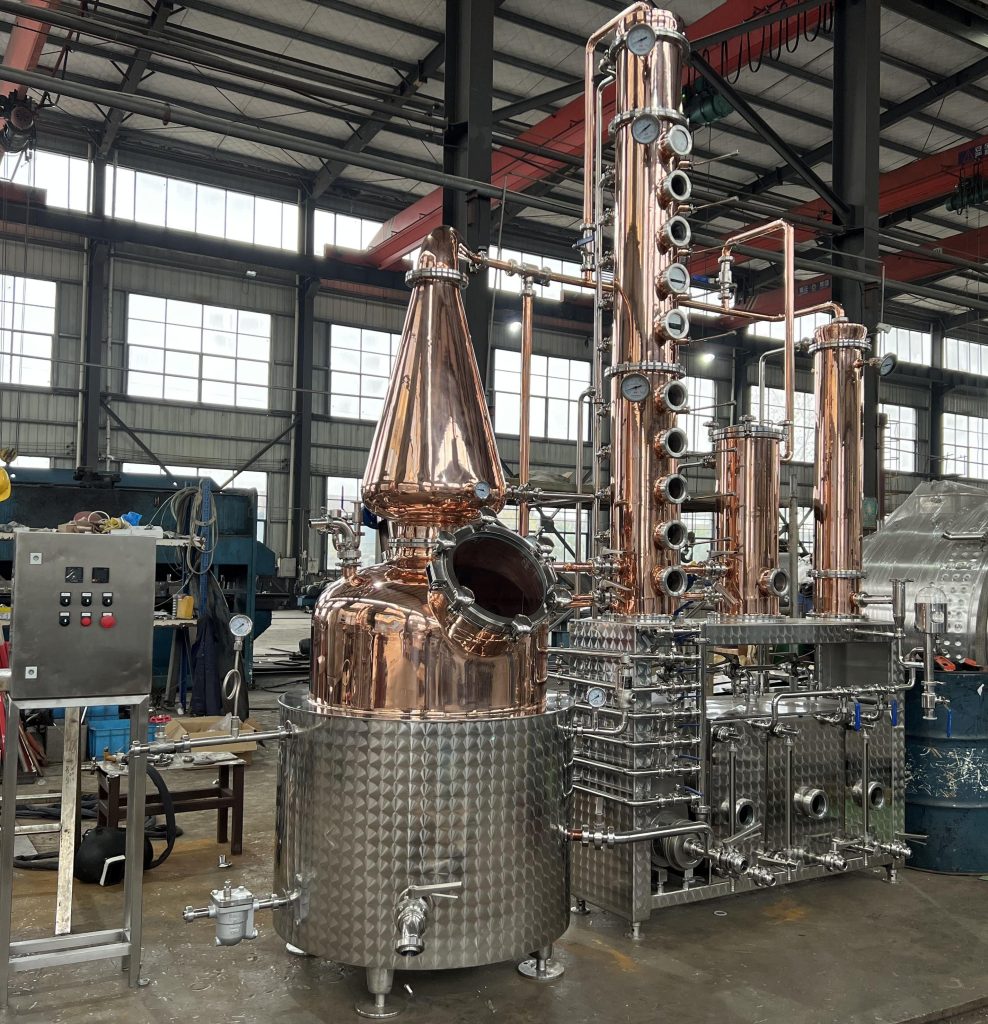
For example, our 100L Gin Distiller is designed around gin-specific requirements, including a botanical basket. Our 250L and 1000L multifunctional models are designed for configurable applications. The 1500L Vodka Distiller and 5000L Fully Automatic Vodka Distiller address larger commercial production requirements with different heating and control configurations.
How Do You Choose the Right Distiller for a New Distillery?
Before comparing purchase prices, develop a clear production brief.
Start with the spirit you intend to manufacture, the planned annual output, the production schedule, and the building in which the equipment will operate. These factors determine the suitability of the still and its supporting systems.
A practical purchasing checklist includes:
| Project Question |
Why It Matters |
| What spirit will you produce? |
Helps define the required distillation arrangement |
| What is your target batch or annual output? |
Helps determine appropriate equipment capacity |
| What is the expected feed volume and composition? |
Supports process and yield calculations |
| What utilities are available? |
Affects heating, cooling and electrical design |
| What space is available? |
Determines layout, access and installation planning |
| What level of automation is required? |
Influences controls, operation and investment |
| Do you need a complete production line? |
Defines the supporting equipment and project scope |
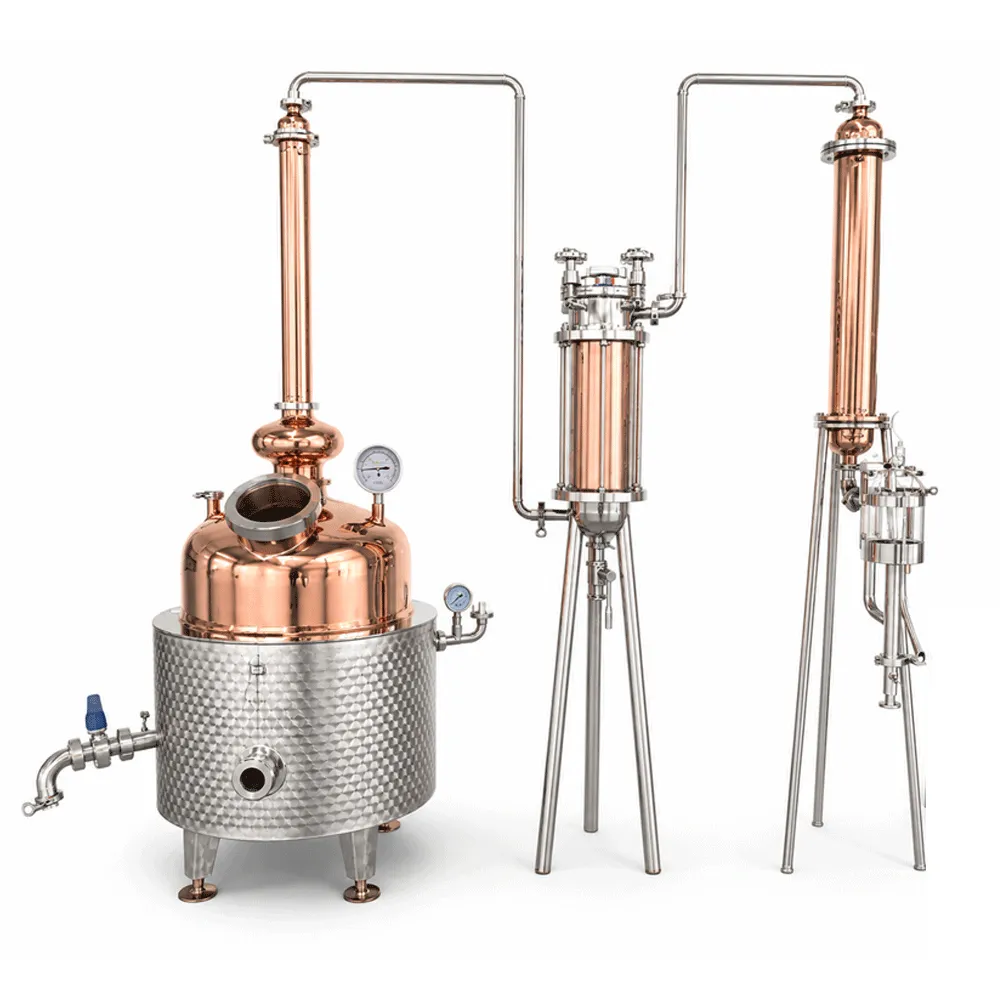
For example, a craft gin business may need a specialized copper still with botanical infusion equipment. A producer planning several spirit styles might prefer a multifunctional system with appropriate configurable components.
A commercial vodka project will have different separation and capacity requirements.
At ZR Brew, we support buyers who need more than a standalone machine. Our complete distillery solutions can incorporate mashing, fermentation, distillation, condensing, collection, storage, and CIP according to the confirmed project scope.
FAQ
What is the difference between a water distiller and an alcohol distiller?
A water unit is designed to produce condensed water, while spirit equipment processes a suitable alcoholic liquid to achieve a desired product composition. They share a basic separation principle but differ significantly in construction, operation, safety requirements, and intended use.
Can a countertop distiller be used for commercial vodka production?
A household appliance is not a substitute for an engineered commercial vodka system. Commercial production requires suitable capacity, process controls, supporting infrastructure, safety measures, and regulatory compliance.
Is an air still the same as a pot still?
Not exactly. The phrase air still commonly refers to certain compact electrically heated products. A pot still describes a broader distillation arrangement based on a boiling vessel and vapor-condensing path. Their exact features depend on the equipment design.
What material is better for a commercial still: copper or stainless steel?
Both have valid applications. Copper is valued for its interaction with certain sulfur compounds, while stainless steel offers important sanitary fabrication and maintenance advantages. Hybrid configurations can combine selected characteristics of both materials.
Can one commercial distiller produce gin, whisky, rum, and vodka?
A multifunctional system may support several spirit production processes when fitted with suitable components. However, the equipment must be specified against the required product characteristics, strength, production volume, and operating conditions.
What is the best distiller size for a craft spirits startup?
There is no universal size. A 100L or 300L system may be appropriate for some small-batch projects, while other businesses need a larger installation. The choice should follow your production targets, process requirements, available utilities, and business plan.
What should I send a manufacturer when requesting a quotation?
Provide the intended spirit, target batch and annual output, feed material, required equipment capacity, available utilities, installation country, facility dimensions, automation expectations, and preferred project scope.


 Published