Buying commercial distillation equipment is a major investment. The wrong still size, heating method, or column configuration can limit production and increase operating costs. Understanding how different systems work helps distillery owners select equipment that matches their spirits, production goals, and budget.
Commercial distillation equipment includes pot stills, column stills, multifunctional distillers, and supporting systems used to produce spirits such as whiskey, gin, rum, brandy, and vodka. . Choosing the right system depends on the target spirit, batch capacity, material, heating method, automation, and total project cost. A complete distillery also needs fermentation, cooling, cleaning, and spirit storage equipment.
What Is Commercial Distillation Equipment and How Does It Work?
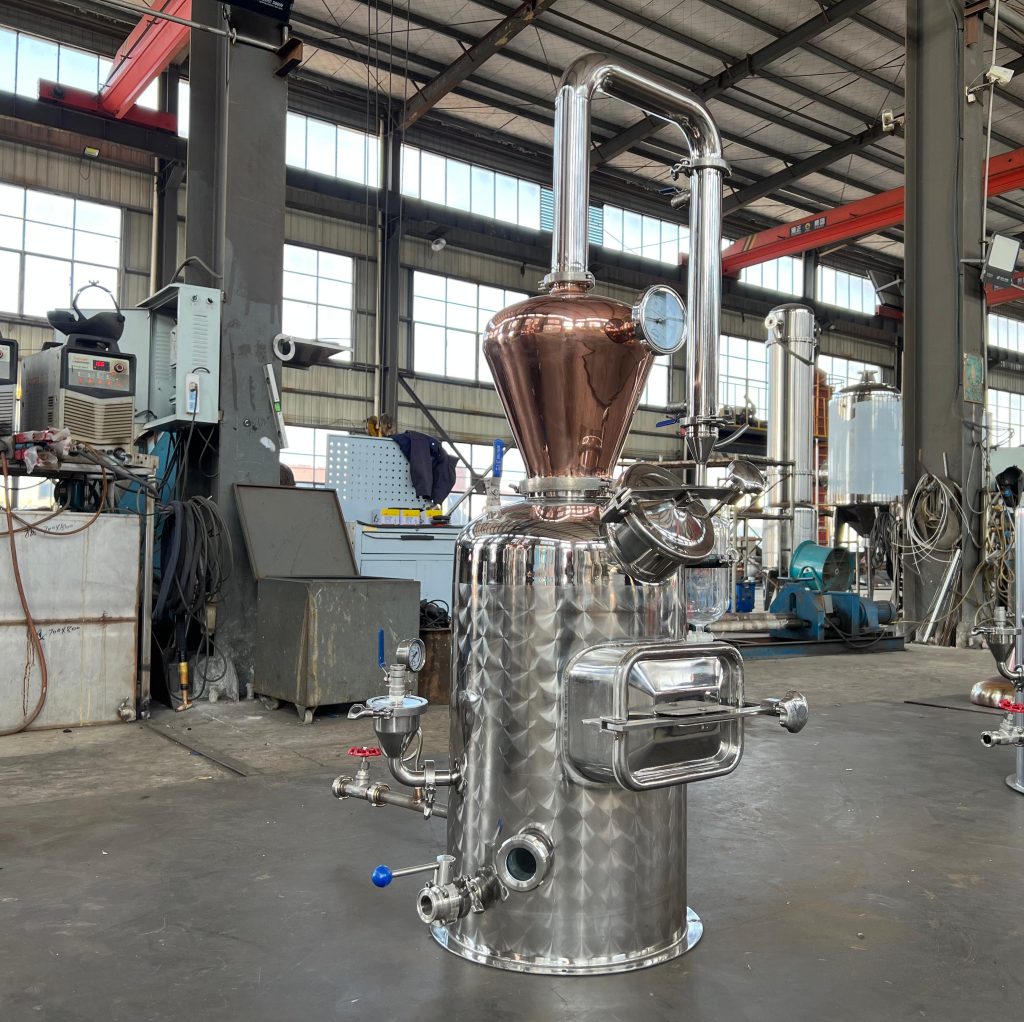
Commercial distillation equipment separates and concentrates alcohol from fermented liquids through controlled heating and condensation.During the distillation process, fermented liquid enters a heated still pot. Alcohol and other volatile compounds move into the vapor phase, pass through a swan neck or column, and reach a condenser. The condenser cools the vapor into liquid distillate.The resulting spirit depends on the raw materials, fermentation conditions, still design, and operating method.
Basic Commercial Distillation Process
A typical spirits production process includes:
- Fermentation: Yeast converts fermentable sugars into alcohol.
- Heating: The still heats the fermented liquid.
- Vapor separation: Alcohol-rich vapor rises through the still or column.
- Reflux control: A dephlegmator may return part of the condensed liquid for further separation.
- Condensation: The condenser converts vapor into liquid.
- Spirit collection: Operators collect and separate the distillate according to the production process.
- Finishing: The spirit may undergo dilution, filtration, maturation, or packaging.
For commercial producers, the goal is not simply to distill alcohol. It is to achieve the required spirit character, alcohol concentration, and production efficiency.
What Are the Main Types of Distillation Equipment?
Different types of distillation equipment serve different spirits and production requirements.
Pot Still Distillation Equipment
A pot still uses a heated vessel connected to a vapor path and condenser.It is commonly used for whiskey, brandy, rum, and other spirits where retaining selected flavor compounds is important.ZR Brew offers a 100L Pot Still for small-batch commercial production and craft distillery projects.This configuration is suitable for producers who prefer traditional batch distillation and greater control over spirit character.
Column Distillation Equipment
A column still uses plates or packing to increase contact between rising vapor and descending liquid.This improves separation and allows higher alcohol concentrations when combined with suitable reflux control.Column systems are commonly used for vodka and neutral spirits production.The required column height, plate configuration, and reflux arrangement depend on the target product.
Multifunctional Distillation Equipment
A multifunctional distiller combines configurable components to support different spirit types.ZR Brew offers multifunctional systems in several capacities, including 150L, 250L, 300L, and 1000L.Depending on the selected configuration, these systems may include a column, dephlegmator, onion head, gin basket, and condenser.This flexibility is useful for distilleries producing more than one spirit category.
ZR Brew Equipment Comparison
| Equipment Type |
ZR Brew Product |
Main Application |
| Pot Still |
100L Pot Still |
Whiskey, brandy, rum |
| Gin Distiller |
100L Gin Distiller |
Craft gin and botanical spirits |
| Multifunctional Distiller |
150L / 250L / 300L |
Small commercial multi-spirit production |
| Multifunctional Distiller |
1000L |
Larger commercial production |
| Vodka Distiller |
1500L Vodka Distiller |
Commercial vodka production |
| Automatic Vodka Distiller |
5000L Fully Automatic Vodka Distiller |
Industrial vodka production |

What Components Are Included in a Distillation System?
A commercial distillation system includes several connected components.Understanding their functions helps buyers compare quotations and identify missing equipment.
Main Distillation Equipment Components
| Component |
Main Function |
| Still Pot |
Holds and heats fermented liquid |
| Swan Neck or Onion Head |
Directs vapor through the system |
| Distillation Column |
Supports alcohol separation |
| Dephlegmator |
Controls reflux in suitable systems |
| Gin Basket |
Holds botanicals for vapor infusion |
| Condenser |
Converts vapor into liquid |
| Spirit Collection Tank |
Collects distillate |
| Heating System |
Supplies thermal energy |
| Control Panel |
Monitors selected operating parameters |
| CIP System |
Supports cleaning of compatible equipment |
Not every system requires all these components.For example, a traditional whiskey pot still may use a relatively simple vapor path, while a multifunctional system may require additional column sections and reflux controls.
Why Does Component Configuration Matter?
The selected components influence alcohol concentration, spirit character, cleaning requirements, and production flexibility.A gin producer may need a botanical basket, while a vodka producer may prioritize column separation capability.Before purchasing, buyers should confirm which components are included in the standard configuration and which require customization.
What Equipment Is Needed for a Complete Distillery?
A complete distillery requires more than a still.The production line must connect raw material preparation, fermentation, distillation, storage, and cleaning.
Typical Distillery Production Process
Raw Material Preparation → Mashing → Fermentation → Distillation → Spirit Collection → Storage → Packaging
Main Equipment Configuration
| Production Stage |
Equipment |
| Raw Material Preparation |
Grain crusher and conveying equipment |
| Mashing |
Mash tun and related processing equipment |
| Fermentation |
Stainless steel fermentation tanks |
| Distillation |
Pot still, column, and condenser |
| Spirit Collection |
Collection vessels |
| Storage |
Spirit storage tanks |
| Finishing |
Blending and filtration equipment |
| Cleaning |
CIP cleaning system |
| Utilities |
Steam, cooling, and water treatment |
| Packaging |
Suitable filling equipment |
Why Does Production Layout Matter?
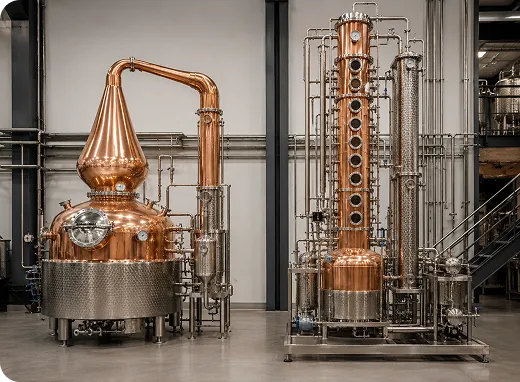
A well-planned facility helps operators move liquids efficiently and provides access for cleaning, inspection, and maintenance.The layout should also account for equipment dimensions, ceiling height, drainage, ventilation, and utility connections.For brewery owners expanding into spirits production, some existing fermentation and utility infrastructure may be suitable for reuse.However, alcohol distillation introduces additional safety and licensing requirements.ZR Brew provides equipment configuration and production layout support for customized distillery projects.
How Much Does Commercial Distillation Equipment Cost?
Commercial distillation equipment prices vary according to capacity, material, heating method, automation, and included components.A 250L system with a simple configuration may have a different cost from a multifunctional system of the same size.Therefore, buyers should compare the complete equipment scope rather than vessel capacity alone.
Main Factors Affecting Equipment Cost
| Cost Factor |
Purchasing Consideration |
| Still Capacity |
Effective working volume |
| Material |
Copper, stainless steel, or hybrid |
| Column Configuration |
Plates, column sections, and reflux components |
| Heating |
Electric, steam, or direct fire |
| Automation |
PID or PLC |
| Accessories |
Gin basket, condenser, collection tanks |
| Auxiliary Equipment |
Cooling, pumps, CIP, and piping |
| Installation |
Factory layout and commissioning requirements |
What Should Be Included in a Distillation Equipment Quotation?
Before comparing suppliers, request a detailed quotation.
| Quotation Item |
What Buyers Should Confirm |
| Still Body |
Capacity, material, and construction |
| Column |
Plate quantity and reflux configuration |
| Condenser |
Type and cooling requirements |
| Heating System |
Whether the heat source is included |
| Control Panel |
PID or PLC and included functions |
| Pumps and Piping |
Connection standards and scope |
| CIP System |
Included or optional |
| Technical Drawings |
Equipment dimensions and layout |
| Factory Testing |
Inspection and testing documentation |
| Installation |
On-site or remote support |
| Shipping |
Packaging and freight terms |
The total cost of a distillation system depends on the complete equipment scope, not just the price of the still.A clear quotation helps buyers compare equipment fairly and identify additional project expenses before placing an order.For customized equipment, pricing should be based on the actual production requirements.
Why Choose ZR Brew as Your Distillation Equipment Manufacturer?
ZR Brew manufactures commercial distillation equipment and stainless steel beverage processing systems for craft distilleries, commercial spirits producers, and international project investors.
Our product range includes pot stills, gin distillers, multifunctional systems, and industrial vodka equipment.
Equipment for Different Production Scales
ZR Brew provides equipment configurations ranging from 100L craft systems to 5000L industrial vodka distillers.
Customers can discuss material selection, column design, heating, automation, and supporting equipment according to their target spirits.
In-House Manufacturing and Quality Control
Our manufacturing processes include material inspection, cutting, welding, polishing, assembly, and equipment testing.
ZR Brew also provides technical drawings and equipment configuration support to help customers plan their production facilities.
FAQ
What is the difference between a pot still and a column still?
A pot still is commonly used for batch distillation where retaining selected flavor compounds is important. A column still provides additional vapor-liquid separation and can achieve higher alcohol concentrations depending on its design.
What size distillation equipment is suitable for a small distillery?
A 100–300L system may suit small commercial producers and pilot projects. The correct capacity depends on the spirit type, expected sales, available fermentation volume, and production schedule.
Is copper or stainless steel better for distillation?
Copper can help reduce selected sulfur compounds during distillation. Stainless steel provides durable construction and practical cleaning characteristics. Some systems combine both materials to meet specific process requirements.
What affects the price of commercial distillation equipment?
The main factors include vessel capacity, material, column configuration, heating method, automation, accessories, and installation requirements. Buyers should compare the full equipment scope before selecting a supplier.
Can ZR Brew provide a complete distillery production system?
Yes. ZR Brew supplies configurable distillation equipment and supporting systems, including fermentation tanks, heating, cooling, storage, and cleaning equipment. The final configuration depends on the customer’s production requirements.


 Published