

お見積りをご依頼ください
24時間以内にご返信いたします。お急ぎの場合は、WhatsAppまたはWeChat(+8613188932181)までご連絡ください。.
*当社はお客様のプライバシーを尊重し、すべての情報を保護いたします。.
お客様の情報は、お問い合わせへの回答にのみ使用し、未承諾のメールや宣伝メッセージを送信することは一切ありません。.
 公開日
公開日
ZR Brew Technical Team Brewing, Fermentation and Beverage Equipment Engineering Team Updated: September 7, 2026
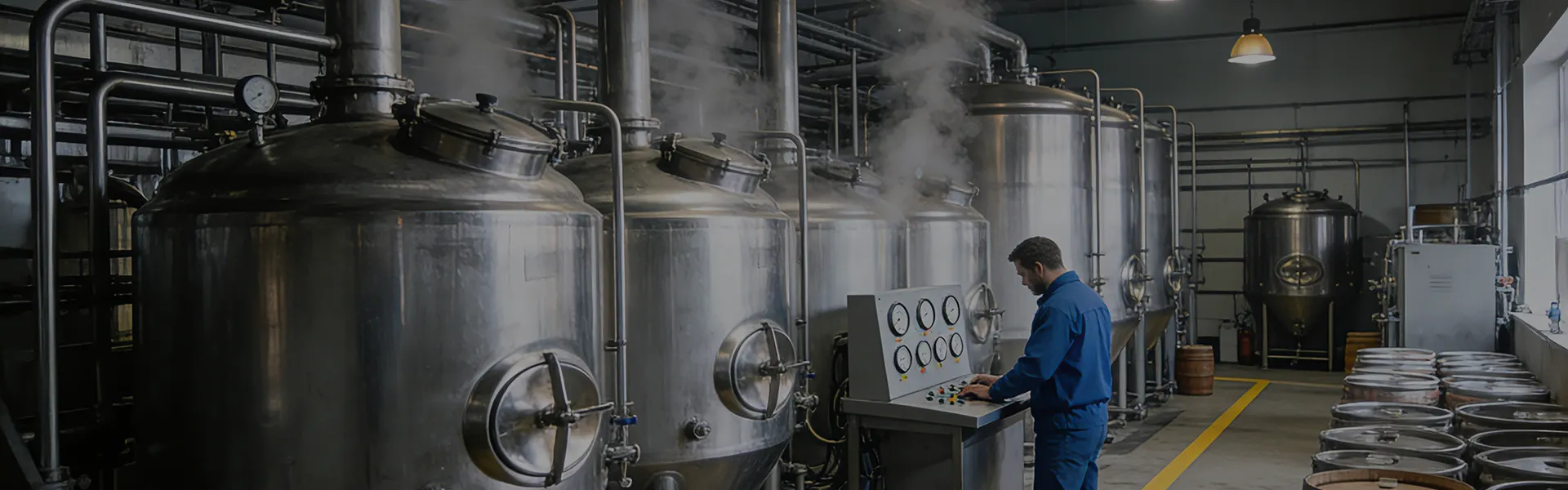
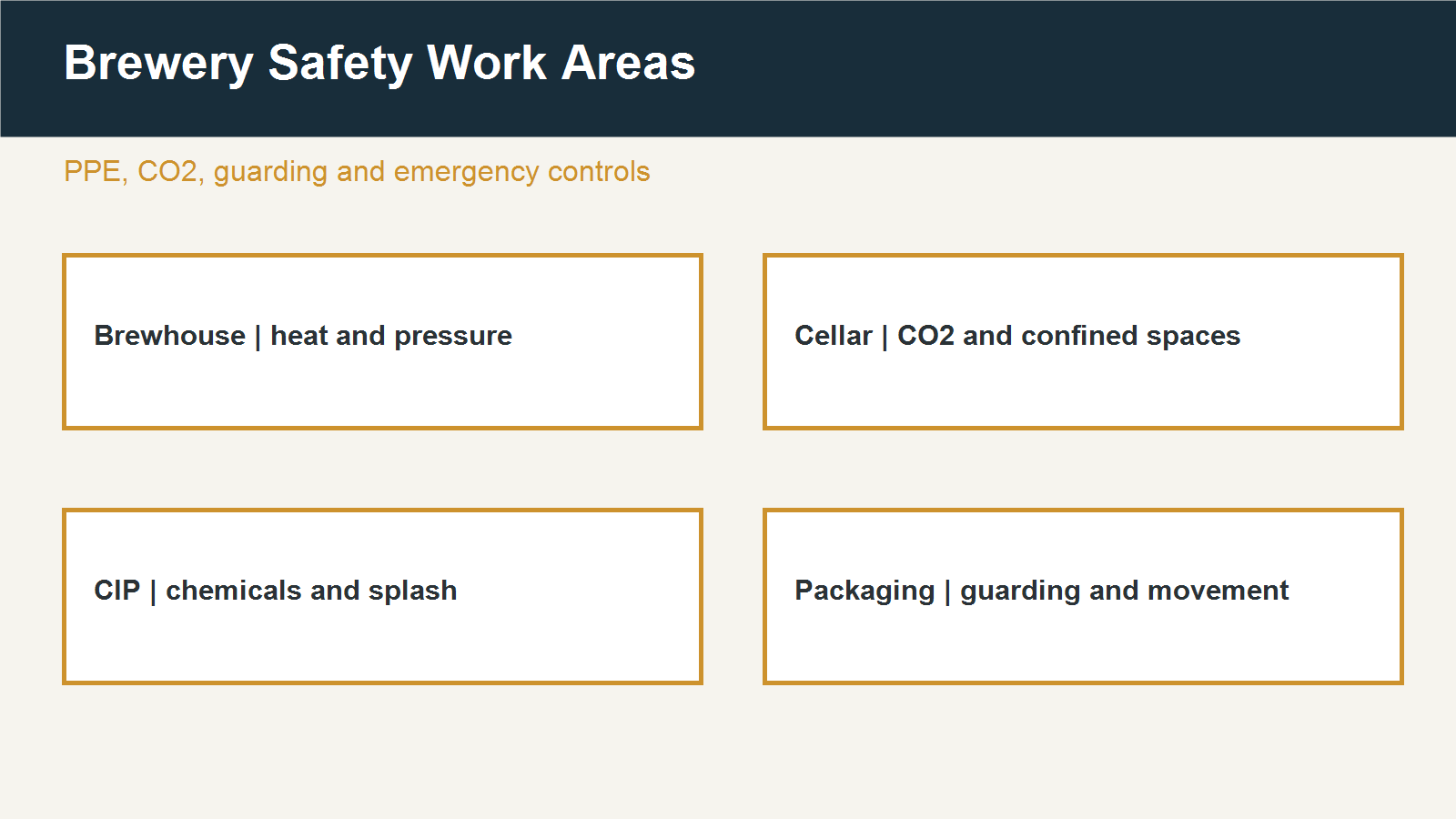
Brewery safety equipment should be selected by hazard and work area, not purchased as one generic PPE kit. A practical checklist separates heat and pressure controls in the brewhouse, CO2 and access controls in the cellar, chemical protection at CIP stations, and guarding and emergency stops around packaging equipment.
Walk the process from receiving through brewing, fermentation, cleaning, packaging and waste handling. For each area, record the energy source, material handled, people exposed, normal task, foreseeable upset and emergency action. The resulting map should identify equipment and procedures together: a detector without an alarm response, or gloves without chemical compatibility, is not a complete control.
The U.S. OSHA general industry standards are a useful reference for projects in the United States, but the applicable local occupational-safety rules, fire code and pressure-equipment requirements govern the installation. Equipment suppliers should provide manuals and hazard information for the selected configuration; they do not replace the site risk assessment.
For lifting and access planning in Great Britain, the Health and Safety Executive’s planning guidance is a useful official reference; other locations must follow their own applicable rules.
The brewhouse combines hot liquid, steam or direct-fire heating, pumps, valves and elevated work positions. The checklist should include:
Do not treat a pressure-relief valve as permission to exceed the vessel’s documented operating limits. The relief path, discharge location and inspection interval require a qualified review for the actual installation.
Fermentation and bright-beer areas can accumulate CO2, especially in low points or poorly ventilated rooms. A cellar checklist should cover:
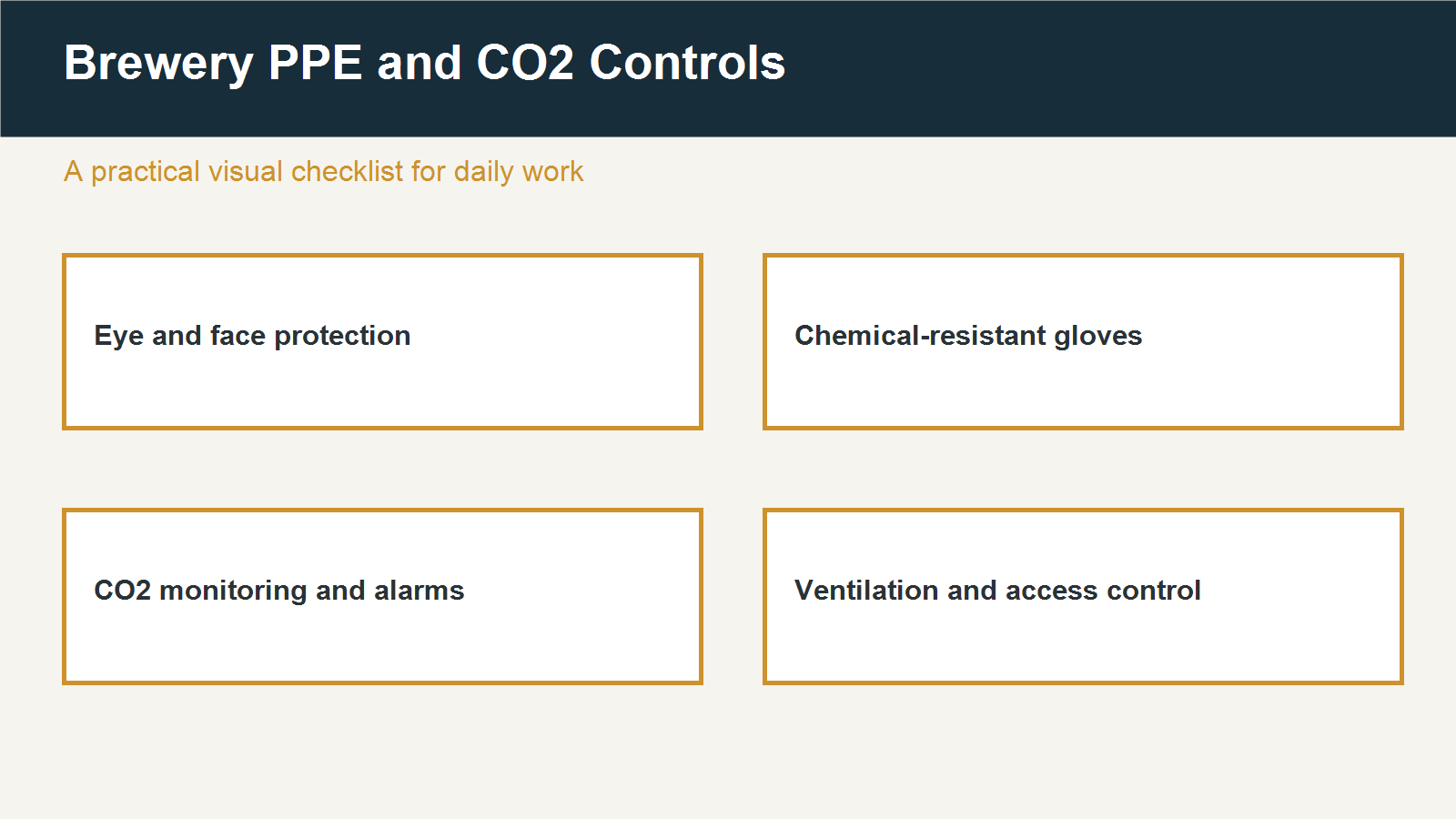
Never send a worker into a suspected CO2-enriched area for rescue without a trained rescue plan and suitable equipment. Call the local emergency service when the site’s emergency procedure requires it.
CIP work can involve corrosive or hot solutions, pressurized hoses and splash during connection or disconnection. Equipment and controls should include:
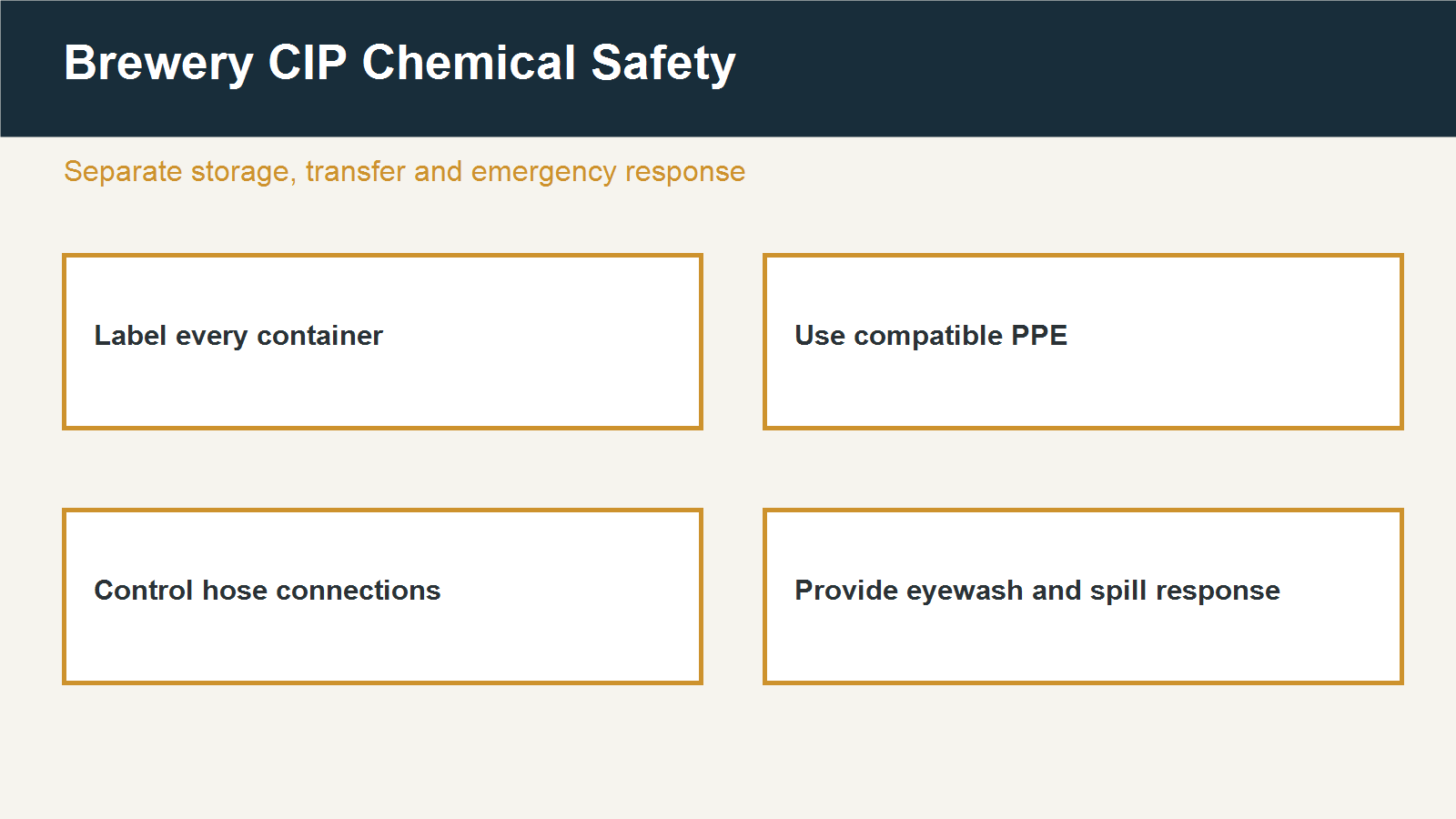
Chemical gloves are not interchangeable. Check breakthrough data, concentration, temperature and contact time rather than selecting a glove by color or a general label such as “industrial.”
Packaging lines introduce conveyors, fillers, seamers, cappers, pallet movement and compressed air. The safety equipment checklist should verify fixed guards, interlocked access doors where required, emergency-stop locations, safe clearing procedures and isolation points. Add pedestrian separation, forklift controls and load-handling rules when kegs, cartons or pallets move through the same space.
Compared with a small manual packaging bench, an automated line may expose workers to more stored energy and restart hazards. The control system, guarding and training must match the selected machine rather than the expected output alone.
Emergency equipment is useful only when people can reach it and know what it means. Mark exits, first-aid supplies, fire equipment, spill kits, eyewash stations and alarm reset points. Keep routes clear, inspect equipment at a defined frequency and record corrective actions.
Use a short area checklist at shift start:
Before ordering, ask the supplier for equipment manuals, hazard labels, pressure and temperature limits, electrical details, guarding arrangements, emergency-stop circuits, cleaning-chemical compatibility and recommended inspection points. Ask the site contractor to confirm local electrical, fire, structural, pressure and occupational-safety requirements. Record which party owns each control after handover.
ZR Brew supplies customized brewing, fermentation, distillation and beverage-processing equipment from 50L pilot systems to 150HL commercial breweries. For a project-specific review, send the approved layout, equipment schedule, utility information and intended production plan through the ZR Brew contact team. You can also review the brewery equipment cost guide when comparing project scope.
No. PPE must match the task, chemical, temperature, splash potential and moving-equipment exposure. The risk assessment should define the selection and replacement rules.
Placement depends on room geometry, likely accumulation points, ventilation and the detector specification. A competent professional should define coverage, alarm response and testing rather than copying a universal mounting height.
No. The source library identifies company-level CE and ISO 9001 claims, but product-specific certificates and scopes must be confirmed for the supplied configuration. Site installation, guarding, utilities, training and local compliance remain separate responsibilities.
The ZR Brew Technical Team supports the planning, engineering, manufacturing, installation and commissioning of brewery, fermentation, distillation and beverage-processing projects. The company states that its key engineers and project leaders average more than 13 years of practical industry experience.
24時間以内にご返信いたします。お急ぎの場合は、WhatsAppまたはWeChat(+8613188932181)までご連絡ください。.
*当社はお客様のプライバシーを尊重し、すべての情報を保護いたします。.
お客様の情報は、お問い合わせへの回答にのみ使用し、未承諾のメールや宣伝メッセージを送信することは一切ありません。.