

お見積りをご依頼ください
24時間以内にご返信いたします。お急ぎの場合は、WhatsAppまたはWeChat(+8613188932181)までご連絡ください。.
*当社はお客様のプライバシーを尊重し、すべての情報を保護いたします。.
お客様の情報は、お問い合わせへの回答にのみ使用し、未承諾のメールや宣伝メッセージを送信することは一切ありません。.
 公開日
公開日
**ZR Brew Technical Team**
Brewing, Fermentation and Beverage Equipment Engineering Team
Updated: August 20, 2026
Brewery equipment cost is not one number attached to a brewhouse capacity. It is the total of the process vessels, cellar capacity, heating and cooling systems, controls, piping, freight, installation, commissioning and compliance scope selected for one site. Two breweries with the same 20HL nominal batch size can receive very different quotations because their daily batch targets, fermentation schedule, utility conditions and automation requirements differ.
ZR Brew does not publish a standard price list. Equipment is configured and quoted according to capacity, process requirements, vessel quantity, heating method, automation level, material grade, component selection, destination-country utilities, shipping conditions, installation requirements and applicable certification needs. This guide explains how to compare those line items without relying on unsupported headline prices.
A useful quotation separates the brewery into cost centers. This makes it possible to identify what is included, what remains an owner responsibility and which choices affect future operating capacity.
| Cost center | What should be specified | Why it changes the quote |
|---|---|---|
| Grain handling | Mill, hopper, conveyors and dust-control scope | Throughput, layout and material-transfer distance affect equipment quantity |
| Brewhouse | Vessel count, working volume, heating method, pumps and heat exchanger | Vessel configuration determines batch overlap, piping and control complexity |
| Cellar | Fermenters, bright tanks, working volume, pressure rating and cooling zones | Tank quantity and size often represent a large share of installed stainless steel |
| Hot and cold utilities | Steam or electric heating, hot-liquor tank, cold-liquor tank and glycol system | Local utility supply and peak loads determine equipment capacity |
| Controls | PID or PLC, instruments, valves, motor control and remote functions | Automation changes hardware, programming, commissioning and operator workload |
| 掃除 | CIP tanks, pump, hoses or fixed return circuits | Manual and automated cleaning scopes require different piping and controls |
| Packaging | Kegging, canning, bottling, labeling and product transfer | Packaging speed and format may create additional utility and buffer-tank needs |
| Delivery and startup | Packing, freight, insurance, duties, rigging, installation and commissioning | Destination, access and division of responsibility determine landed cost |
Ask suppliers to identify exclusions beside each cost center. A low equipment total can be misleading if the buyer later has to source the chiller, steam generator, process piping, electrical panels, freight or startup support separately.
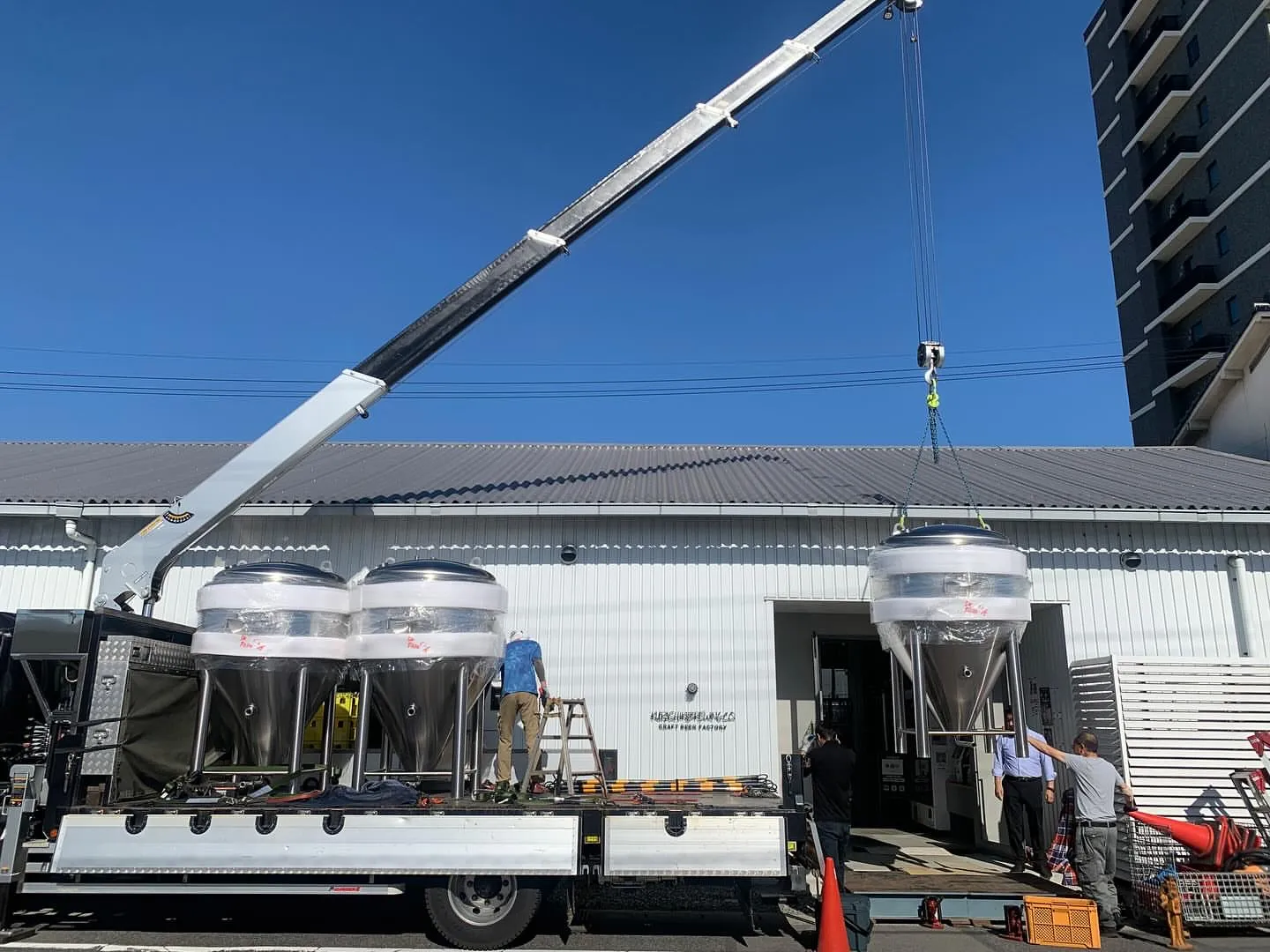
ZR Brew publicly lists capacity categories from 50L-200L pilot systems, 2HL-10HL nano breweries, 12HL-40HL microbreweries and 45HL-150HL commercial systems. Capacity affects material quantity, vessel dimensions, heat-transfer area, pumps, platforms and utility demand, but it does not determine the final price alone.
A two-vessel brewhouse generally has a different capital and floor-space profile from a three- or four-vessel arrangement. More vessels can allow process steps to overlap and increase the number of batches completed in a working day. The tradeoff is more stainless steel, valves, piping, controls and cleaning work. ZR Brew has published representative configurations in which a 10HL four-vessel system supports up to approximately four batches per day and 20HL-50HL four-vessel systems support up to approximately six, subject to the selected process and operating schedule.
The correct comparison is therefore not simply cost per hectoliter of one brew. Compare the quoted system against the required weekly production schedule, available labor and cellar turnover.
Fermentation time determines how many tanks are occupied while the brewhouse continues producing wort. A founder who prices only the brewhouse may underestimate the number of fermenters, bright tanks and cooling circuits needed to maintain the sales plan.
Use this sequence before requesting a quote:
1. Set the sellable volume target by week, allowing for process loss rather than treating nominal vessel capacity as packaged output.
2. Define average fermentation and conditioning occupancy by beer family.
3. Calculate how many brews fill each fermenter and whether double-batching is acceptable.
4. Add cleaning, transfer and maintenance time between tank turns.
5. Check whether bright tanks are required for conditioning, carbonation or packaging buffers.
6. Reserve practical expansion positions in the glycol, control and piping design.
The European project archive shows why configuration matters. A Sweden 20HL project included a steam-heated three-vessel brewhouse, a 40HL hot-liquor tank, six 40HL cylindroconical fermentation tanks and two 40HL pressure tanks. Other publicly listed European projects combine 10HL brewhouses with both 10HL and 20HL fermenters, or 20HL breweries with CIP and glycol-cooling equipment. These are configuration examples, not price benchmarks.
Heating, cooling, water, drainage, compressed air and electrical service connect every vessel into a working plant. Their cost depends on both peak demand and local site conditions.
Steam heating requires a correctly sized steam source, distribution, condensate handling and site-specific safety provisions. Electric heating changes the electrical load and may be simpler at a small site, but available service capacity must be confirmed. Glycol sizing must cover simultaneous cooling loads, ambient conditions, pipe runs and future tanks. Water treatment depends on the incoming supply and recipe targets rather than brewery size alone.
Drainage and floor work are often outside an equipment supplier’s scope. Confirm drain locations, slopes, load-bearing requirements, ceiling height, door access and rigging routes before shipment. A complete equipment package can still be delayed if the site cannot receive or connect it.
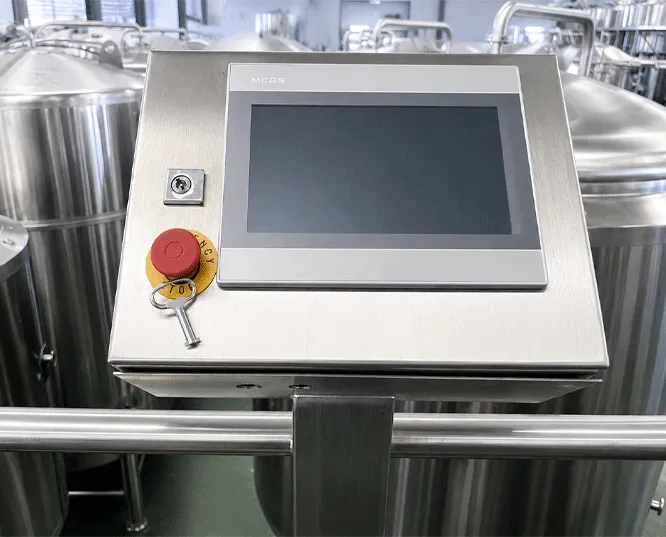
ZR Brew lists PID and PLC control options, with component selections that may include Siemens, Schneider, Allen-Bradley or other agreed brands depending on the project. Specifying only “automatic” is not enough for a comparable quotation.
Define which valves are manual or actuated, which temperatures and levels are measured, whether recipes are stored, how pumps are interlocked and whether remote support is expected. PLC control may reduce repetitive operator actions and improve process repeatability. It also adds instruments, actuators, programming, documentation and commissioning work. Manual or PID control may reduce the initial equipment scope, but it can require more operator attention during each batch.
The decision should be tied to staffing, batch frequency and maintenance capability. Paying for automation that the operating team cannot troubleshoot is a poor use of capital; omitting controls from a multi-batch schedule can create a recurring labor constraint.
An ex-works equipment price is not the same as the landed and operating cost. Request a clear commercial basis and identify the party responsible for each stage:
– Export packing and container loading
– Ocean or land freight and cargo insurance
– Import duties, taxes and customs handling
– Unloading, rigging and positioning
– Mechanical piping and insulation
– Electrical wiring and local code work
– Utility connection and consumables
– Dry testing, water testing and production commissioning
– Operator training and final documentation
Shipping, installation and customs charges are not publicly disclosed by ZR Brew and must be quoted for the destination and project scope. Dimensions and weights should be checked against the actual access route before equipment is released for delivery.
Normalize competing quotations before comparing totals. Create one spreadsheet with identical rows for capacity, vessel working volume, material grade, pressure rating, jacket area, insulation, surface finish, valves, pumps, instruments, controls, CIP, platforms, utilities, spare parts, documentation, freight and startup services.
Then mark every row as included, excluded, optional or owner supplied. Record quantities and model references. Differences that remain unexplained should become written clarification questions, not assumptions.
Three checks catch many costly mismatches:
1. **Working volume versus total volume:** confirm that the quoted tank supports the intended fill volume and headspace.
2. **Compatible utilities:** confirm voltage, frequency, phase, steam pressure, cooling medium and connection standards for the destination.
3. **Expansion boundary:** confirm whether the chiller, control panel and pipe headers can accept planned future tanks.
The cheapest quotation may have a lower initial payment, but exclusions can move cost and coordination risk to the buyer. A more inclusive package may cost more upfront while reducing the number of contractors and interfaces. Neither approach is universally better; the comparison must use the same scope.
Provide the supplier with a short design basis rather than asking only for a brewery size:
– Target annual and weekly sellable volume
– Brew length and expected batches per day
– Beer styles and typical tank occupancy
– Preferred fermenter fill strategy
– Heating method and available utilities
– Packaging formats and line speed
– Building drawing, access dimensions and drain plan
– Destination, required documentation and certification scope
– Desired automation level and component preferences
– Installation, commissioning and training responsibilities
– Planned expansion stage
This information allows the quotation to separate the base system from options. It also reduces later revisions caused by missing utility or site requirements.
There is no verified standard public price for a complete ZR Brew system. The final quotation depends on capacity, vessel count, heating, cooling, controls, material and components, destination, freight, installation and compliance scope. Request an itemized project quotation.
Not necessarily in every comparison. A highly automated 10HL system with more vessels and a complete utility package may include a broader scope than a manual 20HL brewhouse-only quote. Compare complete configurations rather than nominal capacity.
Refurbished equipment may reduce the purchase price in some cases, but condition, refurbishment scope, compatibility, remaining service life, controls and warranty terms must be checked. ZR Brew states that warranty coverage for refurbished equipment is determined by equipment condition, refurbishment scope and the final sales contract.
The tanks may be staged, but it is often useful to price the future glycol capacity, electrical provision, control-panel space and pipe-header connections during the first design. Retrofitting undersized utilities can be more disruptive than adding prepared tank branches.
Send ZR Brew your production target, preferred batch size, tank schedule, utility information, building layout, destination and division of installation responsibility. The project team can then prepare an itemized configuration instead of applying a generic brewery equipment price to an incomplete scope.
Learn more about commercial brewery equipment configurations or contact the ZR Brew project team with your design basis.
The ZR Brew Technical Team supports the planning, engineering, manufacturing, installation and commissioning of brewery, fermentation, distillation and beverage-processing projects. ZR Brew states that its key engineers and project leaders average more than 13 years of practical industry experience, working with systems from 50L pilot equipment to 150HL commercial breweries.
24時間以内にご返信いたします。お急ぎの場合は、WhatsAppまたはWeChat(+8613188932181)までご連絡ください。.
*当社はお客様のプライバシーを尊重し、すべての情報を保護いたします。.
お客様の情報は、お問い合わせへの回答にのみ使用し、未承諾のメールや宣伝メッセージを送信することは一切ありません。.