

お見積りをご依頼ください
24時間以内にご返信いたします。お急ぎの場合は、WhatsAppまたはWeChat(+8613188932181)までご連絡ください。.
*当社はお客様のプライバシーを尊重し、すべての情報を保護いたします。.
お客様の情報は、お問い合わせへの回答にのみ使用し、未承諾のメールや宣伝メッセージを送信することは一切ありません。.
 公開日
公開日
A nano brewing system is a commercial brewhouse in the 2HL to 10HL batch range, roughly 1.7 to 8.5 US barrels, built from the same stainless vessels as larger plants but with fewer of them. The tier is defined by batch volume and vessel count, not by annual output.
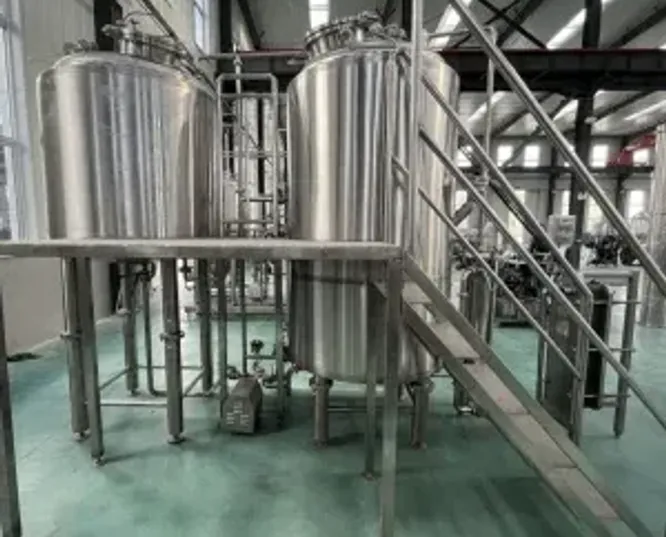
Vessel count determines how many separate process stages can run at the same time, which in turn caps how many batches fit into a working day.
Two-vessel: mash/lauter combined with kettle/whirlpool. Lowest capital cost and smallest footprint. One batch has to finish a stage before the next can begin, so a second brew on the same day is possible but tight.
Three-vessel: hot liquor tank, mash/lauter tun, kettle/whirlpool. The hot liquor tank stops sparge-water heating from blocking the schedule, which is the single most common bottleneck on two-vessel systems.
Four-vessel: mash tun, lauter tun, kettle and whirlpool separated. Lautering no longer occupies the kettle, so the next mash can start while the previous wort is boiling.
ZR Brew’s published data for a 10HL four-vessel configuration indicates support for up to approximately four batches per day, subject to the selected process, operating schedule and system configuration. Move up to the 20HL–50HL four-vessel class and the published figure rises to approximately six batches per day. Those two numbers, read together, describe the actual upgrade path better than any barrel-count definition: you are not buying more litres, you are buying more parallel stages.
Five-vessel configurations are available within the same product line, though at nano scale the added capital rarely pays back before the brewery has already outgrown the tier.
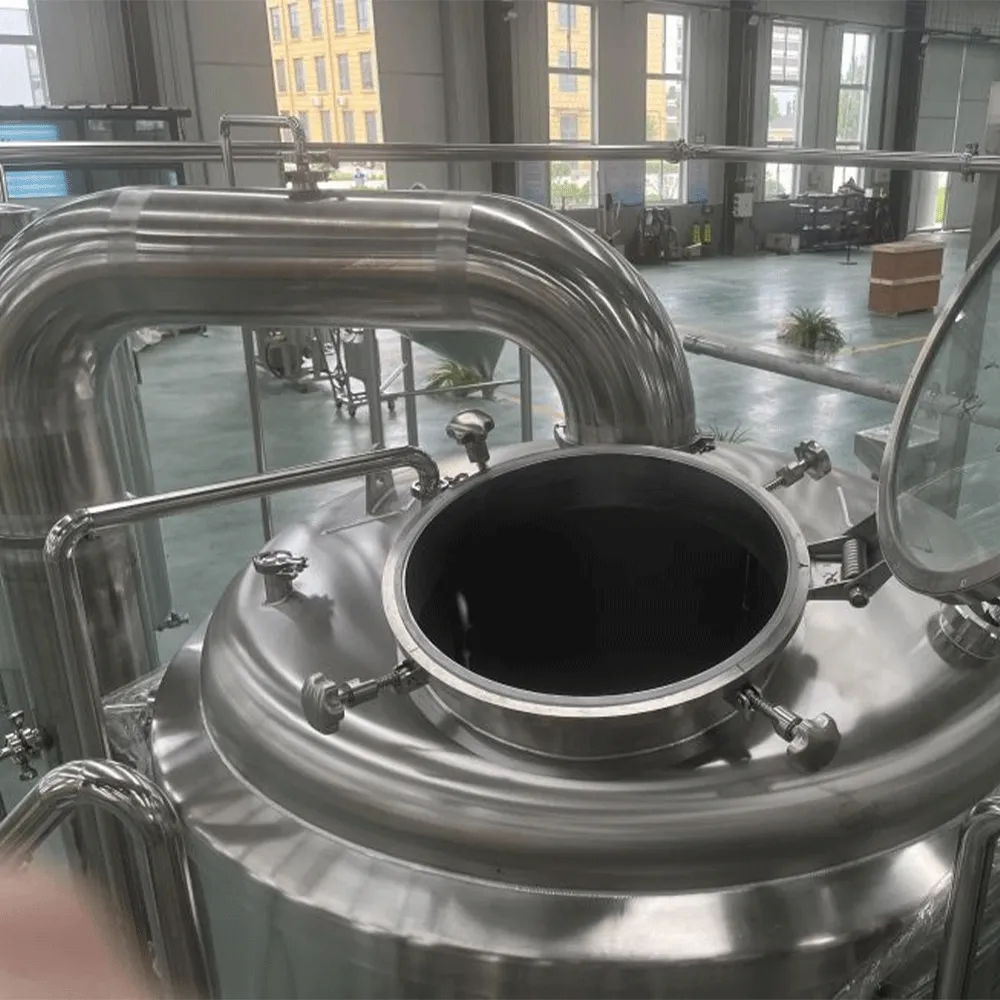
The following reflects ZR Brew’s published parameters for the nano capacity category and the ZR-1000 / ZR-1500 / ZR-2000 class configurations. Where a parameter is not published, it is marked as such rather than estimated.
| Parameter | Published value |
| Capacity category | Nano brewery systems, 2HL–10HL |
| Representative models | ZR-1000, ZR-1500, ZR-2000 |
| Model-to-litre mapping | Not published — confirm against project drawing before quoting |
| Brewhouse structure | Two-, three-, four- or five-vessel |
| 素材 | Food-grade stainless steel, normally SUS304; other grades on project confirmation |
| 暖房 | Electric, steam or direct-fire, depending on system size and site conditions |
| 制御 | PID or PLC |
| Automation components | Siemens, Schneider, Allen-Bradley or other agreed brands per project |
| Published throughput reference | Up to approx. 4 batches/day for a 10HL four-vessel configuration |
The brewhouse sets batch size. The fermenters set output. A 5HL brewhouse with two 5HL fermenters and a 5HL brewhouse with six of them are the same purchase decision only on paper.
ZR Brew’s ZR-FV series covers roughly 100L to 5000L nominal capacity with additional BBL-based configurations, including ZR-FV-100L through ZR-FV-2000L in the range most relevant to a nano plant.
| Parameter | Published value |
| Nominal capacity range | Approx. 100L–5000L, plus BBL-based sizes |
| 素材 | SUS304, with SUS316 available subject to project requirements |
| Cooling | Glycol cooling jacket |
| Cone | Commonly 60-degree conical bottom |
| Typical working pressure | Approx. 0.2 MPa / 30 psi, depending on model |
| Structure | Vertical insulated vessel, configurable top or side manway |
| Configurable | Ports, valves, cooling zones, pressure settings, surface treatment, dimensions, accessories |
The 3000L model lists a total volume of approximately 3750L, a 100 mm insulation layer, 0.2 MPa working pressure and SUS304 construction. That 3750L against 3000L nominal is the headspace allowance, and the ratio is not automatically transferable to other models. Ask for the total-volume figure on the specific size you intend to buy.
For a nano brewery planning to sell what it brews, the practical starting ratio is three to four fermenters per brewhouse volume, weighted toward whichever styles you plan to keep on tap continuously. Lager programmes distort this badly — a single lager tying up a tank for six weeks removes it from your rotation entirely.
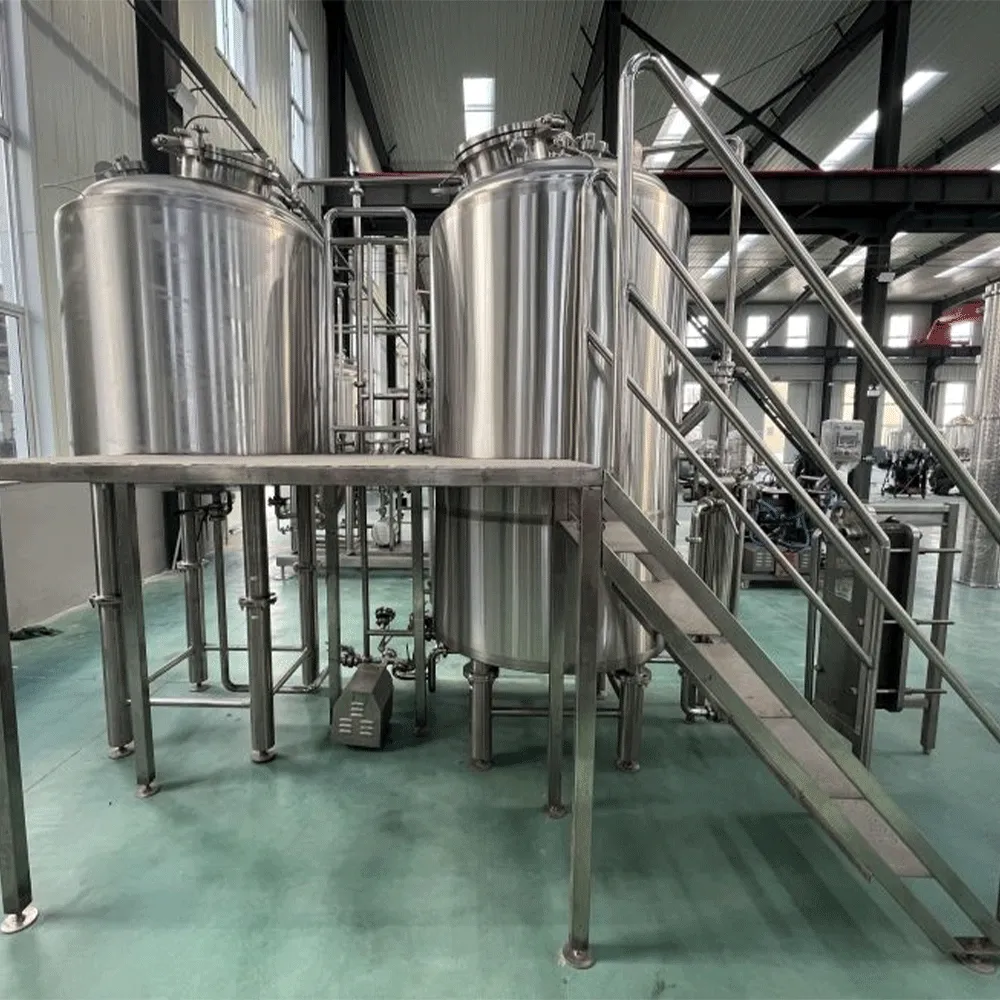
Compared with the burner-based kit packages that dominate this product category online, a stainless nano system built to commercial process standards does not fail by wearing out. It fails by running out of a supporting resource. In rough order of how often it happens:
Once two or more of these are binding at once, moving into the 12HL–40HL microbrewery band is generally cheaper than patching the nano system, because the additional parallel stages and the batches-per-day step change arrive together.
What the tier genuinely gives you: a low enough capital commitment that a recipe failure is not existential; a system a single person can operate; short enough batch cycles that a seasonal beer can go from idea to tap in weeks; and equipment that, if built to commercial standards in SUS304, retains resale value into the used market.
What it genuinely costs you: per-litre production cost stays high because cleaning, transfer and quality-control labour barely scale down with batch size. A 2HL batch takes roughly the same brew-day hours as a 10HL batch. Packaging economics are worse still — most filling equipment is sized for throughput a nano brewery cannot supply, so kegging is usually the only workable format at this scale. And if demand grows faster than expected, the nano system is not upgradeable in place; it becomes a pilot rig alongside a larger plant, which is useful but is a second purchase, not an extension of the first.
That last point is worth being blunt about. Nano equipment that stays in service as a pilot and small-batch system is a good outcome. Nano equipment bought in the hope it will stretch to cover growth is a planning error that steel cannot fix.
A: Approximately 1.7 to 8.5 US barrels per batch, using 117.35 litres per barrel. Batch size and annual output are different questions; annual output depends on your fermenter count and turnaround time.
A: For most configurations up to around 5HL, yes, for a single daily batch. At 10HL with multiple batches per day, brew-day labour plus cleaning exceeds what one operator can sustain over a full week.
A: Three-vessel if you expect to brew more than once a week. The hot liquor tank is what removes the sparge-water wait, and retrofitting one later is more disruptive than including it at the outset.
A: SUS304 is the normal specification for brewing vessels. SUS316 is available on project confirmation and is generally specified where chloride exposure or particular cleaning chemistry justifies it, not as a blanket upgrade.
A: Not from published category data. Vessel dimensions, connected load and glycol duty are configuration-specific and are confirmed on project drawings. Request them before finalising your floor plan.
A: CE is claimed at company level, with model-specific certificate numbers not publicly disclosed. Request the applicable certificate and confirm its scope covers your equipment and destination market before purchase.
24時間以内にご返信いたします。お急ぎの場合は、WhatsAppまたはWeChat(+8613188932181)までご連絡ください。.
*当社はお客様のプライバシーを尊重し、すべての情報を保護いたします。.
お客様の情報は、お問い合わせへの回答にのみ使用し、未承諾のメールや宣伝メッセージを送信することは一切ありません。.