Choosing the right number of fermentation tanks is one of the most important decisions when planning a new brewery or expanding an existing production line. Too few tanks can restrict brewing schedules, while purchasing more tanks than necessary increases initial equipment investment and occupies valuable production space.
For brewery owners, investors, and production managers, the key question is not simply how many fermentation tanks match a particular brewhouse size. It is how many tanks are required to support the planned production schedule.
This guide explains how to calculate fermentation tank requirements using weekly brewing batches, fermentation time, tank turnaround, and working capacity.
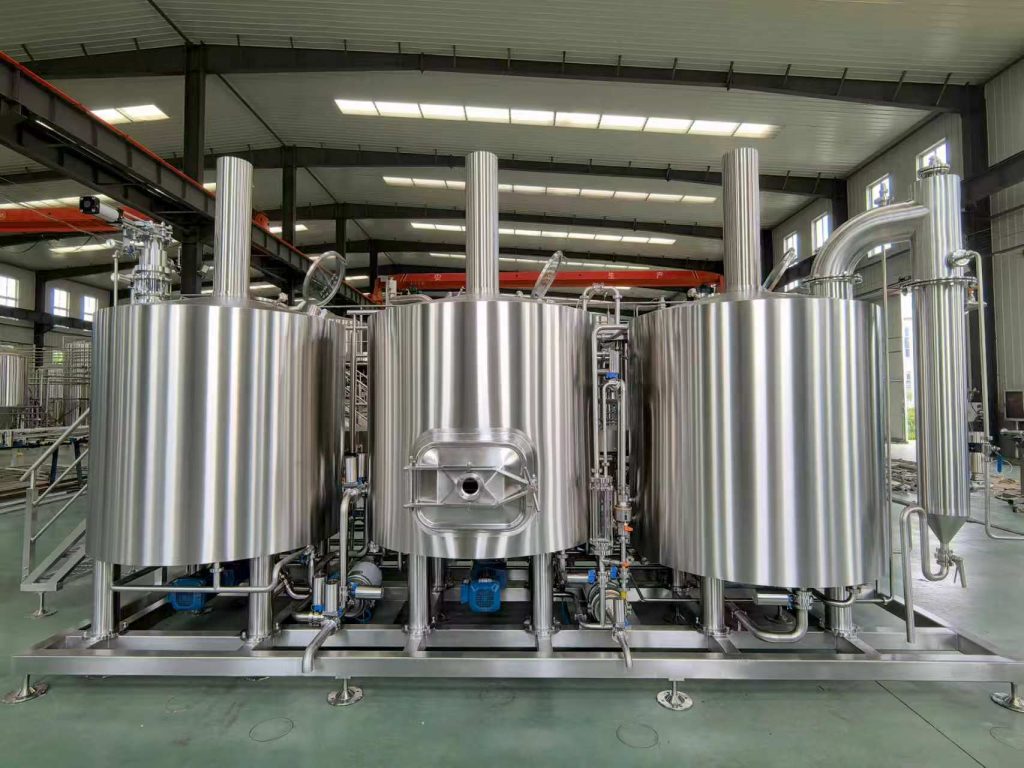
How Many Fermentation Tanks Does a Brewery Need?
A brewery needs enough fermentation tanks to accommodate all batches that remain in the fermentation and tank-turnaround cycle at the same time.
The required number depends primarily on four factors:
- Number of brewing batches produced each week.
- Total time each batch occupies a fermentation tank.
- Additional time required for emptying, cleaning, and preparation.
- Usable fermentation tank capacity relative to brewhouse batch volume.
A practical starting formula is:
Required Fermentation Tanks = Round Up [(Weekly Brewing Batches × Total Tank Occupancy Days) ÷ 7]
Where:
Total Tank Occupancy Days = Fermentation/Conditioning Days + Tank Turnaround Days
This formula provides an initial estimate for breweries operating on a relatively consistent weekly production schedule. Final tank requirements should also account for brewing days, product mix, seasonal demand, and operational flexibility.
1. Why Doesn’t Brewhouse Capacity Determine the Number of Fermentation Tanks?
A common misconception is that purchasing a 1000L brewhouse automatically determines the number of fermentation tanks required.
In reality, brewhouse capacity describes the nominal volume produced per batch, while fermentation tank requirements depend on how frequently those batches are produced and how long they occupy the tanks.
These figures are illustrative planning examples, not fixed equipment recommendations.
Although both breweries use the same brewhouse capacity, Brewery B requires more fermentation capacity because it produces batches more frequently.
This is why ZR Brew recommends considering the complete production schedule when planning fermentation tank configurations rather than selecting tank quantities based on brewhouse capacity alone.
2. How Do You Calculate Fermentation Tank Requirements?
The calculation begins with three essential inputs.
Step 1: Determine Your Weekly Brewing Schedule
Estimate how many batches your brewery intends to produce each week.
For example:
Brewhouse capacity: 1000L
Planned brewing frequency: 4 batches per week
Nominal weekly wort production: 4000L
The nominal production figure assumes four full 1000L batches. Actual transferable wort volume and fermentation filling requirements should be confirmed during equipment design.
Step 2: Calculate Total Tank Occupancy
A fermentation tank remains unavailable while the current batch is inside it.
Depending on the brewing process, tank occupancy may include primary fermentation, maturation or conditioning, and preparation for the next batch.
| Process |
Duration |
| Fermentation and in-tank conditioning |
14 days |
| Emptying, cleaning and preparation |
2 days |
| Total Tank Occupancy |
16 days |
The 16-day cycle is an example only. Actual requirements vary with beer style, yeast, temperature, fermentation process, and whether maturation takes place in the same vessel or separate equipment.
Step 3: Apply the Calculation Formula
Using the example above:
Required Tanks = (4 × 16) ÷ 7
= 9.14
Round up to the next whole tank.
Initial planning requirement: 10 fermentation tanks.
This provides an approximate minimum for the assumed production schedule. The actual batch calendar should then be checked to ensure that a suitable tank is available whenever a new batch is ready for transfer.
3. How Many Fermentation Tanks Does a 1000L Brewery Need?
The following comparison demonstrates how brewing frequency and tank occupancy affect the initial number of fermentation tanks.
All scenarios assume a 1000L nominal brewhouse and fermentation vessels sized appropriately for the intended batch volume.
| Weekly Brewing Batches |
Total Tank Occupancy |
Calculated Minimum Tanks |
| 2 batches |
14 days |
4 |
| 2 batches |
16 days |
5 |
| 3 batches |
16 days |
7 |
| 4 batches |
16 days |
10 |
| 4 batches |
21 days |
12 |
| 5 batches |
16 days |
12 |
These results illustrate an important purchasing principle:
Increasing brewing frequency or extending tank occupancy directly increases the fermentation capacity required to maintain production.
A brewery planning to produce several beer styles with different fermentation periods should calculate its requirements using the actual production mix rather than relying on a single average cycle.
4. How Does Fermentation Time Affect Tank Quantity?
Fermentation time is one of the most influential factors in brewery tank planning.
Different beer styles and production processes can occupy fermentation equipment for different periods.
For example, a brewery producing relatively short-cycle beers may release its fermentation tanks more frequently than a brewery producing beers that require extended in-tank maturation.
Consider two illustrative production plans:
| Factor |
Production Plan A |
Production Plan B |
| Weekly Batches |
3 |
3 |
| Total Tank Occupancy |
14 days |
28 days |
| Calculated Minimum Tanks |
6 |
12 |
Doubling tank occupancy doubles the approximate fermentation capacity required to maintain the same weekly brewing frequency.
Before ordering equipment, buyers should therefore confirm:
- Expected fermentation time for each beer style.
- Whether maturation occurs in the fermentation vessel.
- Whether separate conditioning or bright beer tanks are required.
- Expected cleaning and preparation time between batches.
- Whether different products require dedicated tanks.
These details help prevent production bottlenecks after installation.
5. Should Fermentation Tank Capacity Match Brewhouse Capacity?
Not necessarily. Fermentation tank sizing should be based on the actual wort volume, filling requirements, and intended production process.
For example, a brewery using a 1000L brewhouse may consider different fermentation configurations depending on whether it plans to:
- Transfer one brewing batch into one fermentation tank.
- Combine multiple brewing batches into a larger fermentation vessel.
- Produce different beer styles in separate tanks.
- Reserve additional capacity for future production.
A larger fermentation vessel may accommodate multiple brewing batches, provided its usable capacity and the planned filling schedule are suitable.
However, larger tanks also affect production flexibility. A brewery producing several beer styles may benefit from multiple appropriately sized vessels rather than relying entirely on larger-capacity tanks.
Tank nominal volume and usable working volume should always be distinguished.
The final specification should account for the manufacturer’s vessel design, required headspace, process conditions, and actual wort transfer volume.
6. What Other Factors Should You Consider Before Buying Fermentation Tanks?
The calculation formula provides a starting point, but several practical considerations can change the final equipment configuration.
Brewing Schedule and Peak Production
A brewery that produces all its weekly batches over two or three consecutive days may require a different tank-release schedule from one that distributes brewing evenly throughout the week.
Check the actual brewing calendar, not just the weekly average.
Different Beer Styles
If the brewery produces multiple beer styles, calculate occupancy for each product separately.
Longer-cycle products can occupy tanks while shorter-cycle products are ready for additional brewing.
Cleaning and Preparation
A fermentation tank cannot immediately receive another batch after the previous product has been discharged.
Allow realistic time for cleaning, inspection, sanitization, and preparation according to the brewery’s operating procedures.
Bright Beer and Conditioning Tanks
Where appropriate, transferring beer into separate conditioning or bright beer tanks may release fermentation vessels earlier.
However, this also introduces additional equipment, transfers, and process-planning requirements.
Future Expansion
Buyers planning to increase weekly production should consider whether their initial layout allows additional fermentation tanks to be installed later.
Future expansion planning should include floor space, cooling capacity, utilities, pipework, and maintenance access.
7. How Can ZR Brew Help Plan Your Fermentation Tank Configuration?
Selecting fermentation equipment involves more than choosing a vessel capacity from a product catalog.
As a manufacturer of stainless steel brewing equipment and customized brewery systems, ZR Brew can help buyers evaluate fermentation tank configurations alongside their planned brewhouse and production requirements.
When preparing a project inquiry, the following information is particularly useful:
| Project Information |
What to Provide |
| Brewhouse Capacity |
Nominal capacity per batch |
| Brewing Frequency |
Planned batches per week |
| Beer Types |
Main products to be brewed |
| Fermentation Cycle |
Expected occupancy for each product |
| Conditioning Process |
In-tank or separate vessel |
| Production Target |
Planned weekly or annual output |
| Available Space |
Brewery layout or building dimensions |
| Expansion Plan |
Expected future production requirements |
With these inputs, the engineering team can discuss suitable fermentation tank capacities, quantities, and configurations as part of a complete brewery equipment plan.
Buyers can also explore ZR Brew’s Fermentation Tanks and Turnkey Brewery Systems for related equipment options.
Domande frequenti
How many fermentation tanks do I need for a 1000L brewhouse?
There is no universal fixed number. For example, a 1000L brewery producing four batches per week with a 16-day tank occupancy cycle has an initial calculated requirement of 10 fermentation tanks. The final quantity depends on its actual brewing calendar and production process.
Can I use a 2000L fermentation tank with a 1000L brewhouse?
Potentially, yes. Multiple brewing batches may be combined in a larger vessel when the tank’s usable capacity and process requirements allow it. The filling schedule, wort transfer volume, and fermentation plan must be considered.
Do I need more fermentation tanks if I brew lager?
You may need additional fermentation or conditioning capacity if the selected lager production process occupies tanks for longer periods. The deciding factor is total tank occupancy, not the beer category alone.
Should I buy extra fermentation tanks for future expansion?
If production growth is planned, additional fermentation capacity or space for future tanks may be appropriate. The decision should consider expected demand, available capital, utilities, and production flexibility.
Are bright beer tanks included in fermentation tank calculations?
Not automatically. The calculation in this guide estimates fermentation tank requirements based on the assumed tank occupancy cycle. Bright beer tanks should be planned separately according to conditioning, carbonation, storage, and packaging requirements.
What information does ZR Brew need to recommend a fermentation tank configuration?
Provide your planned brewhouse capacity, weekly brewing frequency, beer types, fermentation cycle, target output, available installation space, and future expansion requirements.
Plan Your Fermentation Capacity with ZR Brew
The right fermentation tank configuration should support your production schedule without creating unnecessary equipment investment or avoidable capacity bottlenecks.
Whether you are building a new craft brewery or expanding an existing production line, ZR Brew can discuss customized stainless steel fermentation tanks and complete brewery equipment configurations based on your project requirements.
Share your brewhouse capacity, weekly brewing schedule, and target production volume to request a customized fermentation tank configuration.
CTA: Get a Customized Brewery Quote


 Pubblicato