

お見積りをご依頼ください
24時間以内にご返信いたします。お急ぎの場合は、WhatsAppまたはWeChat(+8613188932181)までご連絡ください。.
*当社はお客様のプライバシーを尊重し、すべての情報を保護いたします。.
お客様の情報は、お問い合わせへの回答にのみ使用し、未承諾のメールや宣伝メッセージを送信することは一切ありません。.
 公開日
公開日
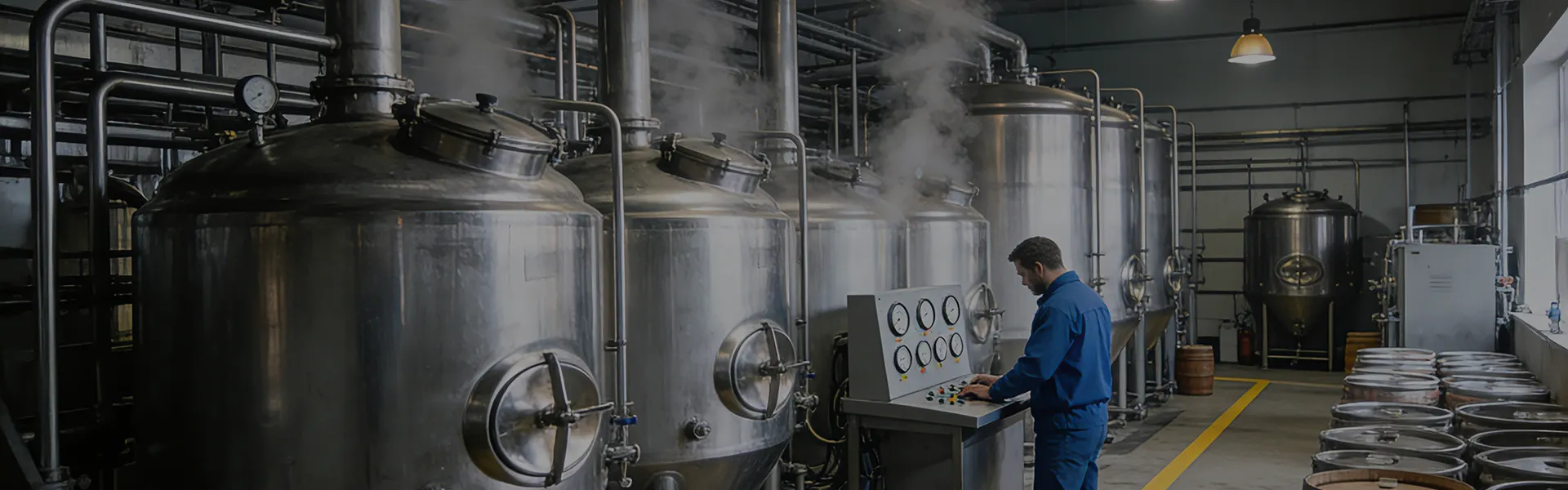
What a 12HL–40HL microbrewery system actually includes: brewhouse vessel count, liquor tanks, fermenter ratio, glycol, CIP and grain handling, sized as one system.
A 12HL–40HL microbrewery is one system, not a shopping list. The brewhouse vessel count sets your daily batch ceiling, fermenter quantity sets your monthly output, and glycol, CIP and grain handling decide whether either number is reachable.

Brewery equipment is usually grouped by batch size, and the group boundaries are commercial rather than technical:
The step from 10HL to 12HL is not a small increase in tank diameter. It is normally the point where manual handling stops working: grain volumes justify a mill and conveyor rather than bagged malt tipped by hand, cleaning volumes justify a dedicated CIP cart or station rather than a bucket and a pump, and cooling load justifies a chiller sized against simultaneous crash-cooling rather than one tank at a time.
If you are still deciding between 10HL and 20HL, decide on your fermenter count first. That number will make the choice for you, for reasons covered further down.
A brewhouse is described by how many separate vessels the hot-side process is split across. ZR Brew builds two-, three-, four- and five-vessel configurations. The trade is always the same: more vessels means more stages can run at once, which means more batches per day from the same nominal capacity.
| Configuration | Typical Vessel Split | What It Buys You | What It Costs You |
|---|---|---|---|
| Two-Vessel | Combined mash/lauter tun; combined kettle/whirlpool | Smallest footprint, lowest capital cost, and simplest piping | Processes run sequentially; back-to-back batching within one day is constrained |
| Three-Vessel | Mash/lauter tun, kettle, and whirlpool; or mash tun, lauter tun, and combined kettle/whirlpool | The whirlpool rest no longer blocks the kettle, enabling more consistent knockout timing | Requires more floor space and adds pumps and valves that need cleaning |
| Four-Vessel | Mash tun, lauter tun, kettle, and whirlpool | Allows the next batch to be mashed while the current batch boils, providing the highest daily throughput within this range | Highest footprint and utility demand among the standard configurations |
| Five-Vessel | Four-vessel configuration plus a dedicated vessel, commonly used for cereal/adjunct cooking or liquor staging | Supports adjunct and decoction processes without occupying the mash tun | Justified only by a specific recipe program; confirm the function of the fifth vessel for each project |
Published ZR Brew configurations give two reference points. A 10HL four-vessel system supports up to approximately four batches per day, and 20HL–50HL four-vessel systems are designed for up to approximately six batches per day. Both figures depend on the selected process, the operating schedule and the final configuration, and neither transfers to a two- or three-vessel system.
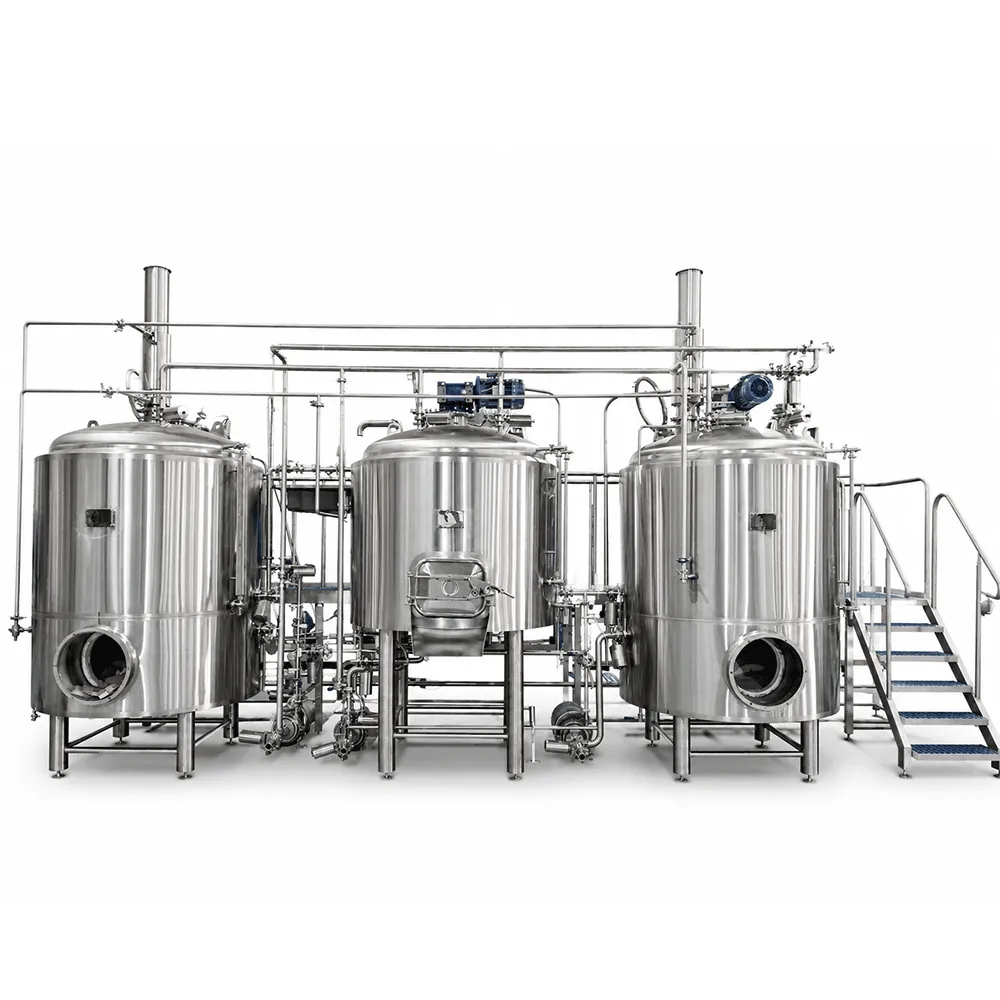
This is the section to read before you fill in an enquiry form, because these are the fields a quotation is actually built from.
Batch capacity. Standard project range runs from 50L pilot systems up to 150HL commercial systems, with the microbrewery band sitting at 12HL–40HL. Nominal capacity refers to the brewhouse batch, not the fermenter volume.
Brewhouse structure. Two-, three-, four- or five-vessel, as above.
Material. Food-grade stainless steel, normally SUS304. SUS316 and other materials are available subject to project confirmation, and are worth specifying where water chemistry, chloride levels or a sour programme justify the cost difference.
Heating. Electric, steam or direct fire, selected against system size and site conditions rather than preference.
| Heating Method | Where It Fits in This Range | Site Requirement to Check First |
|---|---|---|
| Electric | Smaller systems within the range; suitable for sites without a steam permit | Available three-phase electrical capacity and electricity cost per kWh |
| Steam | Most 12–40 HL installations; provides even heat transfer and a controllable heating ramp | Boiler or steam generator, water treatment, boiler-room space, and local pressure-vessel approval |
| Direct Fire | Gas-supplied sites and certain brewhouse configurations | Gas supply, flue routing, ventilation, and compliance with local combustion regulations |

Fermenters Decide Your Output, and Two Numbers Decide Your Fermenters
The brewhouse sets how much you can brew in a day. Fermentation time sets how long that beer occupies a tank. Multiply, and you have your tank count.
Work the arithmetic rather than copying someone else’s tank farm. A clean ale turned around in 14 days including cold conditioning, crash and transfer occupies one fermenter for two weeks. Brewing twice a week into single-batch fermenters means you need four tanks just to keep brewing, before any tank is out of rotation for cleaning, dry hopping or a slow lager. Most microbreweries in this band end up with a fermenter capacity well above their weekly brewhouse output, and the ones that undersized it are the ones brewing at 40% of installed capacity.
Two structural choices change the arithmetic:
ZR Brew fermentation vessels are published from roughly 100L to 5000L plus BBL-based sizes, with glycol cooling jackets, a commonly 60-degree conical bottom, and typical working pressure around 0.2 MPa or 30 psi depending on model. Ports, valves, cooling zones, pressure settings, surface treatment and dimensions are configured per project.
Support equipment is chosen against the main system, raw-material flow, plant layout, utility conditions and automation level. No single parameter table covers all of it, but the categories that consistently belong in a 12HL–40HL scope are: CIP systems, glycol chillers, water-treatment systems, malt mills, screw conveyors and tube-chain conveyors, steam generators, filters, hop guns, centrifuges, yeast-propagation equipment and CO₂ recovery.
A workable CIP sequence for a fermenter, with a verification checkpoint at each stage:
Two details determine whether that sequence works: spray-ball coverage against your actual tank geometry, including under the manway and behind the dry-hop port, and CIP pump flow rate against the largest vessel in the plant rather than the average one. Ask for the spray-ball flow and pressure requirement, and confirm the CIP pump meets it for your largest tank
On grain handling, the useful question is not which mill but where the malt lands. A mill positioned so that crushed grain has to be carried up a platform will be worked around within a month. Screw conveyors, 90-degree screw conveyors and tube-chain conveyors exist to solve exactly that routing problem, and they are cheaper to design in at layout stage than to retrofit around installed vessels.

ZR Brew states company-level CE and ISO 9001 certification. Both references are worth understanding precisely, because company-level and machine-level are not the same claim.
ISO 9001 is the quality management systems standard published by the International Organization for Standardization. It certifies how a company manages quality processes. It does not certify that a particular vessel meets a particular pressure standard.
CE marking operates under the applicable European Union legislation for the supplied equipment. Which directive or regulation applies depends on the machine and the destination market, and that mapping has to be confirmed machine by machine.
ZR Brew does not publish model-specific certificate numbers, notified bodies or certificate validity periods, so treat any supplier’s certification claim, including this one, as something to verify rather than accept. Request in writing, per machine: the certificate itself, the issuing body, the scope covered, the expiry date, plus material certificates, hydraulic pressure-test records and the technical drawing. Destination-market pressure-vessel and electrical compliance are assessed separately from the CE claim, and in several markets a local approval is required regardless of what the supplier’s file contains.
Q: How many fermenters do I need for a 20HL microbrewery?
A: It depends on fermentation turnaround, not on the brewhouse. Calculate tank-weeks: brews per week multiplied by days each beer occupies a tank. A brewery running two 20HL brews weekly on a 14-day turnaround needs at least four 20HL fermenters to keep brewing, and more to cover cleaning, dry hopping and lager schedules.
Q: Is a four-vessel brewhouse worth it at 20HL?
A: It is worth it if you need more than two or three batches on a single brew day. Published four-vessel configurations at 20HL–50HL are designed for up to approximately six batches per day depending on process and schedule. If your plan is one batch per brew day, the extra vessels add footprint and cleaning without adding output you will use.
Q: What is the difference between a unitank and a bright beer tank?
A: A unitank handles fermentation and conditioning in the same vessel, reducing transfers and floor space. A bright beer tank receives finished beer for carbonation, clarification and packaging supply, freeing the fermenter for the next batch sooner. Breweries packaging for distribution generally run both.
Q: Can I run a 12HL–40HL system on electric heating?
A: At the smaller end of the band, yes, where three-phase capacity is available and electricity cost supports it. Steam is the more common choice across this range. The deciding factors are available supply capacity, energy cost per unit and whether your site can accommodate a steam generator with its water treatment and local approvals.
Q: Does CE marking mean the equipment is approved for my country?
A: Not automatically. CE marking applies under European Union legislation, and which directive applies depends on the machine and market. Destination-market pressure-vessel and electrical compliance is confirmed separately. Request the certificate, issuing body and scope per machine, and check local approval requirements before shipment.
24時間以内にご返信いたします。お急ぎの場合は、WhatsAppまたはWeChat(+8613188932181)までご連絡ください。.
*当社はお客様のプライバシーを尊重し、すべての情報を保護いたします。.
お客様の情報は、お問い合わせへの回答にのみ使用し、未承諾のメールや宣伝メッセージを送信することは一切ありません。.