

견적 받기
24시간 이내에 답변해 드리겠습니다. 긴급한 사안이신 경우, WhatsApp/WeChat(+8613188932181)으로 연락해 주시기 바랍니다.
*당사는 귀하의 개인정보를 존중하며, 모든 정보는 안전하게 보호됩니다.
당사는 귀하의 정보를 오직 문의에 답변하는 용도로만 사용하며, 원치 않는 이메일이나 홍보 메시지를 절대 보내지 않습니다.
 게시됨
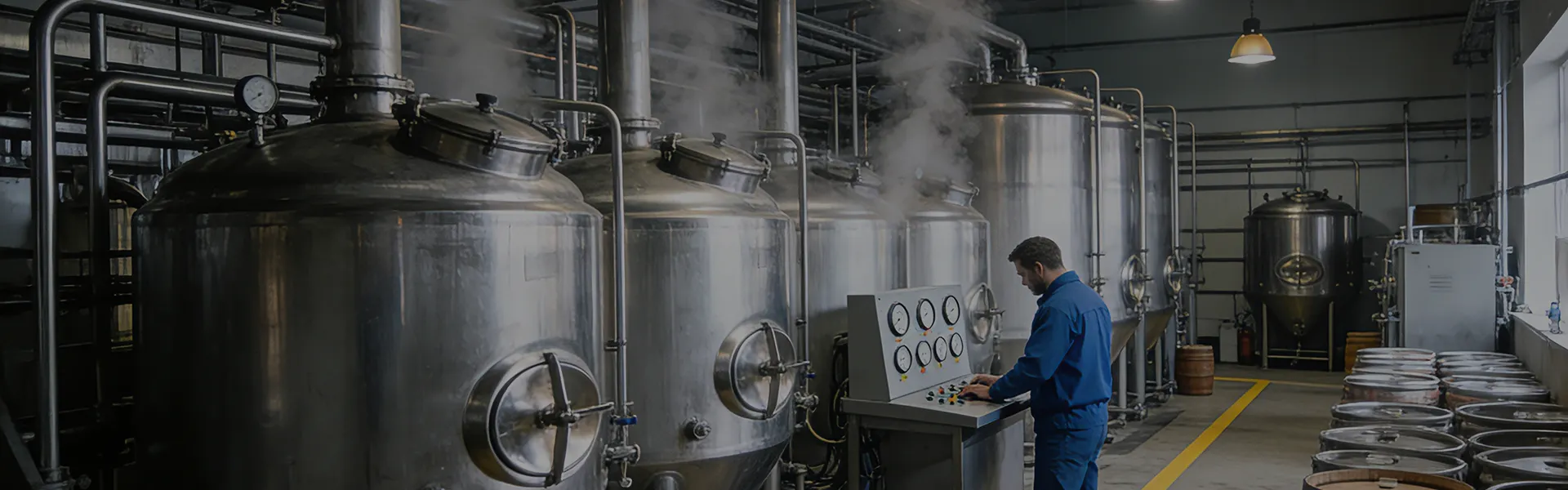
Brewery equipment is grouped by process stage: milling and brewhouse, fermentation and bright tanks, cold-side utilities, filtration, and packaging. The right set depends on batch volume. ZR Brew builds systems from 50L pilot units to 150HL commercial breweries, with heating by electric, steam or direct fire and PID or PLC control.
Compared with generic commercial-kitchen equipment checklists, which rarely reach brewhouse or cellar engineering, this guide follows the beer itself: grain in, packaged beer out. Each section names the equipment at that stage, the decision it forces, and the published ZR Brew parameters where they exist. Prices are not listed, because none are published; the cost section explains what drives a quotation instead.

Stage Equipment Decision it forces
Everything upstream of the fermenters is sized in batch volume. Everything downstream is sized in weekly volume. Mixing those two units up is where most first equipment lists go wrong.
ZR Brew groups its brewery systems into four tiers.
| Tier | Batch capacity | Where it usually fits |
| Home and pilot | 50L–200L | Home brewing, recipe trials, pilot production |
| Nano | 2HL–10HL | Bar and restaurant brewing, small craft production |
| Micro | 12HL–40HL | Microbrewery production |
| Commercial | 45HL–150HL | Commercial beer production |
Published throughput markers help set expectations. A 10HL four-vessel system is listed at up to about four batches per day, and 20HL–50HL four-vessel systems at up to about six, both subject to the process, the operating schedule and the configuration. Treat those as ceilings under good scheduling. They are not planning numbers.
The planning number comes from the cellar. Here is the arithmetic with illustrative assumptions (replace them with your own recipes): a brewery that brews three times a week, with ales that occupy a fermenter for 14 days from knockout to transfer, needs at least six batch-size fermenters in rotation (3 batches a week × 2 weeks). Bright tanks and cleaning gaps come on top. The brewhouse could run four times a day and the cellar would still set the output. Lagers, which spend longer in cold conditioning, push the count higher.

The brewhouse is where grain becomes wort, and its first specification is the number of vessels. ZR Brew builds two-, three-, four- and five-vessel configurations. Exactly which operations share a vessel varies between designs, so ask for the process-flow drawing rather than relying on the label. In general, fewer vessels cost less and take less floor space, but they make the steps wait for one another. More vessels let one batch boil while the next one mashes, which is how the four-vessel systems above reach several brews in a day.
Heating comes in three forms: electric, steam or direct fire. The choice depends on system size and site conditions, so start from the utilities you actually have. Electric heating needs sufficient electrical capacity at the building. Steam needs a steam source, and a steam generator is part of the supporting equipment range. Direct fire needs a gas supply and a plan for the combustion side of the room. Picking the heating method before surveying the site is how a brewery ends up paying for an electrical upgrade or a new gas line late in the project.
제어 is either PID or PLC. A PID setup holds temperatures at set points while the brewer drives the sequence by hand. A PLC adds programmed step sequences, so the same brew runs the same way each time, at the price of a higher panel cost and more operator training. ZR Brew lists Siemens, Schneider and Allen-Bradley automation components, or other agreed brands depending on the project. Pumps, electrical parts and control devices may come from established suppliers, while most core stainless steel vessels are made in-house.
The standard material is food-grade stainless steel, normally SUS304. Other materials are subject to confirmation for the project.
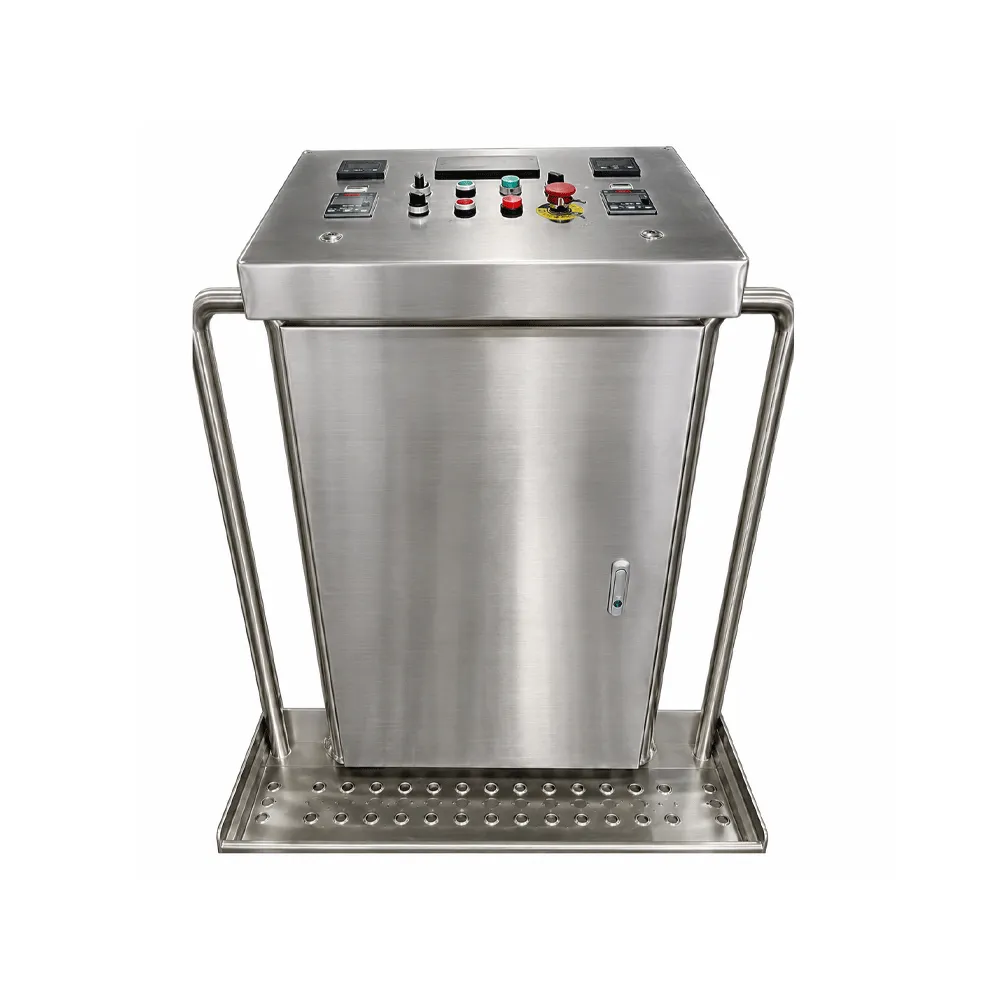
This is the part of the guide that applies specifically to ZR Brew’s brewery equipment line. The representative public models are ZR-1000, ZR-1500, ZR-2000, ZR-2500 and ZR-5000.
| 매개변수 | Published value |
| Batch capacity | 50L to 150HL across the line |
| Brewhouse structure | Two-, three-, four- or five-vessel |
| 재료 | Food-grade stainless steel, normally SUS304; other materials subject to project confirmation |
| 난방 | Electric, steam or direct fire |
| 제어 | PID or PLC |
| Automation brands | Siemens, Schneider, Allen-Bradley, or other agreed brands |
| Batches per day (published examples) | About four for 10HL four-vessel; about six for 20HL–50HL four-vessel |
| Applications | Home, pilot, bar, restaurant, craft, microbrewery and commercial brewing |
The capacity assigned to each model number is confirmed in the quotation. Do not infer it from the number itself.
ZR Brew’s range includes malt mills, a commercial corn hammer mill, standard and 90-degree screw conveyors, and tube-chain conveyors. The mill sets the crush of the grist, which in turn affects how cleanly the mash drains. The corn hammer mill matters if your recipes use corn or similar adjuncts, and it can be skipped if they do not.
At 50L–200L, carrying sacks to the mash tun is workable. As batch size grows, the repeated lifting becomes the slowest and most injury-prone part of the brew day, and that is where conveyors earn their place. Decide this while the floor plan is still on paper, because a screw conveyor needs a straight run and a clear path from the mill to the brewhouse.
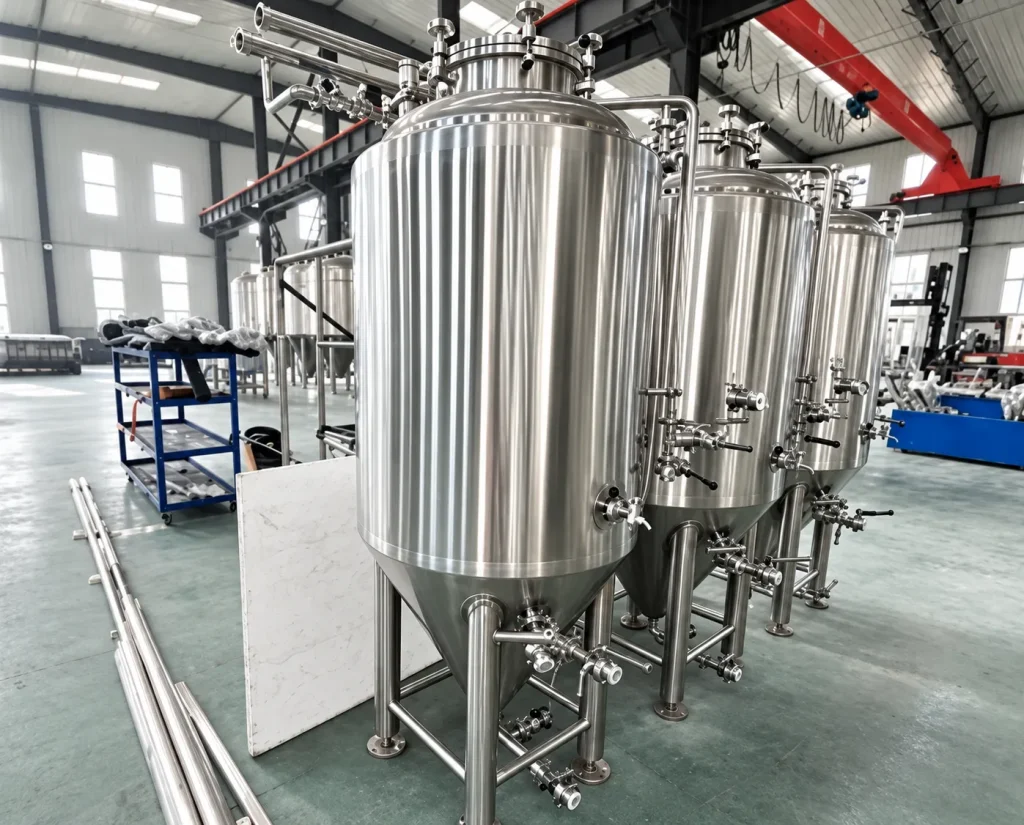
ZR Brew’s fermentation line, the ZR-FV series, runs from ZR-FV-100L through ZR-FV-5000L, plus BBL-based sizes such as ZR-FV-10BBL. The published parameters:
Ports, valves, cooling zones, pressure settings, surface treatment and dimensions can be configured.
One edge case deserves attention: nominal volume is not usable volume. A published 3000L model lists a total volume of about 3750L, a 100 mm insulation layer and 0.2 MPa working pressure. The extra 25% is headspace for foam and krausen. Those figures describe that one configuration only and should not be applied to other fermenters. Always ask for total volume and working volume separately.
Unitank or separate bright tank? A unitank ferments and conditions in one vessel, which saves tanks and transfers. A separate bright beer tank frees the fermenter for the next batch and gives you a buffer between the cellar and the packaging line. If your tank-days calculation shows fermenters are the constraint, bright tanks pay for themselves in recovered fermenter time.
Utilities that decide whether your building can host the system
Chilling, steam, water and cleaning rarely feature in a first equipment list, and they often decide the schedule. ZR Brew’s supporting range covers glycol chillers, steam generators, water-treatment systems, CIP systems, CO₂ recovery and yeast-propagation equipment.
Three checks catch most problems:
For this reason ZR Brew’s pre-sale work includes a site and utility evaluation and two- and three-dimensional layouts. Ask for the layout before you sign, because a clash between a tank’s height and your ceiling is far cheaper to find on a drawing.
Filtration, centrifuges, hop guns and sterilization equipment sit between the cellar and the package. Not every beer needs them, and the choice depends on style: filtering gives a brighter beer, and a heavily hopped or naturally hazy style may be better left unfiltered. A plate-and-frame filter is a compact option, and filter plate quantity can be expanded later if volume grows. Specify throughput and cleaning method in the quote, because those numbers are not standardized across the range.
ZR Brew‘s keg equipment includes automatic keg washing and filling lines, all-in-one washer-fillers with a lifting table or a fixed table, and one- or two-station keg fillers with a flow meter. Operation can be manual, semi-automatic or fully automatic, and PLC-controlled versions are available. Published figures that you can use:
Both numbers belong to those named configurations and cannot be carried over to a different machine. Bottling and canning are within the product scope, but standardized throughput tables are not published for them, so request throughput in writing before comparing bids.
What equipment does a small brewery need to start brewing?
A brewhouse, fermenters sized to your weekly volume, a glycol chilling circuit, a cleaning (CIP) arrangement and a way to package, such as a keg filler. A malt mill is the usual extra at the front. Bright tanks, filtration and bottling or canning can be added as volume grows.
How many fermenters do I need for one brewhouse?
Multiply batches per week by the number of weeks each batch stays in a tank. The worked example in the capacity section shows the arithmetic and why the brewhouse’s maximum brews per day is not the planning figure.
Should I choose electric, steam or direct-fire heating?
ZR Brew offers all three, and the right one follows system size and the utilities at your site. Survey power, steam and gas availability first, then pick the method that connects to what already exists.
Do I need a PLC, or is PID control enough?
PID holds set temperatures and leaves sequencing to the brewer. A PLC automates the sequence and makes repeat brews more consistent, with a higher panel cost and more training. ZR Brew supplies both.
How much does a brewery equipment package cost?
There is no standard public price list. A quotation is built from capacity, vessel quantity, heating, automation, material, components, utilities, shipping, installation and certification needs, so an itemized quote from the ZR Brew project team is the only reliable number.
Is refurbished brewery equipment an option?
ZR Brew supplies refurbished brewhouses, fermentation tanks, bright beer tanks, kegs and packaging-support equipment. Warranty coverage for refurbished equipment is determined by equipment condition, refurbishment scope, and the final sales contract.
24시간 이내에 답변해 드리겠습니다. 긴급한 사안이신 경우, WhatsApp/WeChat(+8613188932181)으로 연락해 주시기 바랍니다.
*당사는 귀하의 개인정보를 존중하며, 모든 정보는 안전하게 보호됩니다.
당사는 귀하의 정보를 오직 문의에 답변하는 용도로만 사용하며, 원치 않는 이메일이나 홍보 메시지를 절대 보내지 않습니다.