

お見積りをご依頼ください
24時間以内にご返信いたします。お急ぎの場合は、WhatsAppまたはWeChat(+8613188932181)までご連絡ください。.
*当社はお客様のプライバシーを尊重し、すべての情報を保護いたします。.
お客様の情報は、お問い合わせへの回答にのみ使用し、未承諾のメールや宣伝メッセージを送信することは一切ありません。.
 公開日
公開日
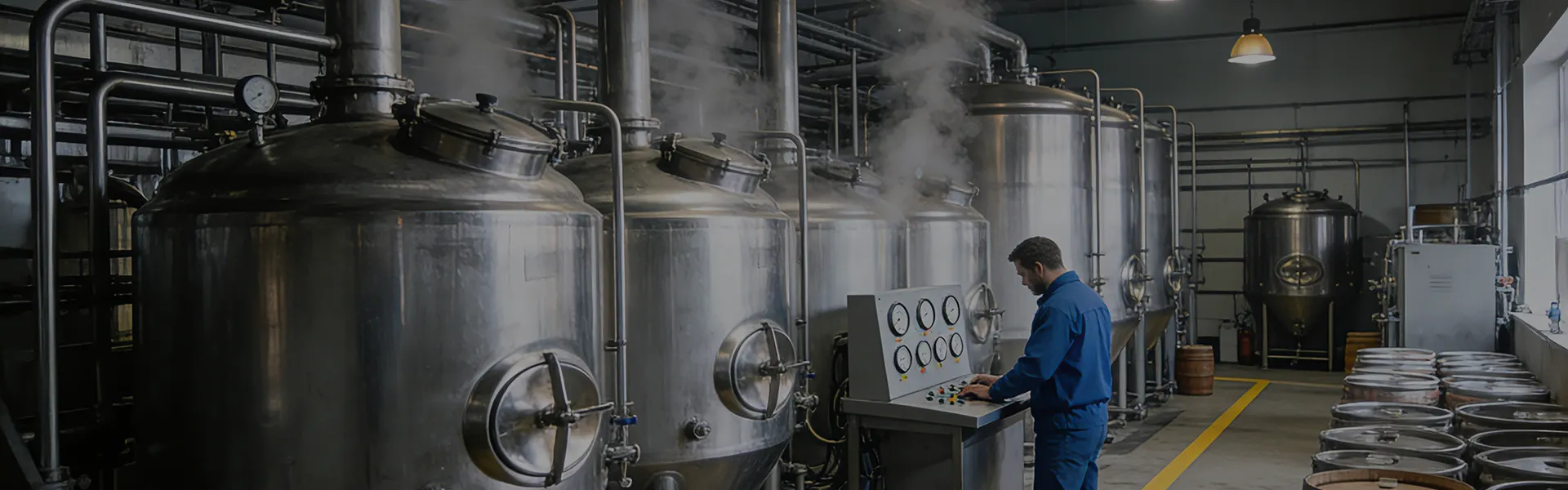
Buying used brewery equipment can save money, but a bad choice can slow your brewery, damage beer quality, and create repair costs. The safer path is simple: understand the equipment, inspect the real condition, and work with a manufacturer that can test and refurbish before shipment.
Refurbished and used brewery equipment for sale can be a smart choice for craft breweries, brewpubs, microbreweries, and beverage startups when each tank, brewhouse, fermenter, pump, chiller, and control system is inspected, cleaned, tested, and matched to the buyer’s production goals.
What Is Refurbished & Used Brewery Equipment?
Why Do Craft Breweries Choose Used Brewery Equipment for Sale?
What Brewery Equipment Details Should You Check Before Buying Used?
Is Used 1000L Brewery Equipment Right for a Growing Microbrewery?
How Does a Refurbished Brewing System Support Stable Beer Quality?
What Should Be Included in a Complete Brewery Setup?
How Should Fermentation Tanks, Cellar Equipment, and Glycol Cooling Be Checked?
Should You Buy Used Brewhouse Equipment or New Stainless Steel Brewing Equipment?
How Can ZR Brew Test and Selectively Refurbish Used Equipment?
Frequently Asked Questions About Used Brewing Equipment
Refurbished brewery equipment is pre-owned commercial brewing equipment that has been inspected, cleaned, repaired, tested, and prepared for another production life. Used brewery equipment is also pre-owned, but it may only receive basic cleaning and inspection before resale. That difference matters because a clean-looking tank may still have worn gaskets, weak valves, old controls, or cooling problems.
In our work as a brewery and beverage equipment manufacturer, we often see buyers focus only on the outside surface. A bright stainless-steel tank looks good in photos. But the real value sits inside the vessel, the welds, the jacket, the fittings, the pump, the CIP line, and the control system. Good refurbished brewing equipment should be checked like a working production tool, not like a simple second-hand product.
A reliable used brewing system may include a mash tun, lauter tun, kettle, whirlpool, fermenter, brite tank, chiller, glycol cooling lines, CIP unit, and packaging support. It may also include auxiliary equipment such as hoses, valves, a plate heat exchanger, grain handling parts, and a control cabinet. Each part should match the new owner’s brew plan, floor space, and utility supply.
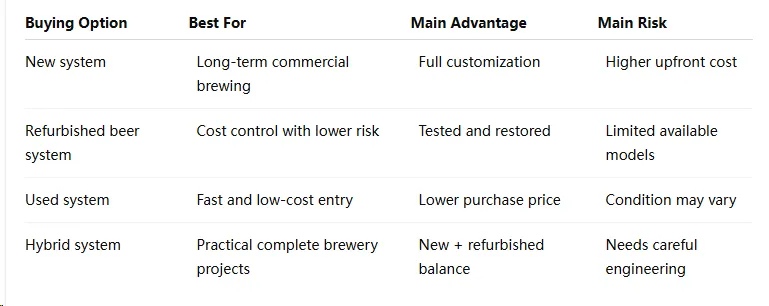
Many craft breweries choose used brewery equipment for sale because it can reduce the first project cost. That saved capital can go into taproom design, raw materials, staff training, licensing, branding, and cold storage. For a startup brewery, this can be the difference between opening earlier and waiting another year.
Used beer equipment also helps some buyers move fast. If a new brewhouse has a long manufacturing lead time, a proven used system may support a faster brewery setup. This is useful for brewpubs, taprooms, second-location projects, and investors who want a quicker path to beer sales.
But lower cost should not mean lower safety. A buyer should never treat used equipment as “cheap equipment.” The smarter goal is reliable used equipment. That means the system has a clear history, visible photos, pressure test results, clean fittings, correct power requirements, and a layout that fits the site. Good planning keeps the budget low without turning the project into a repair job.
Simple Budget View
Before buying used, start with the main stainless-steel equipment. Check every tank for dents, corrosion, pitting, weld quality, manway seals, pressure rating, and jacket condition. A fermentation tank or brite tank may look fine outside, but the internal finish and cooling jacket are more important for real production.
Next, review the brewhouse equipment. A brewhouse usually includes the mash tun, lauter tun, kettle, whirlpool, and hot-side piping. The false bottom in the lauter tun should be clean, flat, and strong. The kettle should heat evenly. The wort path should be sanitary and easy to clean. The plate heat exchanger should be checked for leaks, blockage, and cleaning history.
Then review moving and control parts. A pump can fail if seals are old. A valve can leak if gaskets are worn. Sensors can drift. Electrical panels can be hard to service if parts are outdated. Before you buy, ask for brewery equipment details, photos, videos, inspection notes, and a list of missing or replaced parts.
Used 1000L brewery equipment can be a strong choice for a growing microbrewery or brewpub that already has a clear sales plan. A 1000L system gives more output than a pilot line, but it is still easier to manage than a large industrial brewery. For many growing craft beer brands, it offers a practical balance between production volume and investment control.
A 1000L brewhouse may include a mash tun, lauter tun, kettle, and whirlpool in a 2-vessel, 3-vessel, or 4-vessel layout. The right choice depends on how many batches you want to brew per day, how much labor you have, and how much space your building allows. The brewhouse design must also match the fermentation and storage cellar, not just the hot-side equipment.
For example, if the brewhouse can produce more wort than the cellar can hold, your production will stop at the tank limit. If your chiller or glycol system is too small, your fermentation temperature may become unstable. The key is not only buying a used 1000l brewhouse. The key is building a complete craft beer brewing plan around it.
A refurbished brewing system can support stable beer quality when the core used parts are tested, repaired, and matched to the recipe plan. Beer brewing is sensitive to temperature, cleaning, flow rate, oxygen pickup, and sanitation. A small problem in the tank or piping can create a large problem in the glass.
In the brewhouse, consistent wort production matters. The mash tun must hold temperature well. The lauter tun should drain clearly. The kettle should boil with enough power. The whirlpool should separate solids from wort. If these parts work together, the brewer gets a more predictable brew day.
On the cold side, fermentation control is even more important. A fermenter must cool evenly and hold pressure when needed. A cellar with the right glycol cooling can help yeast work in a stable way. CIP also matters. Cleaning in place helps clean interior surfaces without heavy disassembly, which saves labor and supports repeatable production.
“Used equipment is only valuable when it can still protect product quality, process safety, and daily efficiency.”
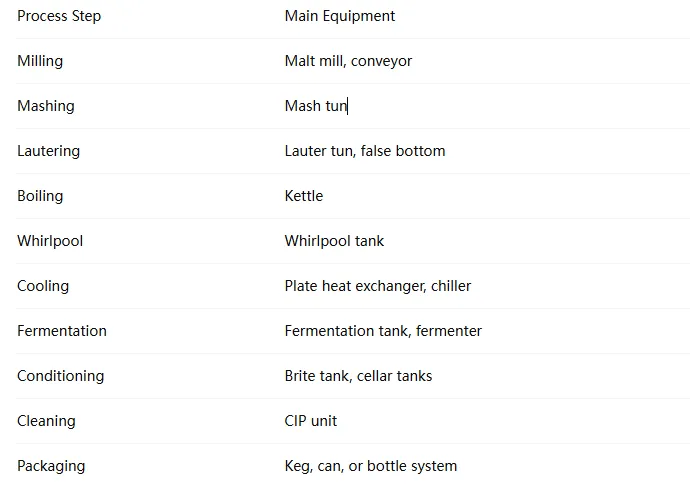
A complete brewery is more than a brewhouse. It is a working production line. It starts with malt handling and water treatment, then moves through mashing, lautering, boiling, whirlpooling, wort cooling, fermentation, conditioning, packaging, and cleaning.
For a small brewpub, the core system may include a 500L or 1000L brewing block, several fermenters, one brite tank, a glycol chiller, a CIP cart, and keg filling support. For a commercial brewery, the system may need a larger brewhouse system, more cellar tanks, automatic controls, grain handling, a packaging line, and a stronger utility plan.
This is why we always ask about equipment needs before recommending a system. Do you brew lager or ale? Do you need cans, kegs, or bottle filling? How many batches per week? How much space do you have? Do you need kombucha, cider, wine, cold brew coffee, or other beverage equipment in the same plant? These questions shape the real system.
Fermentation tanks and cellar equipment need careful inspection because they directly affect flavor, safety, and production timing. A fermentation tank should have clean internal surfaces, sound welds, working pressure fittings, a proper cooling jacket, and sanitary valves. If the tank has scratches or pitting inside, cleaning may become harder.
The glycol system is also critical. Glycol cooling helps control fermentation temperature by moving chilled glycol through tank jackets. If the cooling system is too weak, beer may ferment too warm. If the piping is poorly designed, some tanks may cool slowly. A proper glycol cooling plan should match the number of tanks, batch volume, ambient temperature, and production schedule.
The cellar should also allow safe work. There must be enough space around each tank for hoses, valves, dry hopping, sampling, cleaning, and maintenance. When buying used brewing equipment, always check not only the tank itself, but also how the tank will work inside your building.
Used brewhouse equipment can be a smart purchase when the system is in good condition and the layout matches your process. It is especially helpful for buyers who need lower investment or faster delivery. However, not every used system is worth buying. Some systems cost less at first but more later.
New stainless steel brewing equipment is better when you need exact capacity, a special floor layout, modern automation, or a long-term commercial brewing plan. New equipment also gives you full control over heating method, tank size, valve position, control level, and future expansion.
Many buyers choose a hybrid plan. They buy a new brewhouse and add refurbished fermenters or brite tanks. Others use a refurbished brewhouse and new controls. This “modernized used” approach can reduce cost while improving reliability. The best choice depends on your risk level, budget, and production target.
As a brewery equipment manufacturer, we look at used equipment from an engineering view. We do not only ask, “Can it be sold?” We ask, “Can it brew safely and reliably for the next owner?” That is why the first step is inspection.
A practical refurbishment scope may include cleaning, descaling, seal replacement, valve repair, pump testing, jacket pressure testing, electrical review, control upgrades, and final documentation. Some parts may be reused. Some parts should be replaced. Some systems are better sold as basic used equipment. Others should be refurbished more deeply.
Our goal is to help customers buy or sell used equipment in a clear way. We can help test and selectively refurbish a system so the buyer understands what is new, what is used, what has been repaired, and what should be upgraded later. This creates a safer path for project investors, engineering contractors, and beverage startups.
What is the difference between refurbished and used brewery equipment?
Used brewery equipment is pre-owned equipment that may be cleaned and inspected before resale. Refurbished brewery equipment has gone through a deeper process, including inspection, repair, parts replacement, pressure testing, cleaning, and quality reporting. Refurbished beer equipment usually gives buyers more confidence.
Does used or refurbished brewery equipment come with a warranty?
It depends on the supplier and condition. A manufacturer-refurbished system may include a limited warranty for stainless-steel vessels and selected removable parts. Basic used equipment may have little or no warranty. Always confirm the warranty terms before payment.
Can I use used brewing equipment to start a brewery?
Yes. Used brewing equipment can work well for a startup brewery, brewpub, taproom, or pilot production line when it is correctly inspected and sized. It is a practical way to reduce first investment while still building a commercial brewing operation.
What should I check before buying used brewery equipment?
Check the tank material, welds, internal surface, pressure rating, cooling jacket, valves, pump, electrical system, control cabinet, CIP compatibility, heating method, and spare parts. Also check whether the system fits your building, utilities, and production target.
Can refurbished brewery equipment be customized for my brewery layout?
Yes, in many cases. Fittings, valves, piping direction, controls, utilities, and layout can often be adjusted. The level of customization depends on the original structure and the condition of the equipment.
How can I know the condition of used brewery equipment before shipment?
Ask for photos, videos, inspection notes, test results, and a clear condition report. For important vessels, pressure testing and leak testing are valuable. For controls and pumps, ask for operation videos and part details.
Buying used brewery equipment is not only a price decision. It is a production decision. The right system can help you open faster, reduce capital pressure, and support stable beer quality. The wrong system can slow your brew day, increase repair cost, and delay your first sales.
For craft breweries, beverage startups, kombucha producers, cideries, wineries, distilleries, project investors, and engineering contractors, the safest path is to work with a manufacturing partner that understands both new and refurbished systems. ZR Brew can help review your equipment needs, compare new and used options, and design a practical brewery equipment solution for your project.
24時間以内にご返信いたします。お急ぎの場合は、WhatsAppまたはWeChat(+8613188932181)までご連絡ください。.
*当社はお客様のプライバシーを尊重し、すべての情報を保護いたします。.
お客様の情報は、お問い合わせへの回答にのみ使用し、未承諾のメールや宣伝メッセージを送信することは一切ありません。.