

견적 받기
24시간 이내에 답변해 드리겠습니다. 긴급한 사안이신 경우, WhatsApp/WeChat(+8613188932181)으로 연락해 주시기 바랍니다.
*당사는 귀하의 개인정보를 존중하며, 모든 정보는 안전하게 보호됩니다.
당사는 귀하의 정보를 오직 문의에 답변하는 용도로만 사용하며, 원치 않는 이메일이나 홍보 메시지를 절대 보내지 않습니다.
 게시됨
Starting a brewery takes more than buying a few stainless steel tanks. Poor equipment planning can lead to slow production, uneven beer quality, and costly upgrades. The solution is to choose a complete brewery equipment setup that matches your production goals, available space, and long-term business plans.
The right beer brewing equipment includes a brewhouse, fermentation tanks, cooling and cleaning systems, and packaging equipment. Commercial buyers should select these components based on batch size, weekly output, beer style, automation needs, and future expansion. A well-designed system connects each production stage and helps breweries make consistent beer while managing labor, utilities, and operating costs.
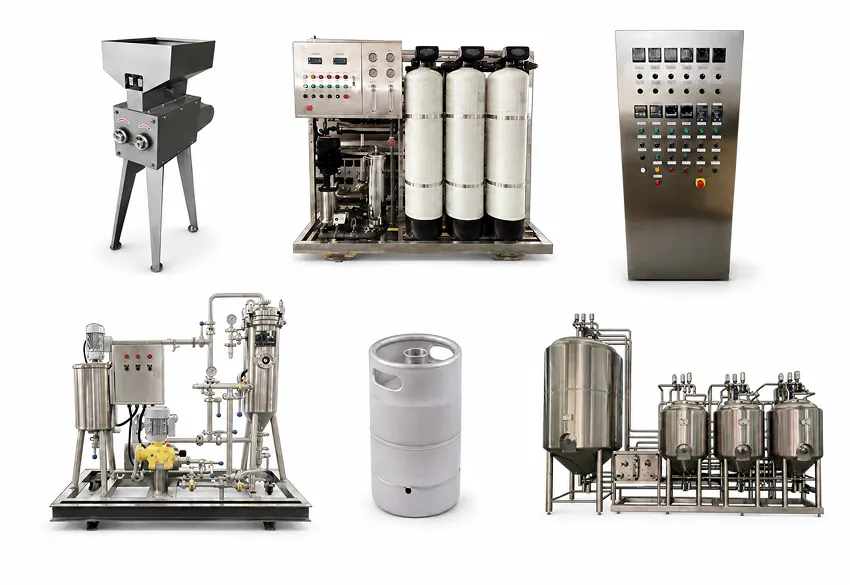
A commercial brewery requires several connected systems to turn raw ingredients into finished beer. The exact configuration depends on the type of business, expected production volume, and brewing methods.
A small brewpub may operate with a compact brewhouse and several fermentation vessels. A larger beer brewery may need separate processing vessels, automated grain handling, multiple storage tanks, and an integrated packaging line.
The most important equipment categories are:
| Equipment Category | Main Function | Common Equipment |
| Grain Handling | Prepare and transport malt | Malt mill, grain conveyor |
| 양조장 | Extract sugars and prepare wort | Mash tun, lauter tun, boiling kettle, whirlpool |
| Wort Cooling | Cool liquid before fermentation | Plate heat exchanger |
| 발효 | Convert sugars into alcohol | Conical fermentation tanks |
| Beer Conditioning | Clarification and carbonation | Bright beer tanks |
| 냉각 | Maintain process temperatures | Glycol chiller, cooling distribution |
| 청소 | Clean internal product-contact surfaces | CIP system, sanitary pumps |
| 포장 | Fill and prepare finished products | Kegging, canning, bottling equipment |
| 자동화 | Monitor and control operations | PLC, sensors, valves, control panels |
These systems should not be selected independently. A large brewhouse with insufficient fermentation capacity can create production delays. Likewise, too many tanks will not improve output if the brewhouse cannot supply enough wort.
At ZR Brew, we approach equipment planning as a connected production project. We review the customer’s process requirements, capacity targets, facility conditions, and expansion plans before recommending a configuration.
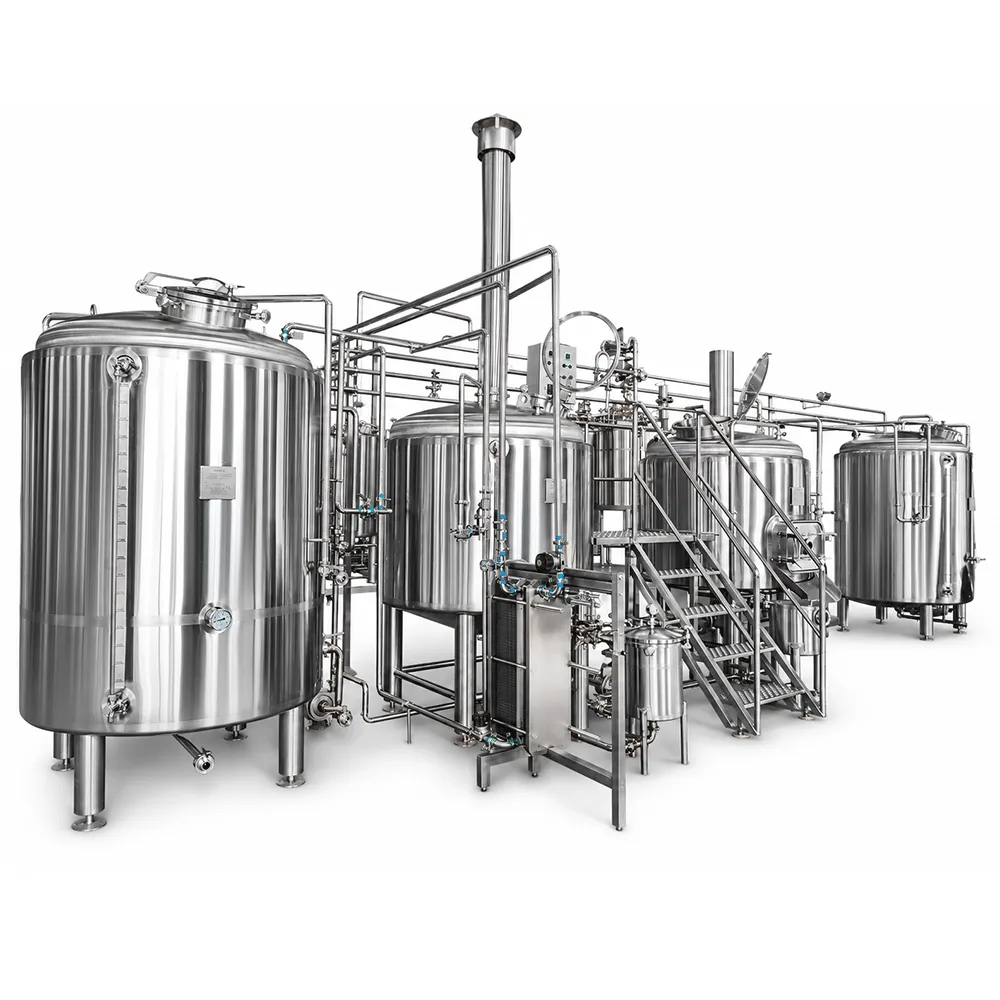
Understanding the brewing process makes equipment selection easier.
Beer production follows a series of connected steps. Each step requires suitable equipment and careful control of time, temperature, and material movement.
Step 1: Milling and Mashing
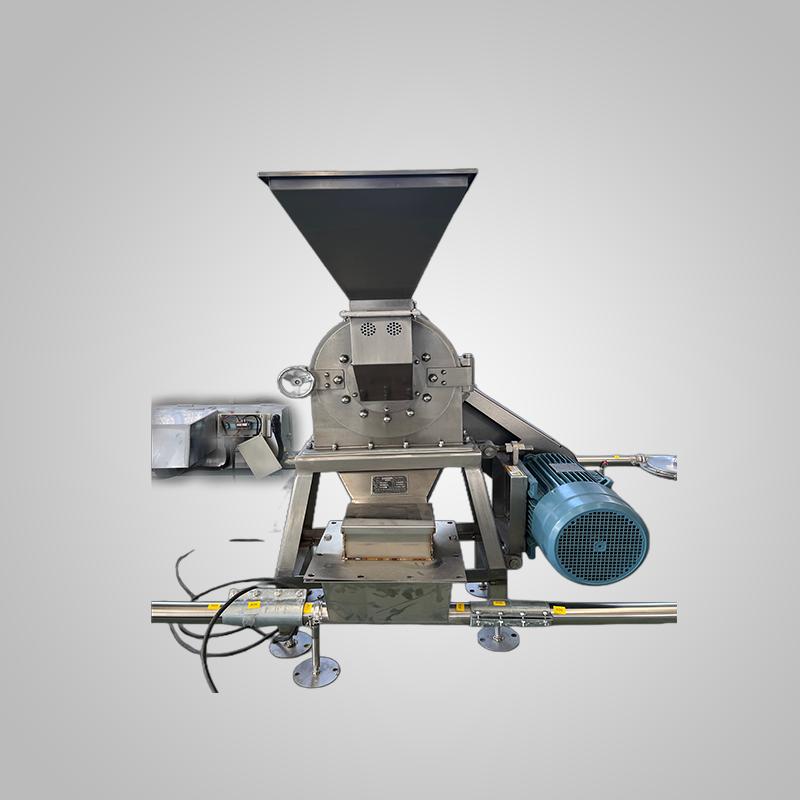
Malted grain first passes through a mill. The goal is to break the grain while preserving enough husk structure to support filtration.
The crushed malt enters the mash tun, where it mixes with heated water. During mashing, enzymes convert starch into fermentable sugar.
The mash temperature and holding time affect the final wort composition and the character of the beer.
Step 2: Lautering and Boiling
After mashing, the liquid separates from the grain bed. The spent grain remains behind while the sweet liquid moves to the boiling stage.
The wort enters a kettle, where the brewer can add hop products according to the recipe.
Boiling supports several important operations, including wort sterilization, enzyme inactivation, and hop bitterness extraction.
Step 3: Cooling and Fermentation
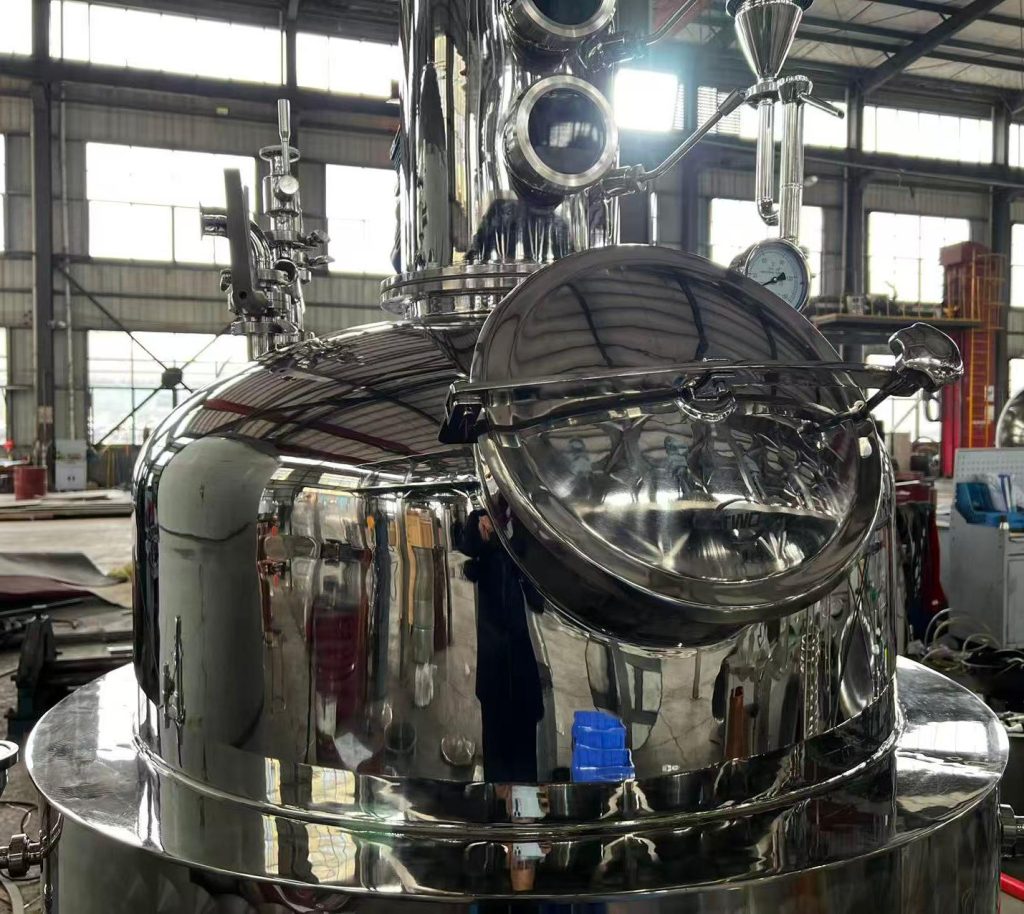
After boiling and whirlpool separation, hot wort passes through a heat exchanger.
The exchanger reduces the temperature to the required fermentation range. The cooled liquid then moves into a sanitary fermenter, where yeast converts sugars into alcohol and carbon dioxide.
The required temperature depends on the yeast strain and beer style.
Step 4: Conditioning and Packaging
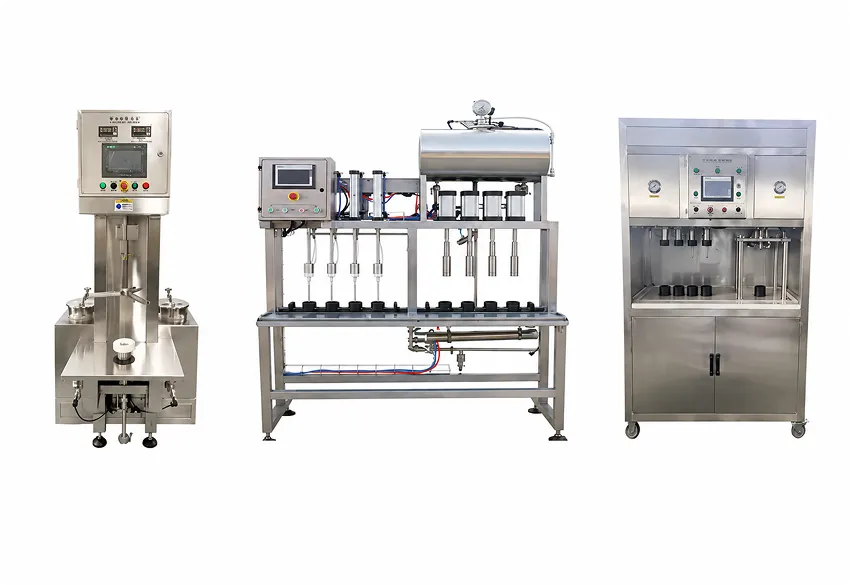
After primary fermentation, the beer may undergo maturation, clarification, carbonation, and transfer to a bright tank.
The finished product then moves into kegs, cans, or bottles.
Process flow:
Malt Milling → Mashing → Lautering → Boiling → Whirlpool → Wort Cooling → Fermentation → Conditioning → Packaging
The important purchasing lesson is simple: every stage must support the capacity and operating schedule of the next.
The brewhouse is the central production area of a beer-making facility.
It usually includes several processing vessels, pumps, pipework, instruments, and a control system. Different vessel arrangements offer different levels of operating flexibility.
Two-Vessel, Three-Vessel, and Four-Vessel Systems
| Configuration | Typical Arrangement | Suitable Applications |
| Two-Vessel | Combined mash/lauter vessel and kettle/whirlpool | Brewpubs, pilot systems, small operations |
| Three-Vessel | Separate mash, lauter, and kettle/whirlpool functions | Growing craft breweries |
| Four-Vessel | Separate mash, lauter, boiling, and whirlpool vessels | Higher-throughput commercial operations |
A two-vessel brew kit can be a practical starting point for a small business. It uses fewer vessels and generally requires less installation space.
Three-vessel systems provide more flexibility for handling different stages of production.
Four-vessel systems can support overlapping operations and higher daily output when the supporting utilities and operating schedule allow it.
However, more vessels do not automatically mean better beer. The correct arrangement depends on the production plan.
Heating Methods
Commercial brewing kettles can use electric heating, steam, or direct-fire configurations, depending on the system design.
Electric systems may suit smaller facilities where steam infrastructure is unavailable. Steam heating is common in larger installations because it can distribute heat through appropriately designed heating surfaces.
Buyers should compare:
At ZR Brew, we configure mashing systems and brewhouse arrangements according to the customer’s actual operating conditions rather than assuming one design works for every project.
Fermentation tanks have a direct influence on production scheduling, temperature management, and finished beer consistency.
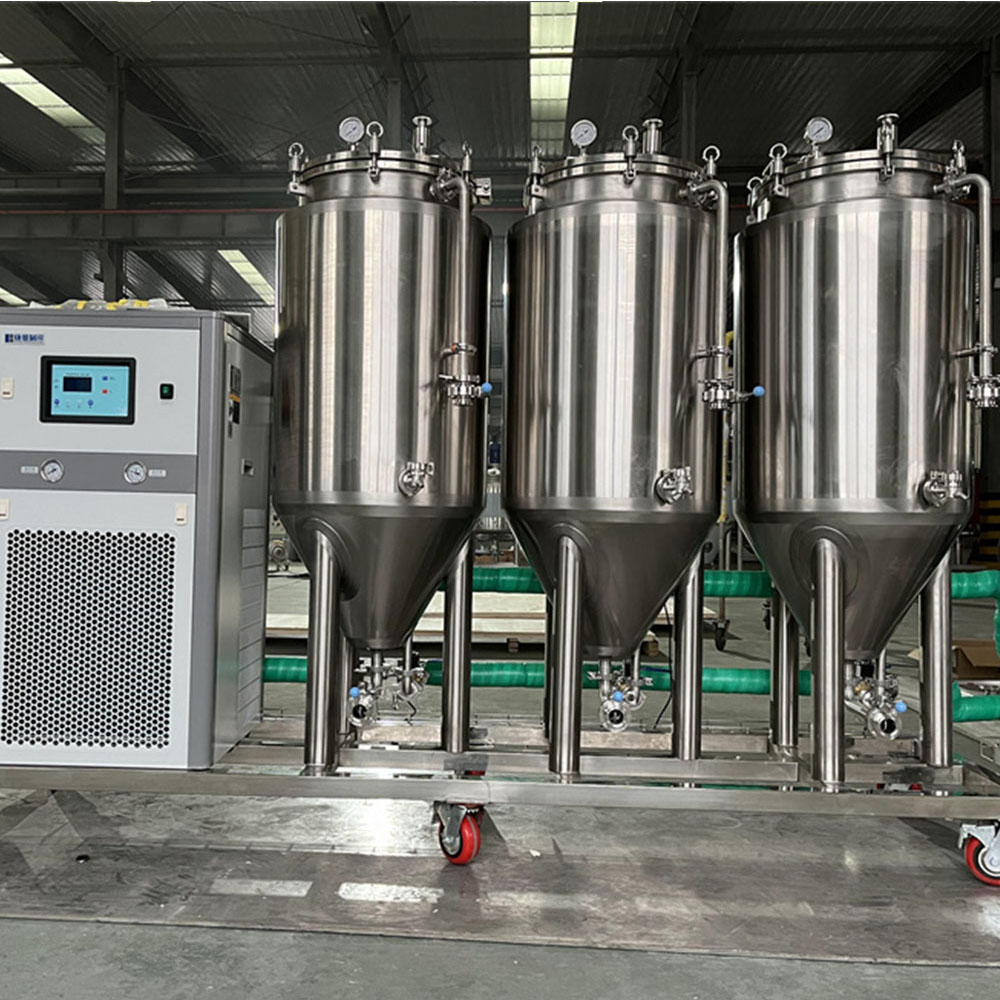
A stainless steel conical tank provides a controlled environment for yeast activity. It typically includes a cooling jacket, temperature sensor, sanitary fittings, sampling points, and cleaning connections.
The tank must match the intended operating conditions, including working volume, pressure rating, cooling requirements, and cleaning method.
Key Features to Compare
| 특징 | 그것이 중요한 이유 |
| Stainless Steel Construction | Provides durable product-contact surfaces |
| Cooling Jacket | Supports controlled heat transfer |
| 단열 | Helps reduce unwanted temperature changes |
| Temperature Sensor | Supports process monitoring |
| Sampling Valve | Allows operators to collect samples |
| Sanitary Gasket | Helps maintain sealed hygienic connections |
| CIP Spray Device | Supports internal cleaning |
| Pressure Rating | Determines permitted operating conditions |
The quality of the surface finish also matters. Smooth, properly fabricated product-contact areas are easier to clean and inspect.
A tank with poor weld finishing or inaccessible internal surfaces may create unnecessary cleaning challenges.
A common purchasing mistake is choosing fermentation capacity based only on the size of the brewhouse.
For example, a 1000L brewhouse does not necessarily require only one or two 1000L tanks.
If a beer occupies a tank for 14 days, and the brewery produces four batches per week, the business needs enough available tank capacity to handle overlapping production cycles.
A practical estimate is:
Required fermentation vessels ≈ Weekly batches × Tank occupancy in weeks
The actual number should also account for cleaning time, different beer styles, production peaks, and spare capacity.
This is why tank quantity planning is often more important than simply buying larger vessels.
A complete production facility needs more than a brewhouse and tanks.
Support systems handle material handling, cooling, cleaning, water preparation, and other daily operations. Without them, even a well-designed main production line may experience delays.
ZR Brew’s Brewery Support Equipment category covers several important auxiliary equipment types.
Grain Mills and Conveyors
Malt mills prepare grain for extraction.
Two-roll mills are common in smaller operations, while four-roll designs may suit higher processing demands.
Conveyors and augers reduce manual grain movement and help connect storage, milling, and brewhouse operations.
The mill capacity should be selected according to the grain quantity required per brewing cycle and the available preparation time.
Glycol Chillers and Refrigeration
Temperature control is essential during fermentation and conditioning.
A glycol chiller circulates chilled fluid through tank jackets to remove heat from the product.
Correct refrigeration sizing requires more than adding up tank volumes. Buyers should consider:
An undersized cooling system may struggle during peak operation. An oversized system can increase purchase costs without delivering proportional benefits.
Water Treatment and Hop Dosing
Water treatment equipment may include filtration and reverse osmosis systems.
The correct arrangement depends on the incoming water quality and the desired brewing water profile.
A hop dosing vessel can also support dry hopping in suitable closed-process configurations, helping operators introduce botanical material while managing oxygen exposure.
These systems should be selected according to the product range, not simply because they appear in a standard equipment package.
Cleaning is one of the most important daily activities in beverage manufacturing.
CIP stands for Clean-in-Place. It allows operators to circulate cleaning liquids through suitable tanks, pipelines, and other connected equipment without fully dismantling the system.
A typical CIP installation includes cleaning solution tanks, pumps, pipe connections, and controls.
Depending on the design, it may support water pre-rinse, alkaline cleaning, intermediate rinse, acid cleaning, and final rinse or sanitation procedures.
Common CIP Configurations
| CIP System | General Application |
| 50L Mobile CIP | Small brewery equipment and selected vessels |
| 100L Mobile CIP | Small to medium cleaning circuits |
| Stationary CIP Skid | Larger connected production facilities |
| Automated CIP System | Repeated cleaning programs across suitable circuits |
The correct system depends on the cleaning circuit, not only the size of the brewery.
Operators must confirm adequate flow rate, chemical concentration, temperature, contact time, and equipment compatibility.
A cleaning program should also consider gasket materials, pump performance, drainage, and the risk of corrosion from unsuitable chemicals.
Good cleaning supports repeatable production and helps reduce contamination risks.
However, CIP equipment does not guarantee hygiene by itself. Cleaning procedures still require validation, inspection, suitable chemicals, and trained operators.
At ZR Brew, we consider cleaning access during equipment configuration because sanitary design should be part of the production system from the beginning.
Effective brewery equipment should do more than complete the brewing process.
It should help operators maintain stable conditions, reduce unnecessary manual work, and keep the system easy to clean and maintain.
Stainless Steel Quality and Sanitary Design
SUS304 stainless steel is widely used in brewing applications. SUS316 may be selected for specific process conditions where its additional corrosion resistance is useful.
Material selection should follow the actual liquid chemistry, cleaning chemicals, and operating environment.
Buyers should also examine weld quality, surface finish, sanitary connections, and accessibility.
A well-built tank should provide suitable inspection and cleaning access.
Automation and Process Control
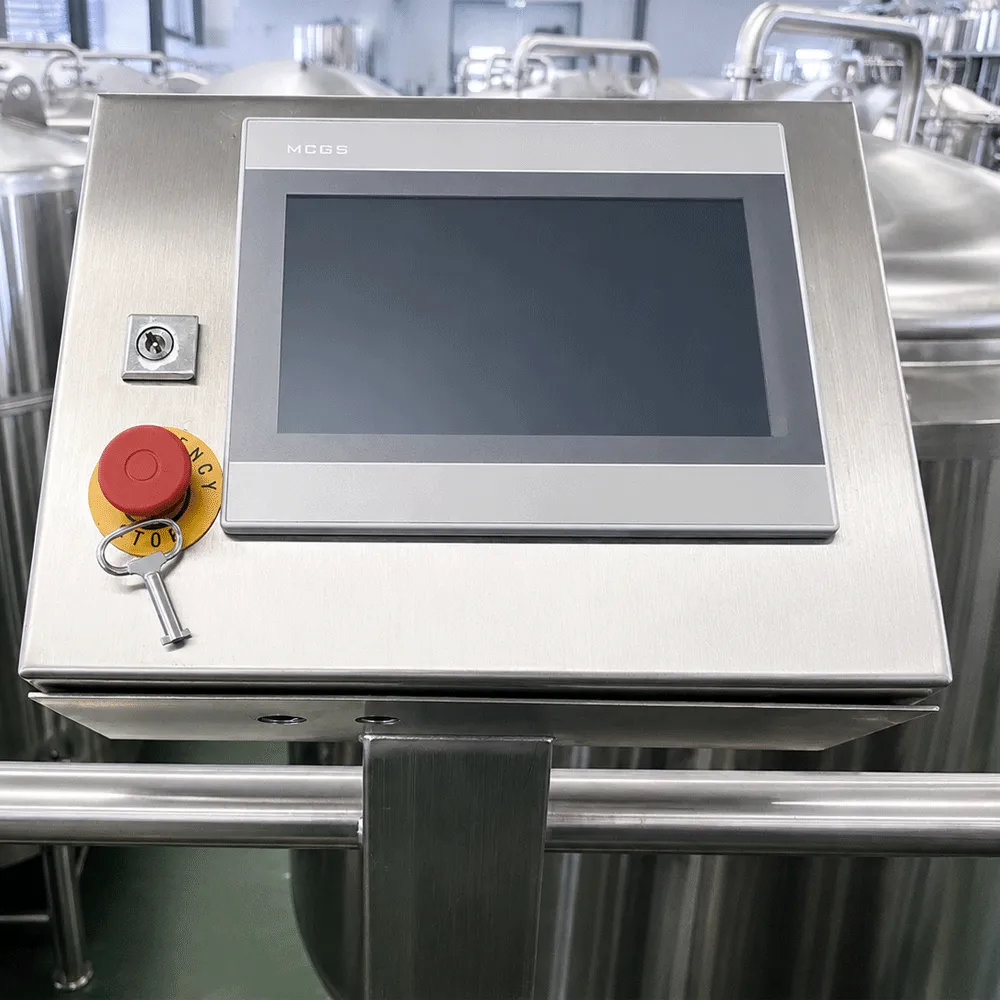
자동화 can help operators monitor temperatures, pump operation, liquid levels, and selected process stages.
Depending on the configuration, the control system may use PID controllers or a PLC with a human-machine interface.
More automation is not always necessary.
A small brewpub may prefer a simpler setup with manual valves and basic controls. A larger commercial operation may benefit from automated sequences, pneumatic valves, and centralized monitoring.
The correct level depends on labor availability, recipe complexity, operating frequency, and budget.
Energy and Utility Management
Energy use depends on heating efficiency, insulation, operating schedules, and heat recovery.
For example, recovering suitable process heat can reduce the amount of new heating energy needed in subsequent operations.
Cooling pipe insulation and properly sized pumps can also support more efficient operation.
Innovative brewing should therefore focus on practical improvements that reduce waste and support repeatable results—not technology added only for appearance.
Buying separate machines is different from planning a working production facility.
At ZR Brew, we manufacture customized stainless steel brewing and beverage processing equipment for international B2B customers.
Our equipment range includes brewhouse systems, fermentation vessels, bright tanks, supporting equipment, and turnkey solutions.
We work with craft breweries, brewpubs, beverage startups, commercial producers, investors, and engineering contractors who need equipment configured around their actual production plans.
From Production Goals to Equipment Configuration
We begin by understanding the customer’s intended output, product range, and available facility.
The next step is to identify the equipment arrangement needed to support that plan.
For example, a customer planning several different types of beer may need more fermentation flexibility than a producer making one core product.
A project with limited ceiling height may require a different vessel layout from a facility with more vertical space.
Likewise, a business with limited utilities may need a different heating and cooling arrangement.
These practical details affect the equipment configuration before manufacturing begins.
Turnkey Brewery Planning
A complete project may involve:
Our goal is to help customers select equipment that works together, supports their production schedule, and allows practical maintenance.
Why Customized Equipment Matters
Customization is not simply choosing a tank size.
It includes vessel arrangement, connection positions, access points, operating controls, available utilities, and future expansion needs.
A properly planned system can reduce avoidable installation changes and make daily operation easier.
For international projects, we also discuss shipping dimensions, unloading conditions, and installation responsibilities before finalizing the equipment scope.
What equipment is needed to start a small commercial brewery?
A small commercial setup usually needs a brewhouse, fermentation vessels, a wort cooler, a glycol cooling system, cleaning equipment, and a method for packaging or serving finished beer. The exact configuration depends on production volume, beer styles, and available utilities.
Is a 500L or 1000L brewhouse better for a startup?
Neither size is automatically better. A 500L system may suit a business with modest demand and limited space, while a 1000L system may reduce the number of brewing cycles needed for higher output. Buyers should compare projected sales, tank occupancy, labor, and expansion plans.
How many fermentation tanks should a brewery purchase?
The number depends on weekly brewing frequency, tank occupancy time, and production flexibility. A useful starting point is to multiply weekly batches by the number of weeks each batch occupies a tank, then allow additional capacity for cleaning and scheduling.
What is the difference between a fermentation tank and a bright beer tank?
A fermentation tank supports the conversion of fermentable sugars into alcohol. A bright beer tank is commonly used for conditioning, carbonation, and holding beer before packaging. Some process designs combine functions, but the equipment must be rated and configured for its intended use.
Does every brewery need a fully automated brewing system?
No. Manual and semi-automatic systems can work well for smaller operations. Full automation becomes more attractive when production frequency, staffing needs, recipe consistency, and process complexity justify the additional investment.
Can ZR Brew customize equipment for different brewery layouts?
Yes. ZR Brew offers customized equipment configurations based on vessel capacity, available space, heating conditions, cooling requirements, and production goals. Final specifications are confirmed during project planning.
24시간 이내에 답변해 드리겠습니다. 긴급한 사안이신 경우, WhatsApp/WeChat(+8613188932181)으로 연락해 주시기 바랍니다.
*당사는 귀하의 개인정보를 존중하며, 모든 정보는 안전하게 보호됩니다.
당사는 귀하의 정보를 오직 문의에 답변하는 용도로만 사용하며, 원치 않는 이메일이나 홍보 메시지를 절대 보내지 않습니다.